
This article has been reviewed according to Science X's editorial process and policies. Editors have highlighted the following attributes while ensuring the content's credibility:
Modern cancer care is based on many factors. Physicians use scans, lab tests and decades of clinical research to help decide which treatments are best for patients.
Even so, one challenge remains: two patients with the same diagnosis can respond very differently to the same therapy.
That challenge drives the work of Christopher A. Lucchesi, an assistant professor of urologic surgery in the Department of Urology at UC Davis Health and a research health scientist at the U.S. Department of Veterans Affairs in Mather, California (VA).
"I'm a cancer survivor myself. I understand how it feels to have chemotherapy, radiation and all that," Lucchesi said. "I was fortunate that treatment worked for me, but for a lot of patients, frontline therapy does not work. Even second-line therapy might not work."
His goal is to develop tools to help determine which treatments may be most effective for an individual patient's cancer.
In collaboration with the VA, Lucchesi's lab research begins with tissue collected during surgery or biopsy.
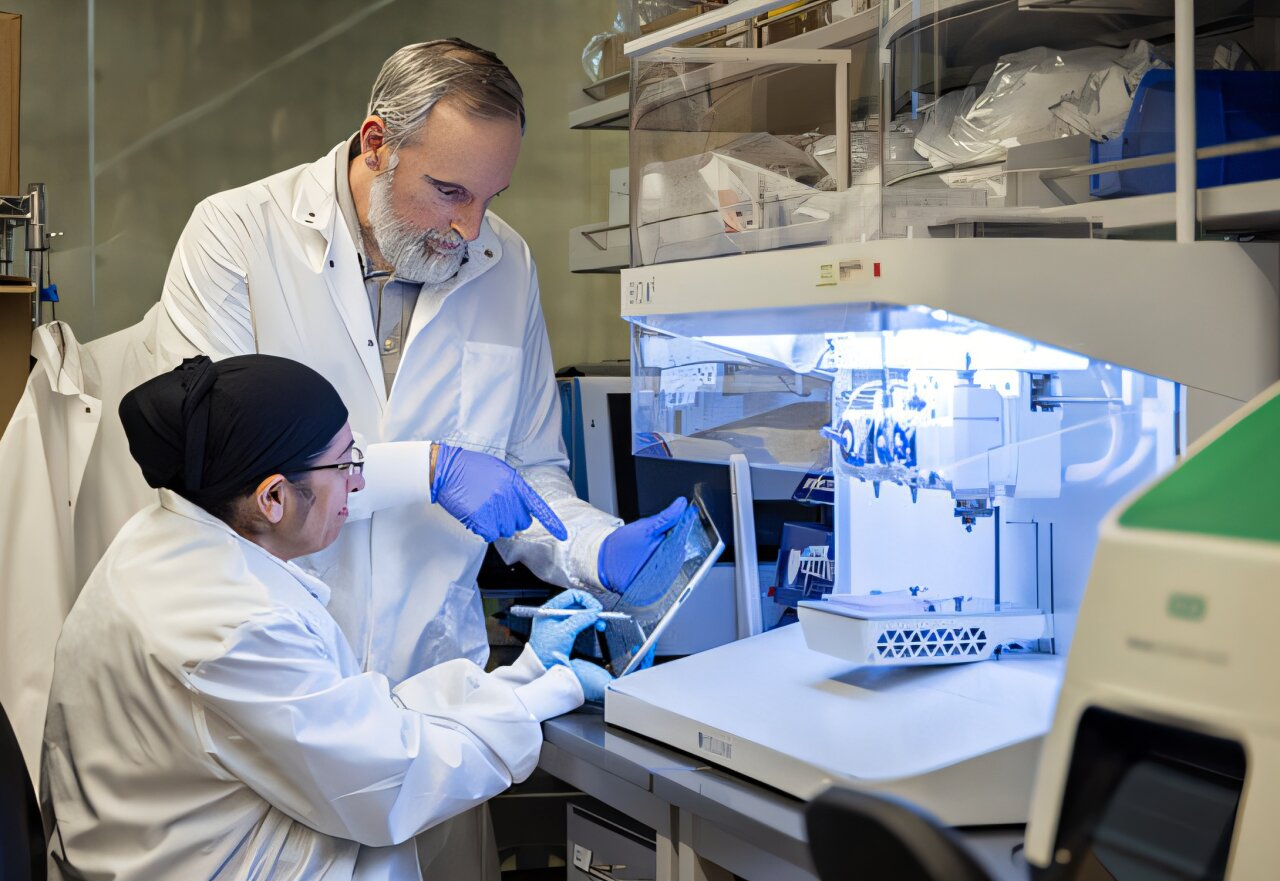
Lucchesi's team breaks down and processes that tissue into individual cells. Using a specialized 3D printer, researchers deposit tiny droplets containing the patient's tumor cells into a bioink, or hydrogel. The microscopic, three-dimensional models of the patient's tumor are called tumoroids.
"The easiest way to explain the concept is that it's your actual primary tumor, just miniaturized," he said.
Source link





