
This article has been reviewed according to Science X's editorial process and policies. Editors have highlighted the following attributes while ensuring the content's credibility:
During kidney transplantation or certain surgical procedures, blood flow to the kidneys may be temporarily interrupted or reduced. When blood flow is restored, the return of oxygen can trigger oxidative stress and inflammation, damaging kidney cells. This phenomenon, known as renal ischemia–reperfusion injury (IRI), is a major cause of acute kidney injury (AKI) and can increase the risk of long-term complications, including chronic kidney disease.
Researchers at Chiba University in Japan found that an enzyme called glutaminase 2 (GLS2) contributes to kidney damage during IRI. The study was led by Dr. Sawako Suzuki, a lecturer at the Graduate School of Medicine, Chiba University, Japan, with Dr. Kazuki Ishiwata, the first author, and Dr. Koutaro Yokote, the last author, from the same university.
This paper was published in the journal Free Radical Biology and Medicine.
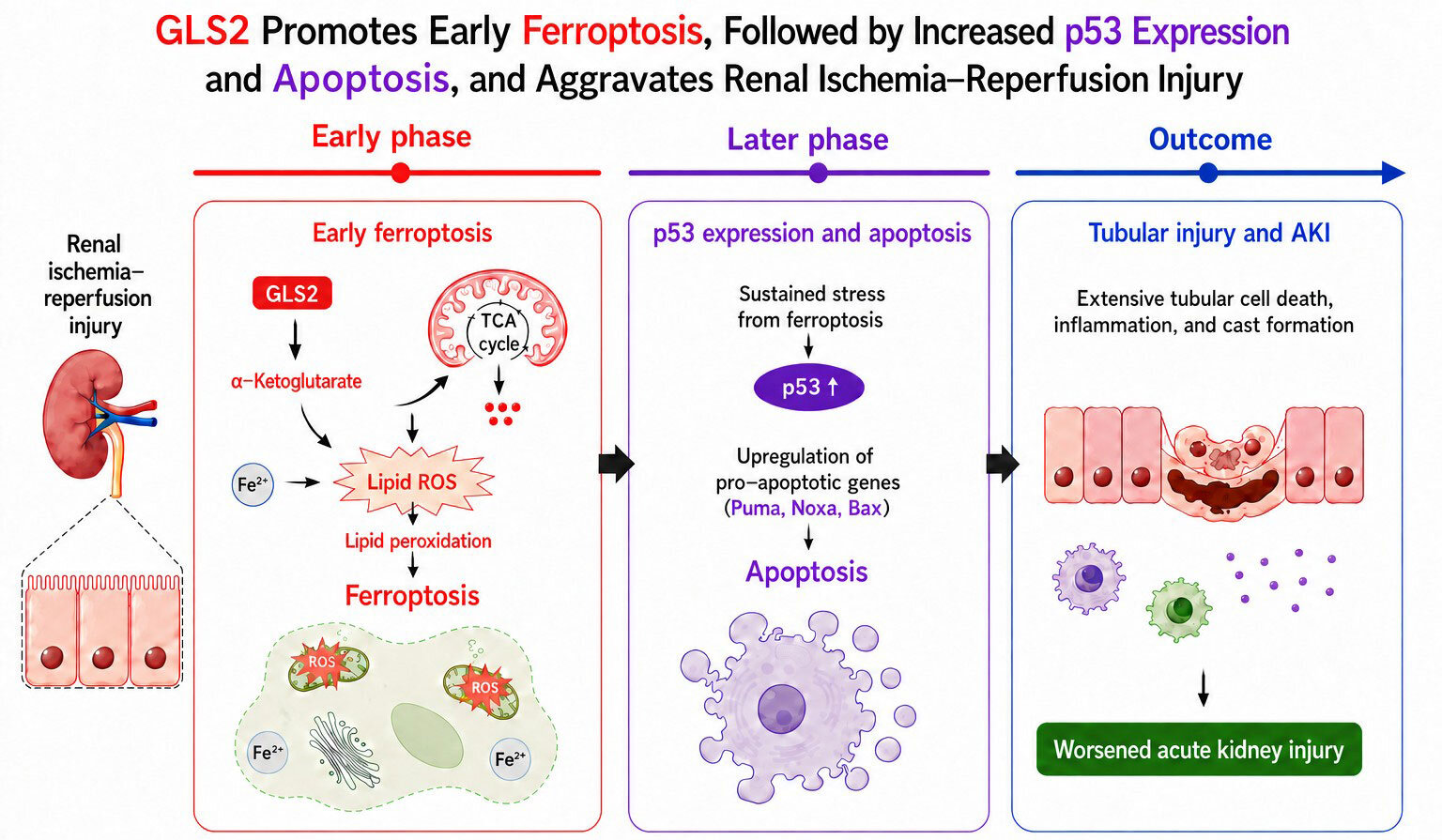
GLS2 is an enzyme involved in glutamine metabolism. It converts glutamine, an amino acid found in the body, into glutamate, which can then be further converted into alpha-ketoglutarate (αKG). The researchers found that this GLS2–αKG pathway promotes ferroptosis, a form of cell death that eventually causes kidney tubular cells to die. In mice, blocking this pathway reduced ferroptosis and limited kidney damage. These findings highlight GLS2 as a potential target for developing treatments against IRI.
"Ferroptosis is a form of cell death driven by lipid peroxidation and is closely linked to cellular metabolism.
Source link





