
This article has been reviewed according to Science X's editorial process and policies. Editors have highlighted the following attributes while ensuring the content's credibility:
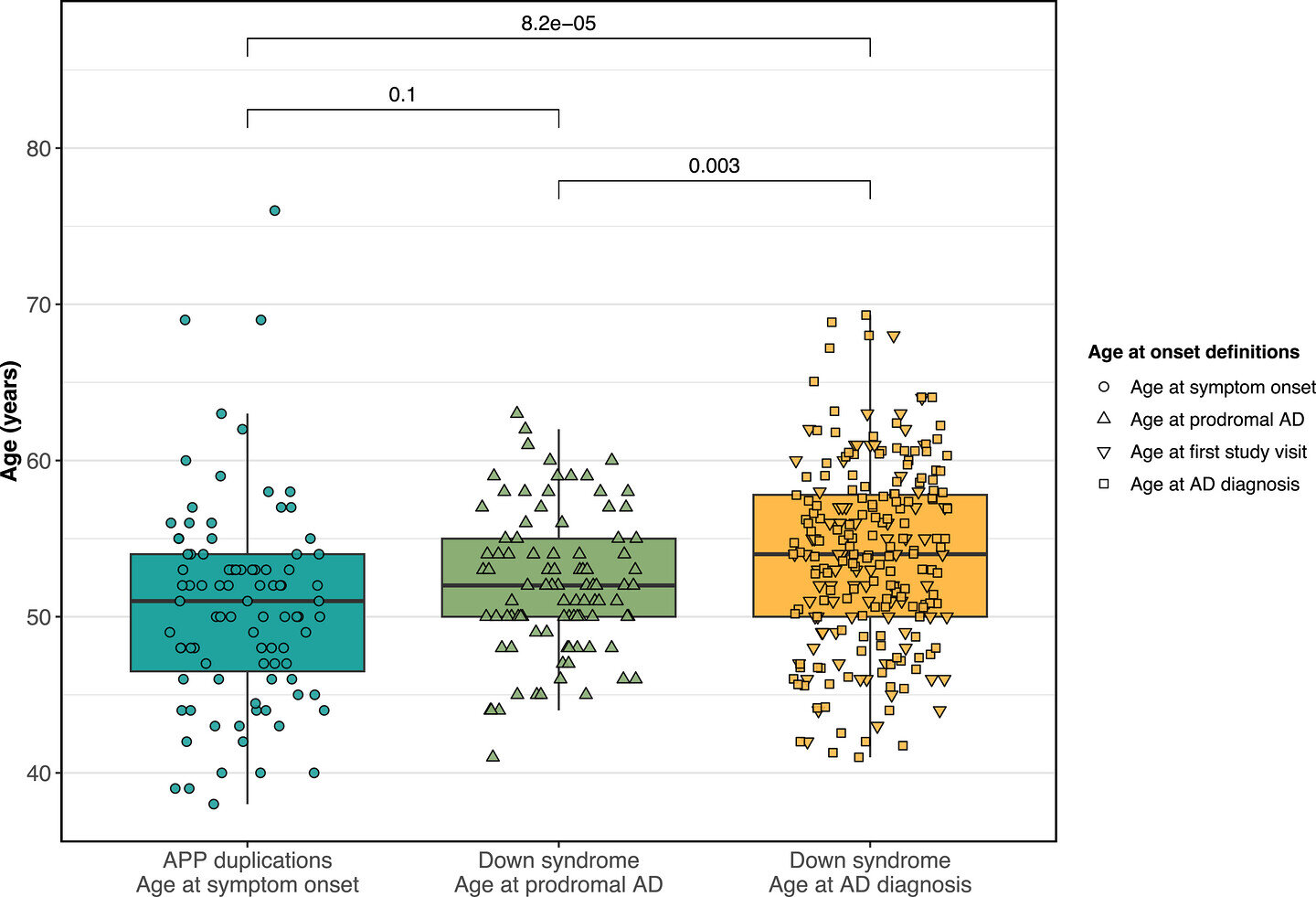
Why do some people develop Alzheimer's disease much earlier than others, even when they share the same genetic alteration that causes the disease? An international study co-led by the Sant Pau Research Institute (IR Sant Pau) has identified genetic factors that help explain these differences. The findings show that the combination of certain genetic variants can make a difference of up to a decade in the age of Alzheimer's onset in individuals with an extra copy of the APP gene, both with and without Down syndrome.
The research, published in the journal Alzheimer's & Dementia, analyzed clinical and genetic data from 1,057 individuals. Of these, 957 had Down syndrome, while the other 100 carried a specific duplication of the APP gene, located on chromosome 21, which, when duplicated, causes a rare form of early-onset hereditary Alzheimer's disease.
The study's authors include Danna Perlaza, a researcher in the Molecular Neurodegeneration Research Group at IR Sant Pau and co-first author of the article; Dr. Olivia Belbin, head of the Molecular Neurodegeneration Research Group at IR Sant Pau; and Dr. Oriol Dols-Icardo, a researcher in the Neurobiology of Dementia Research Group at IR Sant Pau. The latter two are listed as senior investigators on the study, and all three are members of the Memory Unit at Hospital de Sant Pau.
The APP gene contains the instructions for producing amyloid precursor protein, from which the beta-amyloid peptide is generated.
Source link





