
This article has been reviewed according to Science X's editorial process and policies. Editors have highlighted the following attributes while ensuring the content's credibility:
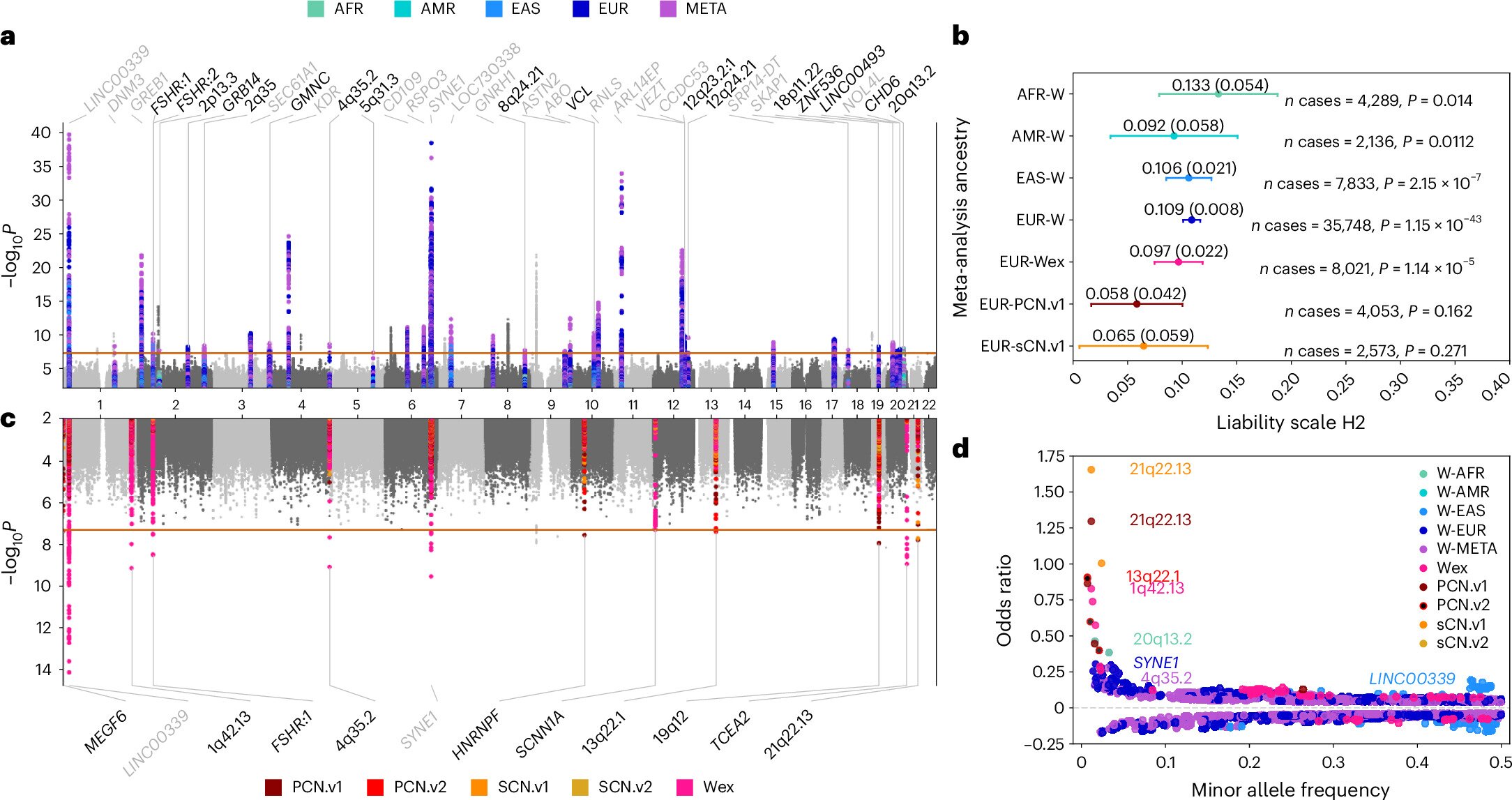
In a large, international study analyzing data from over 1 million people, researchers identified multiple genomic regions, associations and pathways underlying endometriosis, a debilitating, chronic condition in which tissue similar to the lining of the uterus grows in other places in the body.
Endometriosis affects up to one in 10 women worldwide. It can lead to severe pain and fertility challenges, and it may be associated with risk for other diseases. The findings, published in Nature Genetics, provide insights that could someday lead to studies on potential targets for therapeutic interventions for this complex condition.
"The findings from this large multi-ancestry study provide a wealth of information on the genetic underpinnings of endometriosis, a severely painful condition for which NIH is actively pursuing a cure," said John Gaitanis, M.D., director of NIH's Eunice Kennedy Shriver National Institute of Child Health and Human Development (NICHD). "A greater understanding will help us take steps toward developing diagnostic tools and treatments to address this devastating disease."
Despite its prevalence, researchers still need to learn more about why and how endometriosis develops. Researchers have previously used genome-wide association studies to look for genes and pathways linked with endometriosis. However, these studies have primarily included populations with European ancestry, with some East Asian populations at a smaller scale.
In the new study, the research team conducted a meta-analysis of endometriosis spanning 14 biobanks worldwide, representing over 1 million participants.
Source link





