
This article has been reviewed according to Science X's editorial process and policies. Editors have highlighted the following attributes while ensuring the content's credibility:
How the brain learns is one of the biggest unsolved mysteries in science. Researchers in artificial intelligence from the University of Groningen (the Netherlands) and KU Leuven (Belgium) hope that a specific type of forgetting in artificial neural networks will help to capture what is happening in the human brain. The study is published in the journal Trends in Cognitive Sciences.
Artificial neural networks are computer systems that are modeled on the human brain: similar to the brain, they consist of a network of units (the neurons) that signal to each other. Such an artificial neural network can learn a new task through a stepwise process, strengthening or weakening the connections between the units to approach the desired outcome as best as possible. This is called gradient descent learning.
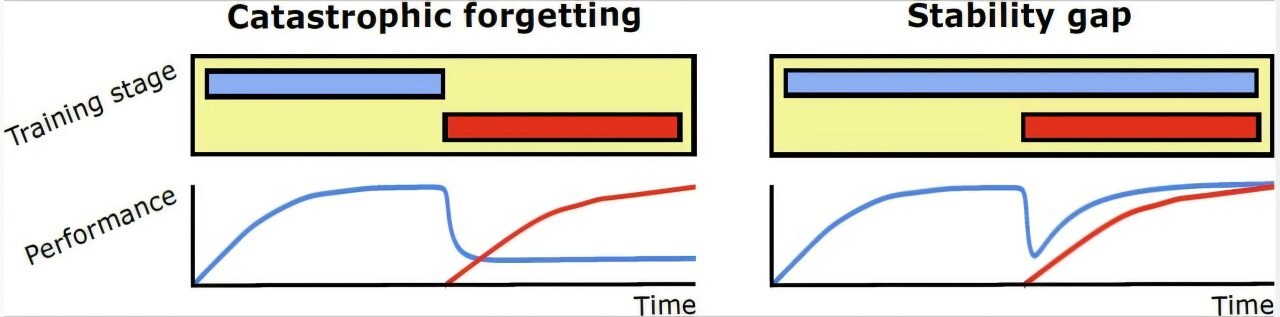
Once the system is fully trained on a task (for example, to recognize the image of a boat), training for a second task can begin (such as training to recognize a car). However, computer scientists have known for a while that when learning this second task, the neural network rapidly and lastingly 'forgets' how to perform the first task. This is called "catastrophic forgetting."
The usual fix to reduce this kind of forgetting is an approach called replay. Take a student who has learned French and then switches to learning Spanish. To keep their French in shape, they might repeat some French lessons during the Spanish course.
Source link





