
This article has been reviewed according to Science X's editorial process and policies. Editors have highlighted the following attributes while ensuring the content's credibility:
Imagine trying to understand a city without a map. You see buildings and meet people, but you have no idea how everything is connected. Researchers face a similar challenge when studying the brain. That is why international scientists within the Brain Initiative Cell Atlas Network are working together to create an atlas that maps all types of human brain cells. The first results have now been made publicly available.
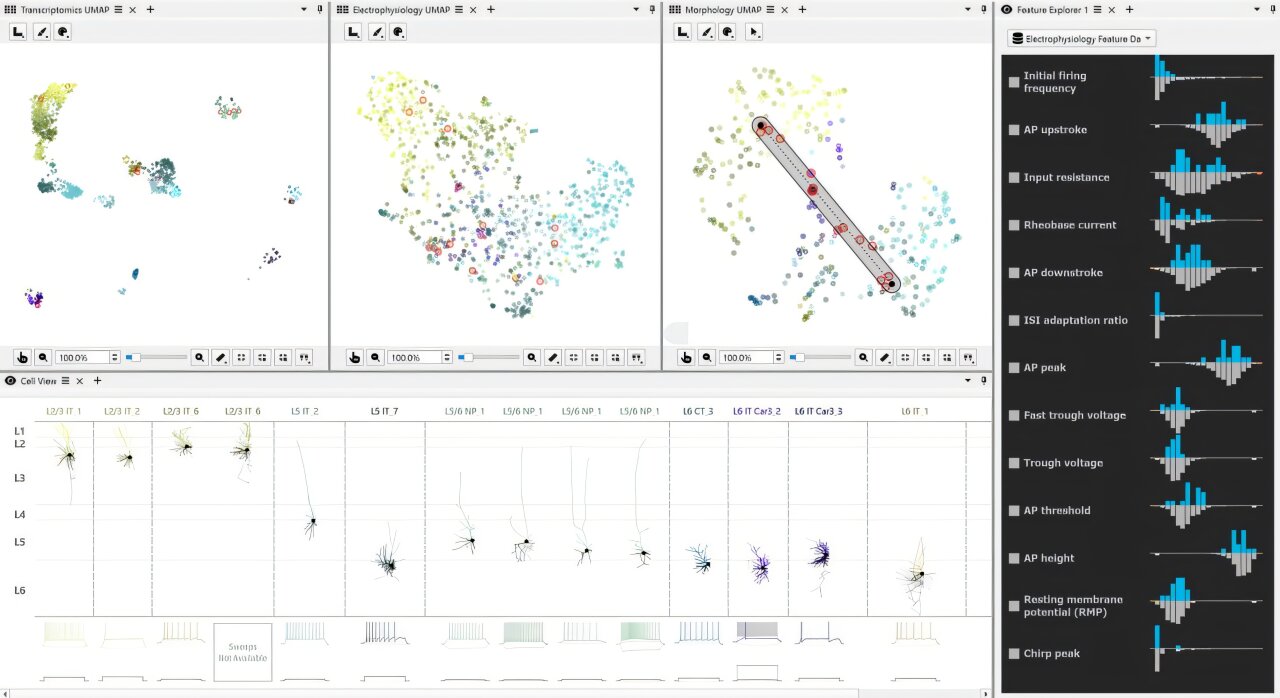
Researchers from TU Delft and Leiden University Medical Center (LUMC), working together through Medical Delta, developed the software behind the atlas. This tool allows researchers to navigate the atlas and map cells and their characteristics. "We have reduced an ocean of search possibilities to a bathtub," says Delft research leader and professor Boudewijn Lelieveldt.
The first section of the atlas has now been introduced in an issue of the journal Cell . In total, the project has resulted in 26 publications in the journals Cell , Cell Genomics , Cell Reports , Cell Reports Methods , Cell Systems , and Neuron . Dutch researchers made significant contributions to six of these papers. The project is led by the Allen Institute in Seattle, but researchers from around the world are involved. Their ultimate goal is to map all approximately 200 billion cells in the human brain. By doing so, they hope to better understand how healthy brains function and what goes wrong in disease.
Source link





