
This article has been reviewed according to Science X's editorial process and policies. Editors have highlighted the following attributes while ensuring the content's credibility:
Wireless technologies using millimeter waves are becoming increasingly important for high-speed communication, but their effects on human health need to be better understood. Heating of the skin is a well-established effect of exposure at these frequencies, yet the temperature at which people begin to experience pain remains uncertain. Previous studies using different heat sources have reported varying pain thresholds, while evidence from direct millimeter-wave exposure in highly sensitive areas, such as the fingertip, has been limited. Understanding when sensations progress from warmth to pain could help inform safer exposure guidelines.
To address this challenge, a research team led by professor Yohei Otaka from the Department of Rehabilitation Medicine at Fujita Health University School of Medicine in Japan conducted the study with his colleagues Dr. Akiko Yuasa, Dr. Shintaro Uehara and Kazuki Ushizawa, all from the same university, in collaboration with professor Akimasa Hirata from Nagoya Institute of Technology in Japan.
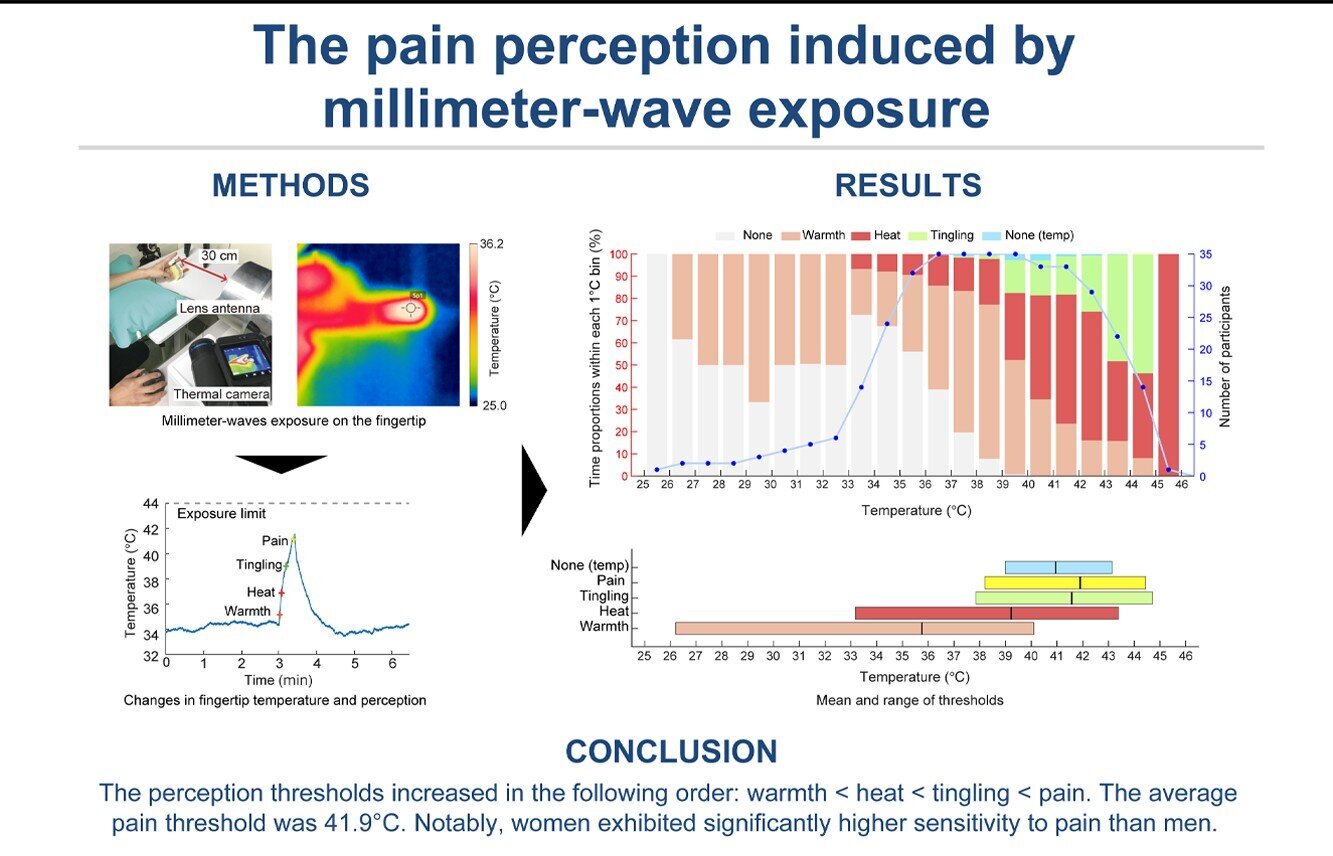
The researchers studied 35 healthy adults who were exposed to 28 GHz millimeter waves on their left middle fingertips. They monitored skin temperature continuously while participants reported when they first experienced warmth, heat, tingling or pain. The noncontact exposure was carefully controlled, and the session was stopped when pain was reported or when the skin temperature exceeded 44 °C (111°F).
The study was published in the Journal of Neurophysiology on Sept. 1, 2026.
The team found that the sensations appeared in a clear sequence as skin temperature increased: Warmth was followed by heat, then tingling and finally pain.
Source link





