
This article has been reviewed according to Science X's editorial process and policies. Editors have highlighted the following attributes while ensuring the content's credibility:
Through long-standing research supported by the National Institutes of Health, investigators at Johns Hopkins Medicine have advanced understanding of ways to better detect invasive aspergillosis (IA). Caused by mold, the infection is uncommon in the general population but can pose significant health risks for people with underlying conditions that affect or weaken their immune systems.
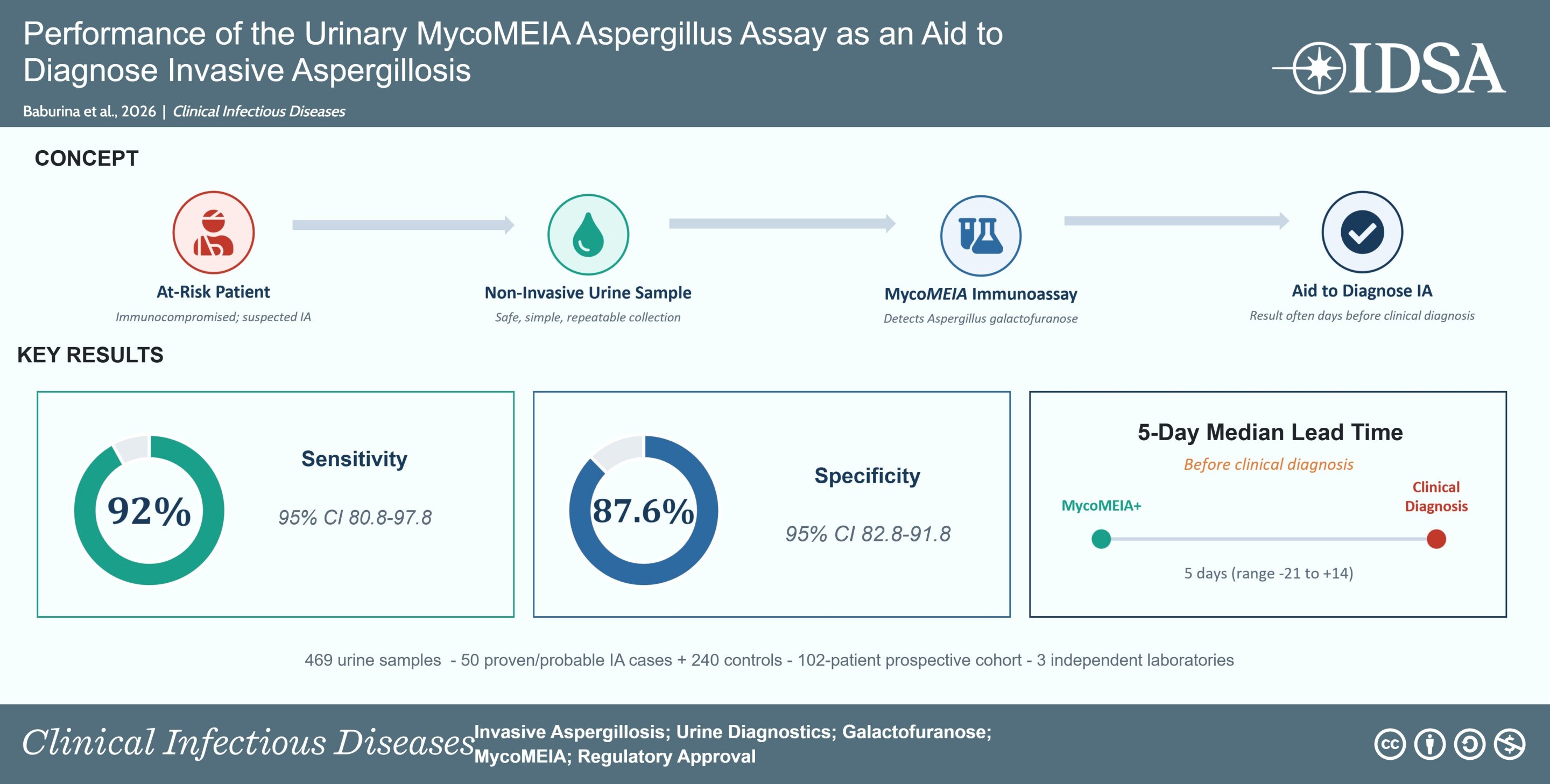
The researchers have published data in the journal Clinical Infectious Diseases that led to the FDA clearance of what is believed to be the first rapid urine-based assay to aid in diagnosing the condition.
"Having an early diagnosis is critical; it can initiate appropriate and timely treatment to help prevent disease progression and increase the odds of survival," says Sean X. Zhang, M.D., Ph.D., the senior study author, an associate professor of pathology and director of the Medical Mycology Laboratory at Johns Hopkins Medicine.
IA, which is generally rare in people with healthy immune systems, is a potentially life-threatening infection caused by Aspergillus, a common environmental mold. It most often affects people whose immune defenses have been severely weakened by certain cancers and medicines used to suppress rejection of transplanted bone marrow, among other conditions.
The prevalence of IA varies, but studies have estimated that IA develops in 5% to 15% of patients with acute myeloid leukemia or those receiving bone marrow transplants for conditions like sickle cell disease. It has also been identified in 5% to 20% of patients admitted to the intensive care unit with severe influenza or COVID-19.
Source link





