This article has been reviewed according to Science X's editorial process and policies. Editors have highlighted the following attributes while ensuring the content's credibility:
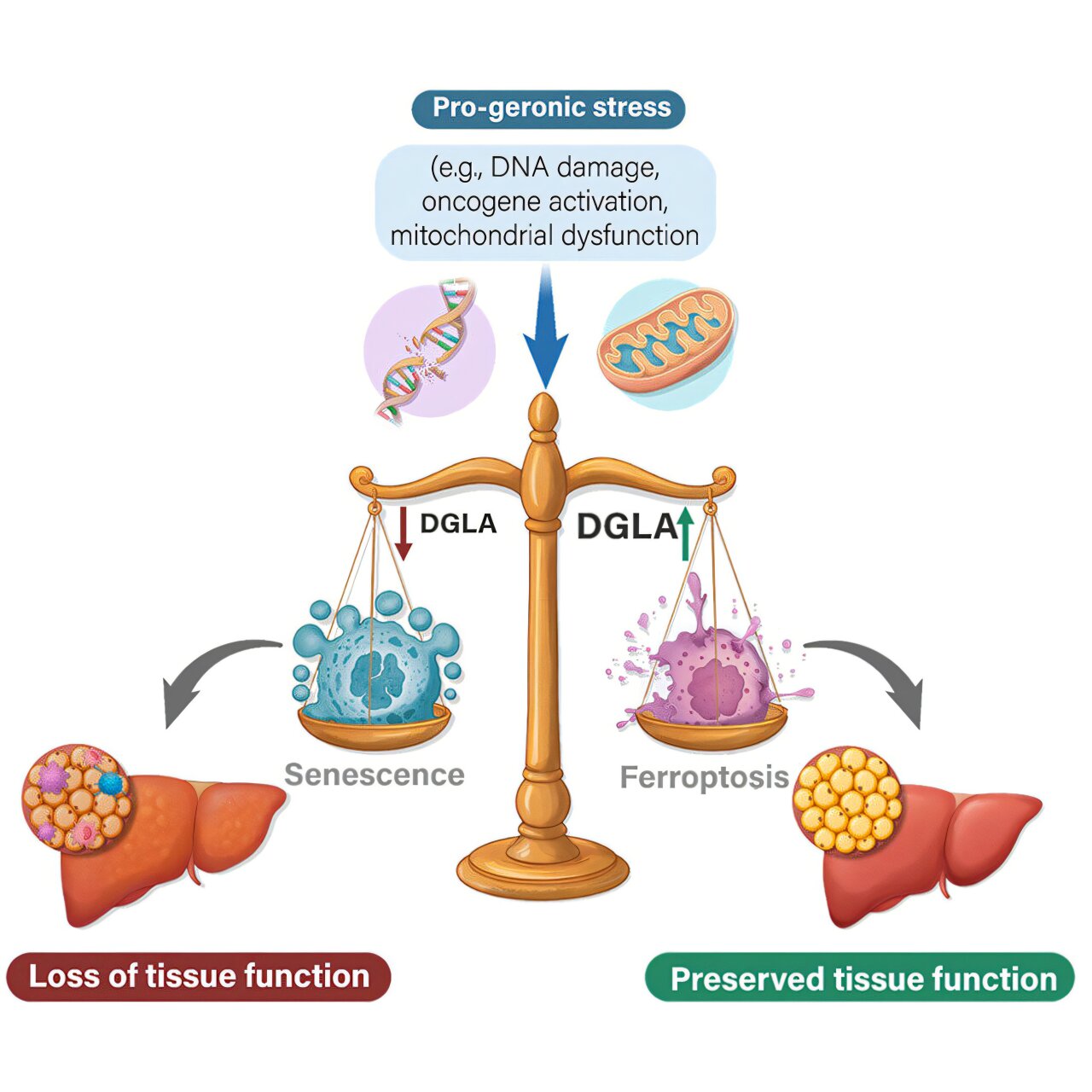
Researchers have identified a mechanism involving fatty acid metabolism that may determine whether a damaged cell enters senescence and persists in the body or is eliminated through cell death. Published in the journal Cell, the study could open new avenues for treating age-related diseases. Researchers from the University of Eastern Finland contributed to the international study.
The elimination of damaged cells is important for tissue health, and such cells are normally cleared from the body through programmed cell death. However, some cells become senescent and persist in the body but no longer proliferate and disrupt normal tissue function. Their accumulation with age contributes to tissue degeneration and the development of several age-related diseases, including cardiovascular diseases and metabolic disorders.
The study found that polyunsaturated fatty acid metabolism is altered in senescent cells, resulting in lower levels of a specific omega-6 fatty acid, dihomo-gamma-linolenic acid (DGLA). When DGLA was added to cells or the activity of the D5D enzyme, which regulates its metabolism, was inhibited, senescent cells died through a form of cell death known as ferroptosis, while healthy cells remained largely undamaged.
"The study shows that DGLA can selectively induce the death of senescent cells through ferroptosis," says university lecturer Maija Vaittinen of the University of Eastern Finland.
, the oxidation of polyunsaturated fatty acids such as DGLA in cell membranes.
Source link