This article has been reviewed according to Science X's editorial process and policies. Editors have highlighted the following attributes while ensuring the content's credibility:
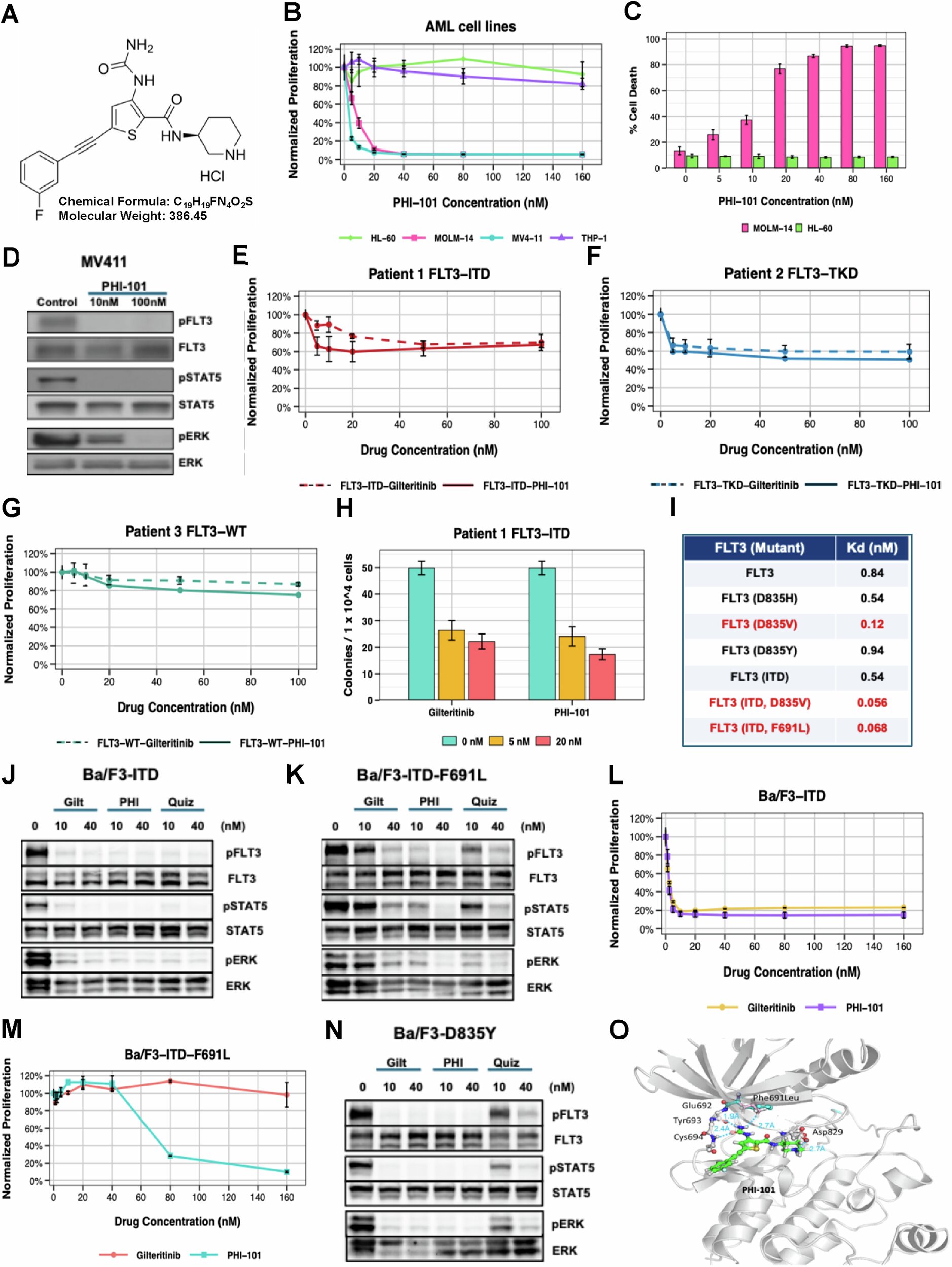
Researchers at the Johns Hopkins Sidney Kimmel Comprehensive Cancer Center and Johns Hopkins Children's Center found that an experimental drug may help overcome one of the major challenges in treating an aggressive subtype of acute myeloid leukemia (AML), known as FLT3-positive AML. In laboratory and animal studies, the drug, called PHI-101, was effective against leukemia cells carrying genetic mutations that cause resistance to existing FLT3-targeted therapies.
The findings, published Oct. 12 in Leukemia, suggest that PHI-101 could provide a new treatment option for patients whose leukemia stops responding to drugs designed to block FLT3, a protein that helps regulate the growth of blood cells.
Mutations in the FLT3 gene occur in approximately one-third of patients with AML and can cause leukemia cells to grow uncontrollably. Drugs called FLT3 inhibitors have significantly improved treatment options for patients with these mutations. However, some patients develop additional mutations that allow their cancer cells to evade the drugs, causing the leukemia to return or continue growing.
"FLT3 inhibitors have made an important difference in the treatment of AML, but resistance remains a significant limitation," says Marina Mitrou, M.D., a fellow in pediatric oncology and first author of the study. "What makes this drug particularly promising is its ability to target several mutations associated with resistance, including one that makes many existing FLT3 inhibitors ineffective."
The research focused particularly on a mutation called F691L, sometimes referred to as a "gatekeeper" mutation because it alters a critical region of the FLT3 protein where drugs bind.
Source link