
This article has been reviewed according to Science X's editorial process and policies. Editors have highlighted the following attributes while ensuring the content's credibility:
A new diagnostic platform is able to screen for and identify four different diseases—colorectal cancer, glioblastoma, pancreatic cancer and Alzheimer's disease—with a small amount of blood in an hour. The patent-pending technology was developed by a team of researchers led by Hsueh-Chia Chang at the University of Notre Dame.
The diagnostic platform was tested in a blind setting using 87 plasma samples from blood draws from patients who were either healthy or had one of the four diseases. The platform was found to be 90% to 99% accurate for detecting the presence or absence of each disease type.
"We believe that if we can screen these diseases earlier, then patients may have a better chance at surviving," said Chang, the Bayer Corporation professor of engineering in the Department of Chemical and Biomolecular Engineering at Notre Dame. The study is published in Nature Biomedical Engineering.
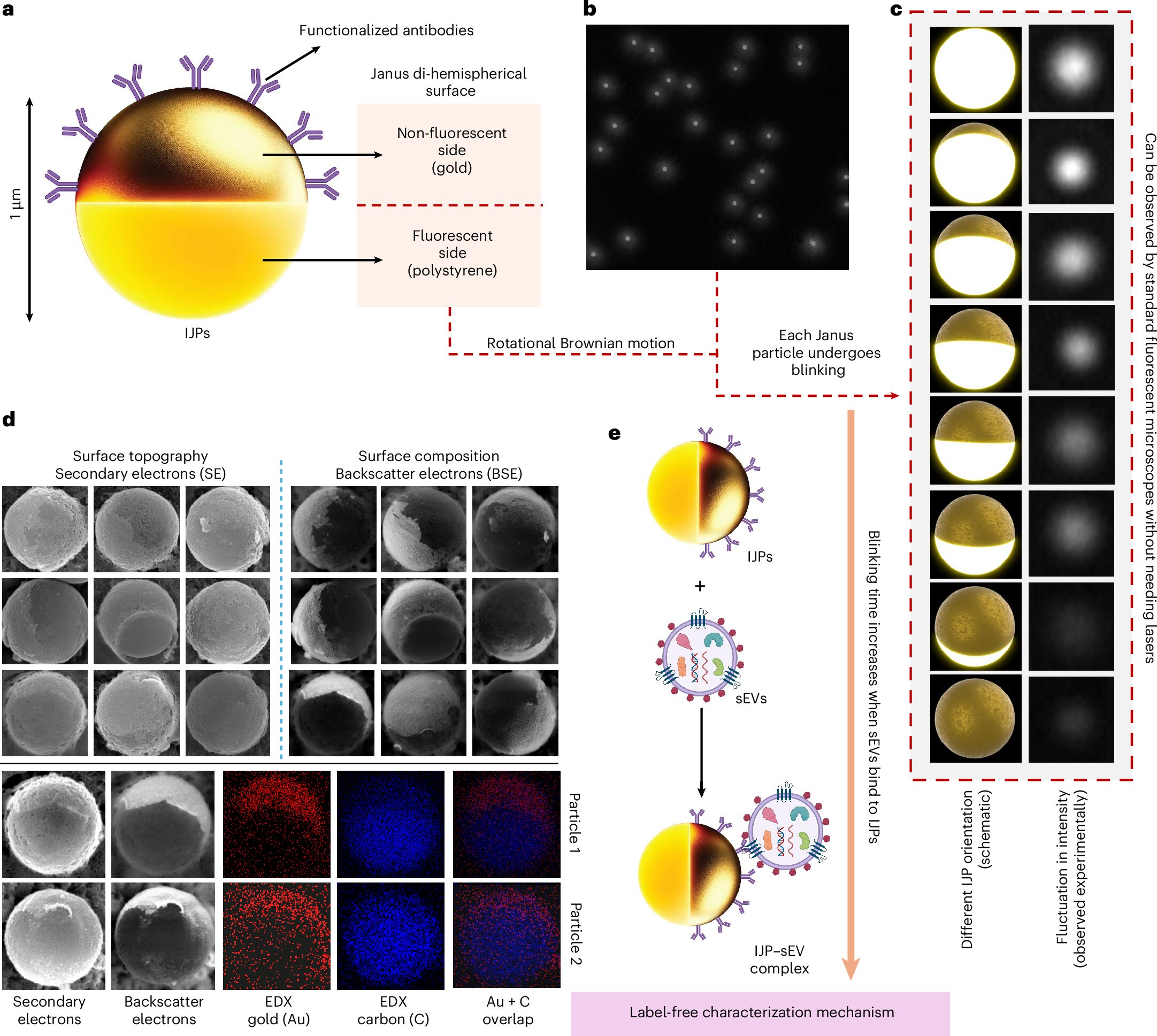
The disease detection platform works by detecting exosomes found in the blood, which carry proteins that can provide an early indication of disease. To detect these proteins, the Chang Lab created immunojanus particles, or tiny spheres that have two distinct halves. One half is affixed with antibodies and the other is fluorescent.
To run a test, 10 microliters of blood is diluted with a saline solution and mixed with immunojanus particles for 10 to 60 minutes, allowing the immunojanus particles to fully disperse throughout the blood mixture.
Source link





