This article has been reviewed according to Science X's editorial process and policies. Editors have highlighted the following attributes while ensuring the content's credibility:
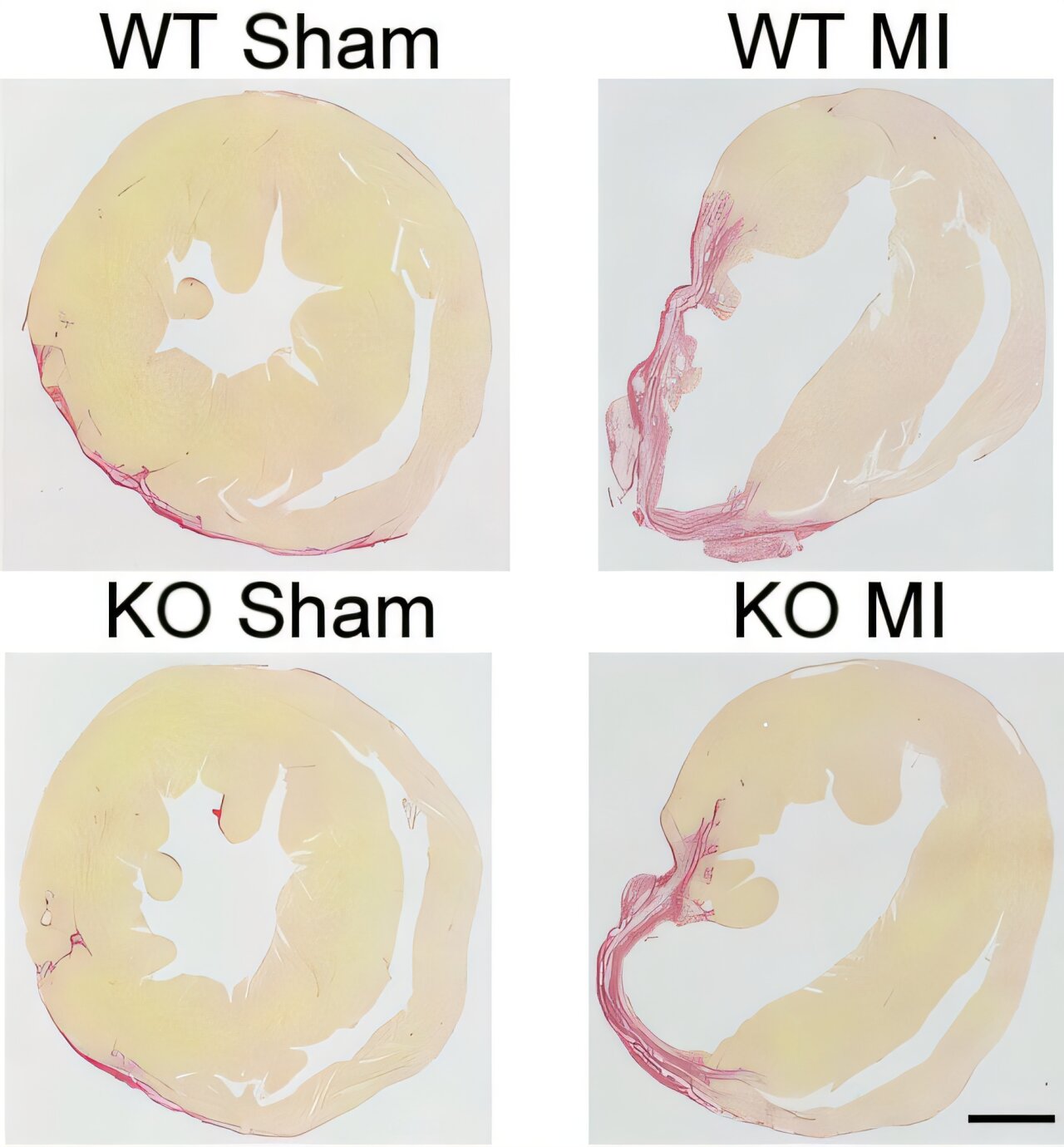
Heart failure often develops after a heart attack because excessive collagen-based scar tissue forms during repair. While collagen is necessary to reinforce scars, disease and chronic inflammation can cause overproduction, which stiffens the heart muscle and impairs its pumping ability.
This stiffening process, called fibrosis, can also affect other organs like the liver, potentially leading to cirrhosis. Fibrosis is estimated to contribute to 45% of deaths in developed countries, but there is no definitive therapy that directly suppresses it.
Researchers in Japan have found that the enzyme BCAT1 plays a major role in cardiac fibrosis. In mouse studies, blocking BCAT1 reduced fibrosis and preserved heart function, even after tissue damage had started. These findings, published in the Journal of Clinical Investigation, highlight BCAT1 as a promising therapeutic target.
After inflammation or injury, specialized cells called myofibroblasts promote fibrosis by producing large amounts of collagen to reinforce scar tissue. Since approximately 20% of collagen consists of the amino acid proline, the researchers investigated how myofibroblasts produce and supply proline to explore new therapeutic strategies.
The team at Nagoya University, led by professor Michio Nakaya of the Research Institute of Environmental Medicine, conducted the study in collaboration with colleagues from Kyushu University and Tokushima University.
The researchers compared genes activated by physical stress with those activated in mouse hearts after a heart attack and identified five overlapping candidates, including Bcat1.
Source link