This article has been reviewed according to Science X's editorial process and policies. Editors have highlighted the following attributes while ensuring the content's credibility:
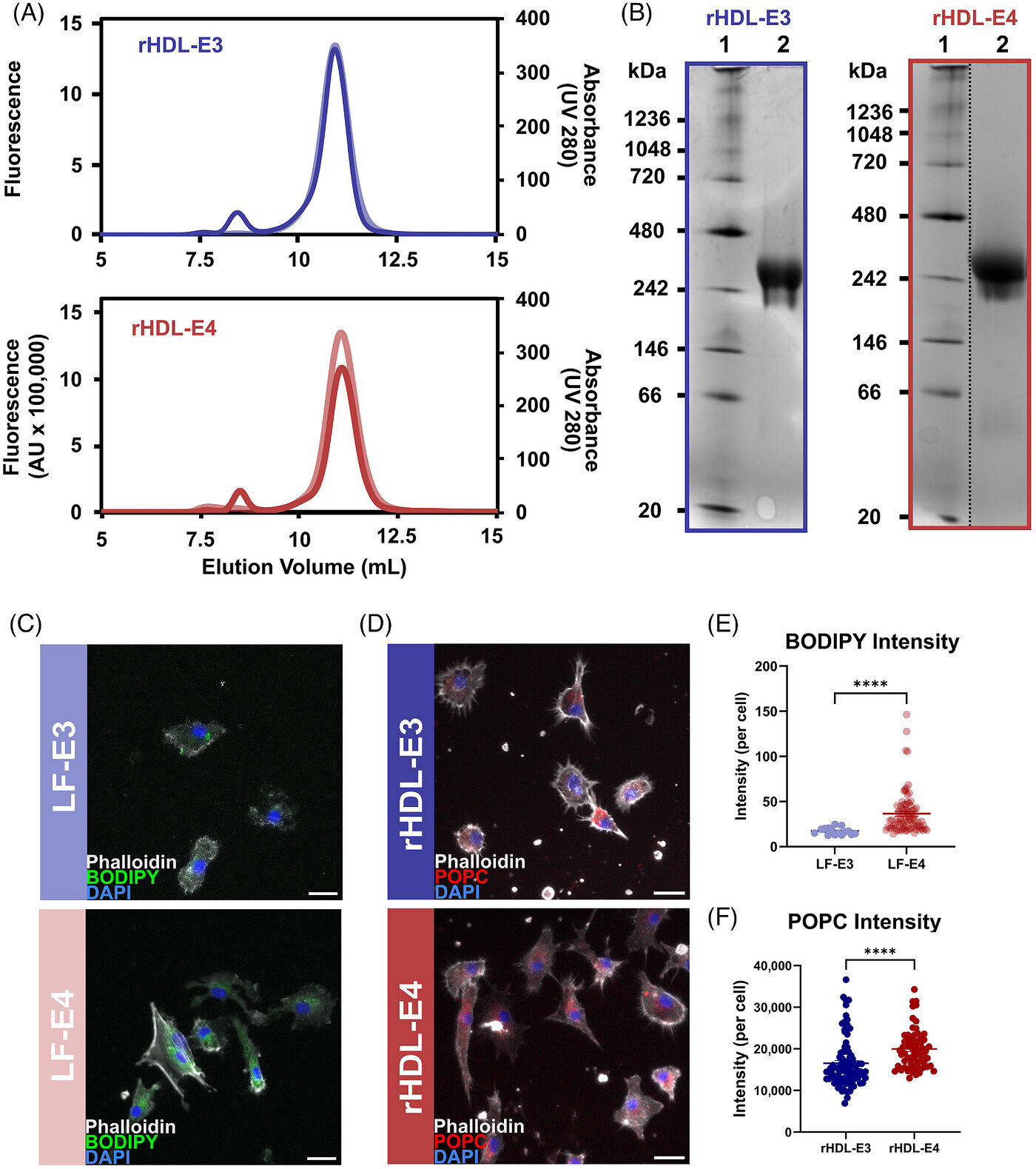
Researchers at the University of Colorado Anschutz and Pacific Northwest National Laboratory have found a new clue that may help explain why some people are more likely to develop Alzheimer's disease. It suggests that a protein linked to the disease can change how the brain's immune cells handle fat and trigger inflammation. Those changes could help explain how a well-known genetic risk factor for Alzheimer's affects the brain.
The gene is called APOE, and one version, APOE4, is the strongest genetic risk factor for Alzheimer's disease. But having APOE4 does not mean someone will develop Alzheimer's. Scientists have spent decades trying to understand why.
"Our brains are mostly made of fat. But because fat can't get into the brain from the circulation, the brain has to make its own fat. It does this by sending fat-carrying particles from one cell to another. This movement of fat around the brain keeps the cells healthy.
"ApoE acts like a belt holding these particles together. Our findings suggest that the way ApoE4 carries lipids causes cells to hang on to the fat, breaking the fat cycle and causing cells to become very inflamed," said Kimberley D. Bruce, Ph.D., senior author of the study and an associate professor in endocrinology at the CU Anschutz School of Medicine.
"Microglia are so important in the fight against Alzheimer's disease. Think of these cells like the brain's cleanup and security crew.
Source link