
This article has been reviewed according to Science X's editorial process and policies. Editors have highlighted the following attributes while ensuring the content's credibility:
When a person eats polyunsaturated fats in foods like meat, eggs and fish, the fat is converted into bioactive molecules called metabolites in the body through metabolic pathways. One such pathway involves the production of the metabolite epoxyeicosatrienoic acid (EET), which has anti-inflammatory and protective effects in the liver.
However, some EETs are converted into dihydroxyeicosatrienoic acids (DHETs) by enzymes, reducing their beneficial effects and potentially contributing to the progression of diseases like fibrosis to more severe forms, such as cirrhosis.
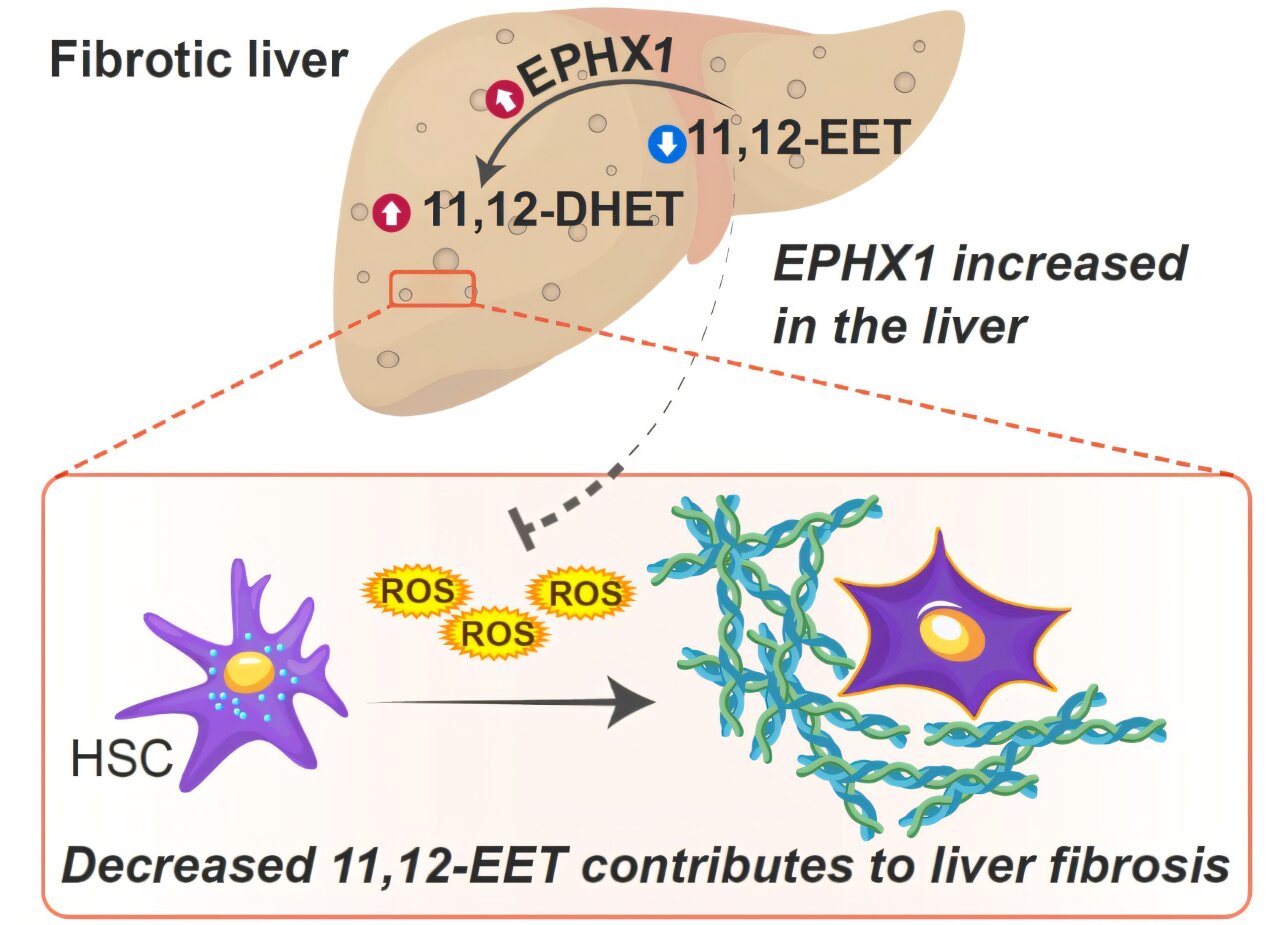
A new study led by Dr. Hiroko Ikenaga and Associate Professor Tsutomu Matsubara of the Graduate School of Medicine, Osaka Metropolitan University, found increased levels of the enzyme EPHX1 in the livers of mice and patients with advanced fibrosis. The enzyme was associated with decreased levels of a specific EET (11,12-EET) and increased levels of its corresponding DHET (11,12-DHET).
When they bred mice without EPHX1, the rodents showed increased 11,12-EET levels and less fiber generation and oxidative stress associated with the advanced forms of fibrosis.
To understand the role of EET, they treated liver cells, known as hepatic stellate cells (HSCs), with 11,12-EET. The cells showed reduced oxidative stress and suppressed transforming growth factor-β-induced HSC activation, which are important in reducing the progression of fibrosis. The findings have been published in JCI Insight.
"Both suppressing EPHX1 activity and preserving and restoring 11,12-EET activity represent promising therapeutic strategies for liver fibrosis," Ikenaga summarized.
Source link





