This article has been reviewed according to Science X's editorial process and policies. Editors have highlighted the following attributes while ensuring the content's credibility:
A defining feature of Alzheimer's disease is the abnormal, sustained accumulation of protein aggregates such as tau inside brain cells, which disrupts the cells' normal functions. As time passes, brain cells stop working and die, leading to a gradual decline in memory and thinking skills and other symptoms of this condition.
One goal of researchers is to find ways to reduce or stop the accumulation of tau and other related proteins to slow down or prevent disease progression.
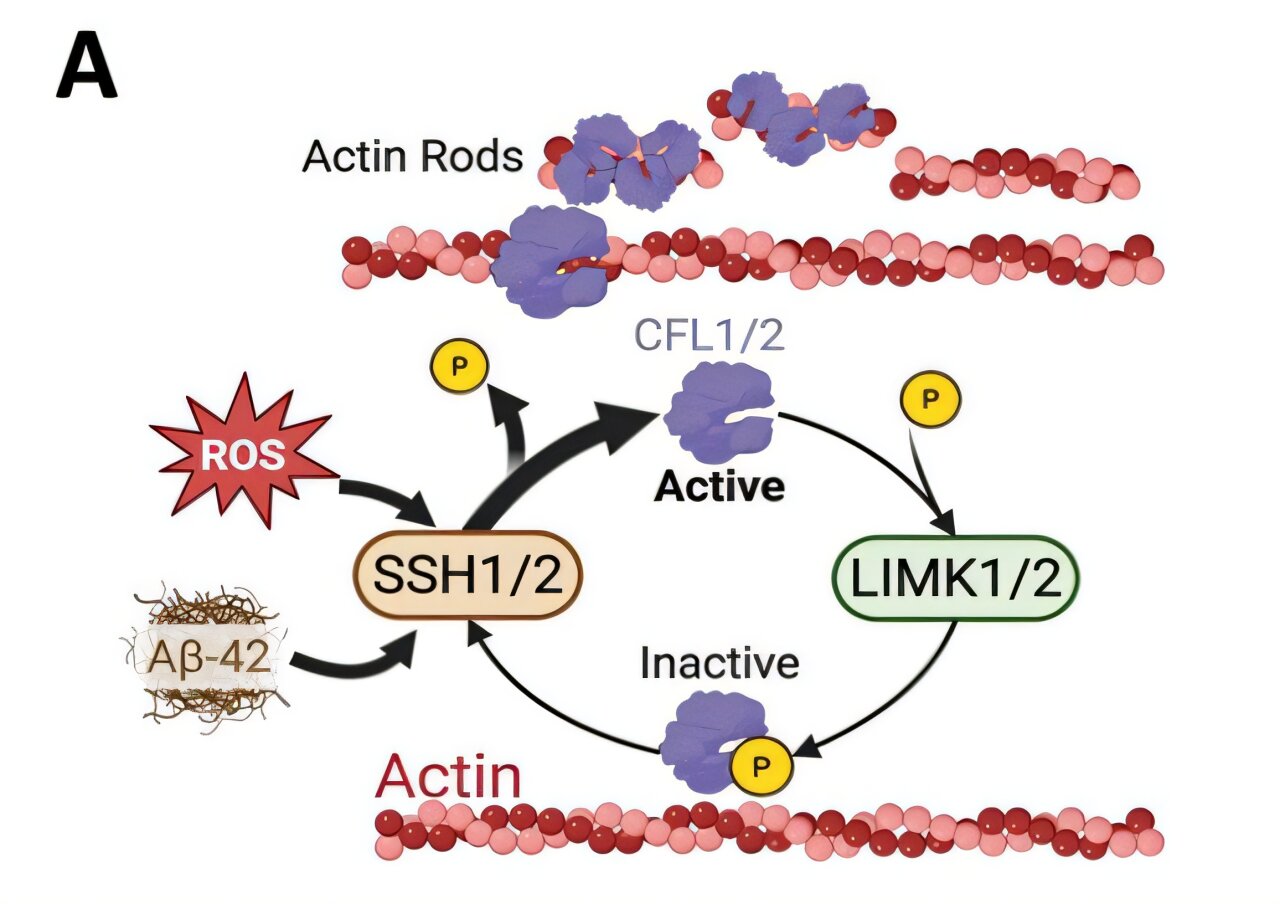
At Baylor College of Medicine and the Jan and Dan Duncan Neurological Research Institute (Duncan NRI) at Texas Children's Hospital, a team of researchers has just taken a step in that direction. They have discovered that reducing the levels of a protein called Slingshot-1 has the unanticipated effect of improving Alzheimer's features in animal models and human cells in the lab.
"We focused our study on genes that participate in the remodeling of the cytoskeleton, a vast, dynamic network of protein fibers that living cells use both as scaffolding that provides internal structural support and a highway system that transports proteins and cellular components inside the cell," said corresponding author Dr. Juan Botas, professor of molecular and human genetics and of molecular and cellular biology at Baylor.
Botas also is the director of the High Throughput Behavioral Screening Core at the Duncan NRI.
Source link