
This article has been reviewed according to Science X's editorial process and policies. Editors have highlighted the following attributes while ensuring the content's credibility:
Per- and polyfluoroalkyl substances (PFAS), often known as "forever chemicals," are widely used in industrial applications, including semiconductor manufacturing. As regulations increasingly restrict legacy PFAS such as PFOS and PFOA, industries have shifted toward alternative compounds, including short-chain PFAS. However, whether these substitutes are safer for human health remains an important question.
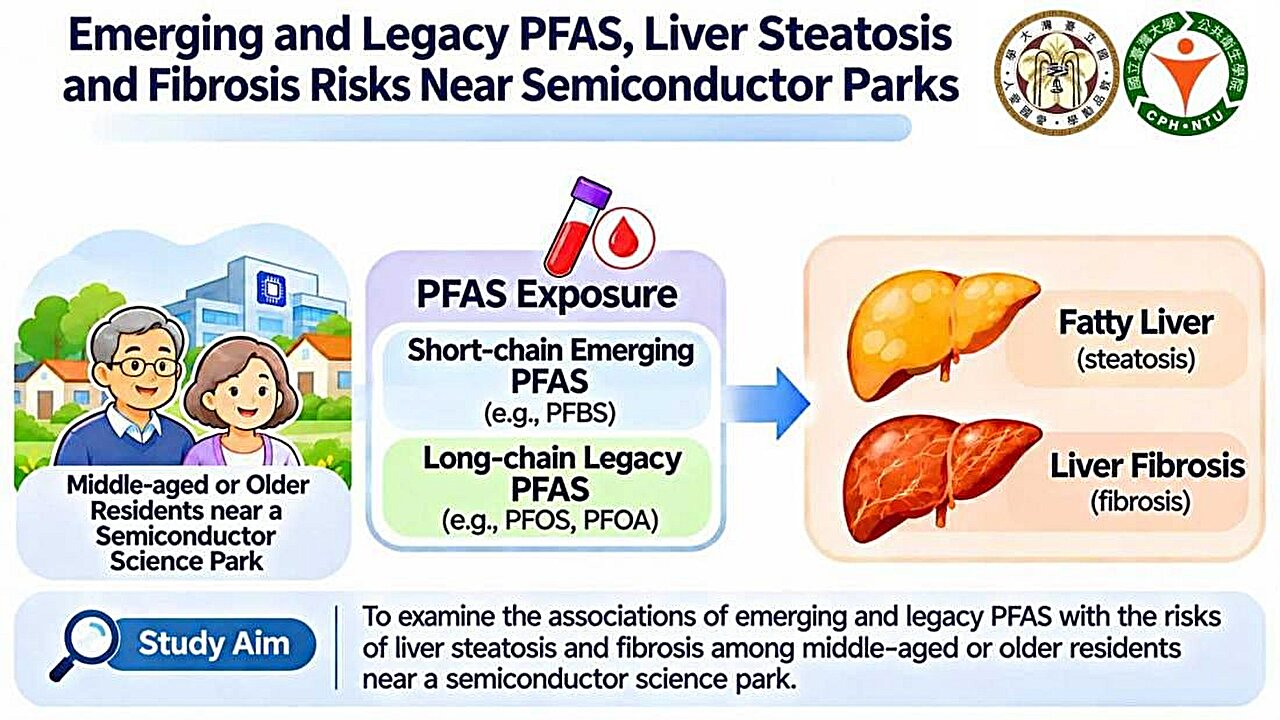
A study conducted in Taiwan has identified a potential link between exposure to perfluorobutanesulfonic acid (PFBS), a short-chain PFAS used in industrial applications, and an increased risk of liver fibrosis among adults living near a major semiconductor science park. The study is published in Journal of Hazardous Materials.
The research team evaluated 338 residents, with an average age of 64 years, recruited between 2016 and 2017. Blood samples were analyzed for seven PFAS compounds using ultra-performance liquid chromatography-tandem mass spectrometry. The researchers assessed metabolic dysfunction-associated steatotic liver disease (MASLD) and liver fibrosis using established noninvasive clinical indices.
The findings revealed that each doubling of serum PFBS concentration was associated with a 51% increase in the odds of liver fibrosis, as estimated by the Fibrosis-4 (FIB-4) index. Importantly, exposure to PFAS mixtures was also associated with an increased risk of liver fibrosis, with stronger associations observed among men.
Interestingly, the researchers did not find significant associations between PFAS exposure and MASLD, suggesting that the potential effects of PFAS on the liver may extend beyond conventional fatty liver disease.
Source link





