This article has been reviewed according to Science X's editorial process and policies. Editors have highlighted the following attributes while ensuring the content's credibility:
In cancer research, the protein kinases CDK12 and CDK13 are attracting attention as promising targets for therapy. These enzymes regulate gene transcription by phosphorylating—transferring a phosphate group to—the protein complex RNA polymerase II, which transcribes DNA. Inhibiting CDK12 and CDK13 disrupts the transcription of particularly long genes, which leads to defects in DNA damage repair and thus the suppression of cancer cell proliferation.
Despite this therapeutic potential, development of oral inhibitors targeting these protein kinases has remained limited. This motivated a team of researchers at Kyoto University and Chordia Therapeutics Inc. to develop one and test its effectiveness and the mechanisms behind it. The research is published in the journal EMBO Molecular Medicine.
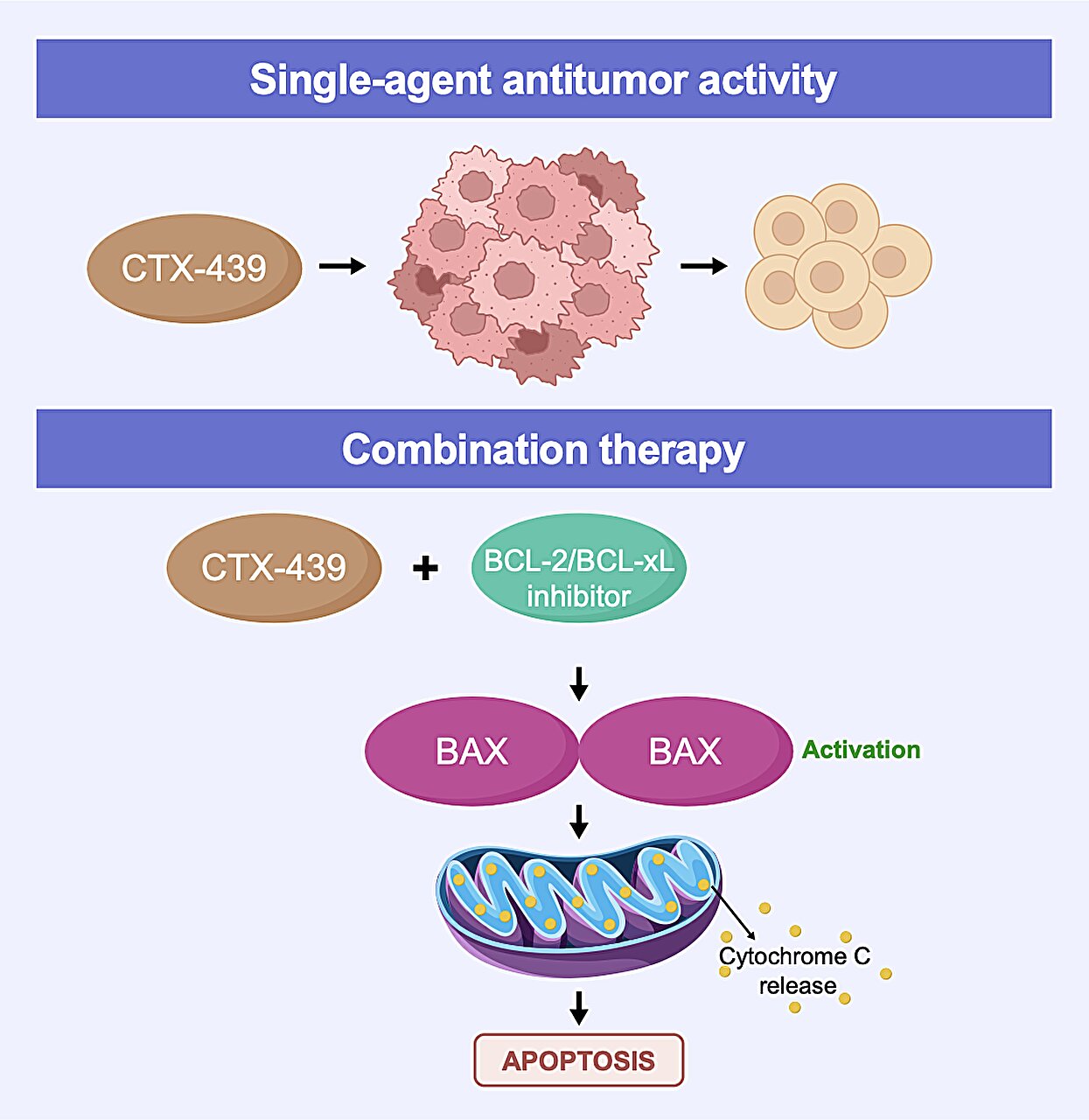
The researchers first developed a CDK12/CDK13 inhibitor called CTX-439, which they then tested against a range of cancer cell lines and in mouse models of breast cancer.
The team then conducted genetic screening with CRISPR, through which they identified two significant factors associated with resistance to CTX-439: the proteins BCL-2 and BCL-xL. These are anti-apoptotic—suppressing apoptosis, or cell death—thus enabling the proliferation of cancer cells.
The researchers observed a much stranger effect on the anti-apoptotic protein MCL1. Treatment with CTX-439 led to splicing abnormalities and transcriptional read-through, in which transcription continues beyond its normal termination site. This read-through caused transcription of MCL1 to increase within the nucleus but decrease in the cytoplasm, suggesting a deficiency in mature mRNA reaching the cytoplasm.
Source link