
This article has been reviewed according to Science X's editorial process and policies. Editors have highlighted the following attributes while ensuring the content's credibility:
Bloodstream infections are a persistent threat to hospitalized patients, and those caused by fungi are particularly dangerous. Candida species are responsible for most invasive fungal infections worldwide and rank among the leading causes of hospital-acquired bloodstream infections overall. Because different fungal species can respond differently to antifungal drugs, doctors strive to correctly identify the fungus responsible for a given infection before initiating treatment.
However, conventional diagnosis relies on blood cultures, in which a patient's blood is incubated until microorganisms grow to detectable levels. This process, together with subsequent identification tests, can take several days to complete. During this waiting period, clinicians often treat patients with broad-spectrum antifungal drugs or wait longer than ideal to start more targeted therapies.
To address this challenge, a research team led by professor Hiroki Takahashi from the Medical Mycology Research Center at Chiba University in Japan developed a workflow to more rapidly identify fungal pathogens.
Their study, published in the journal Microbiology Spectrum was co-authored by Dr. Isato Yoshioka, Dr. Momotaka Uchida, professor Akira Watanabe and Dr. Takashi Yaguchi, all from Chiba University.
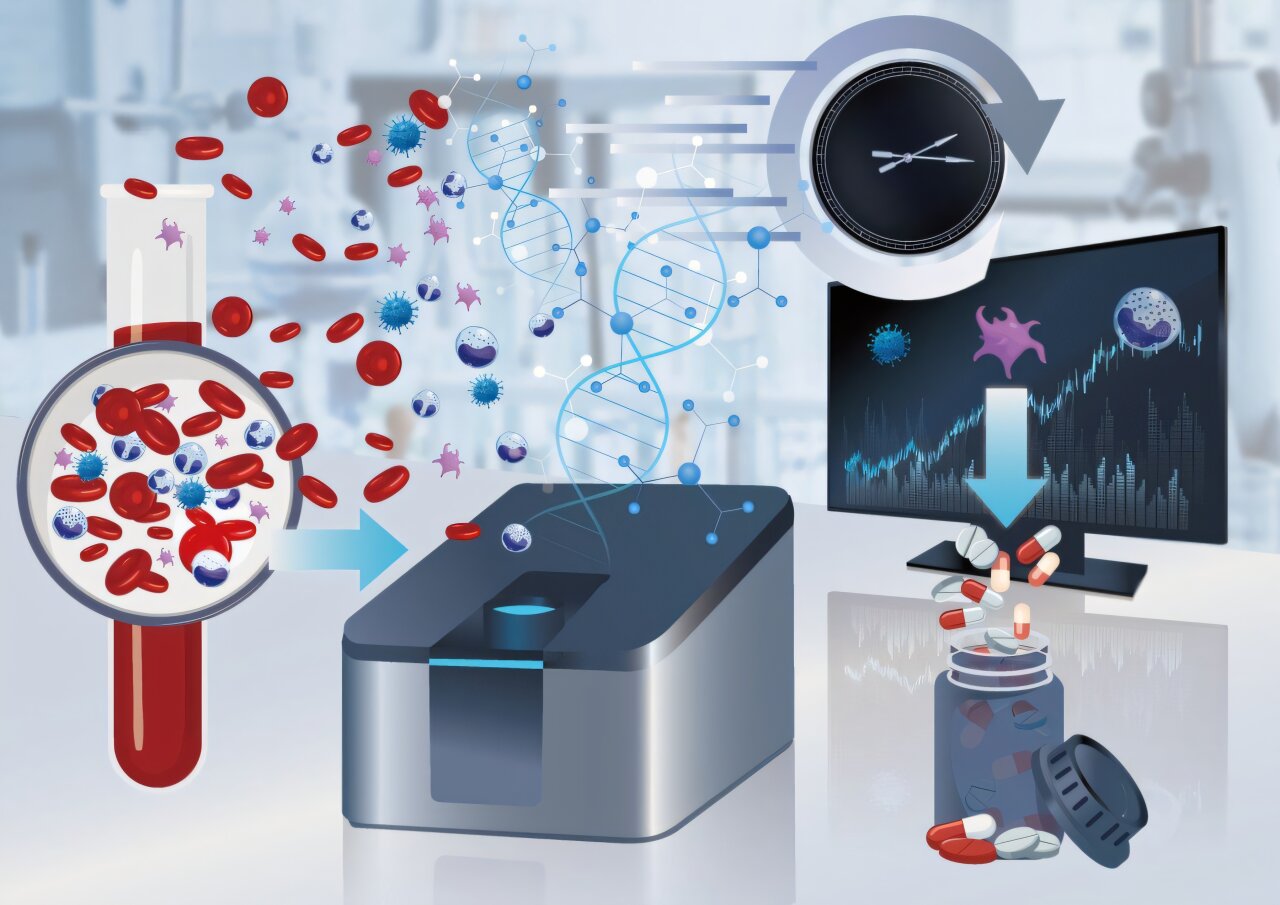
The proposed workflow comprises three main steps, performed on a blood culture sample collected while it is still incubating and before the automated system flags it as positive.
First, the researchers selectively break down human cells and then degrade human DNA using an enzyme called benzonase, without affecting fungal and bacterial DNA.
Source link





