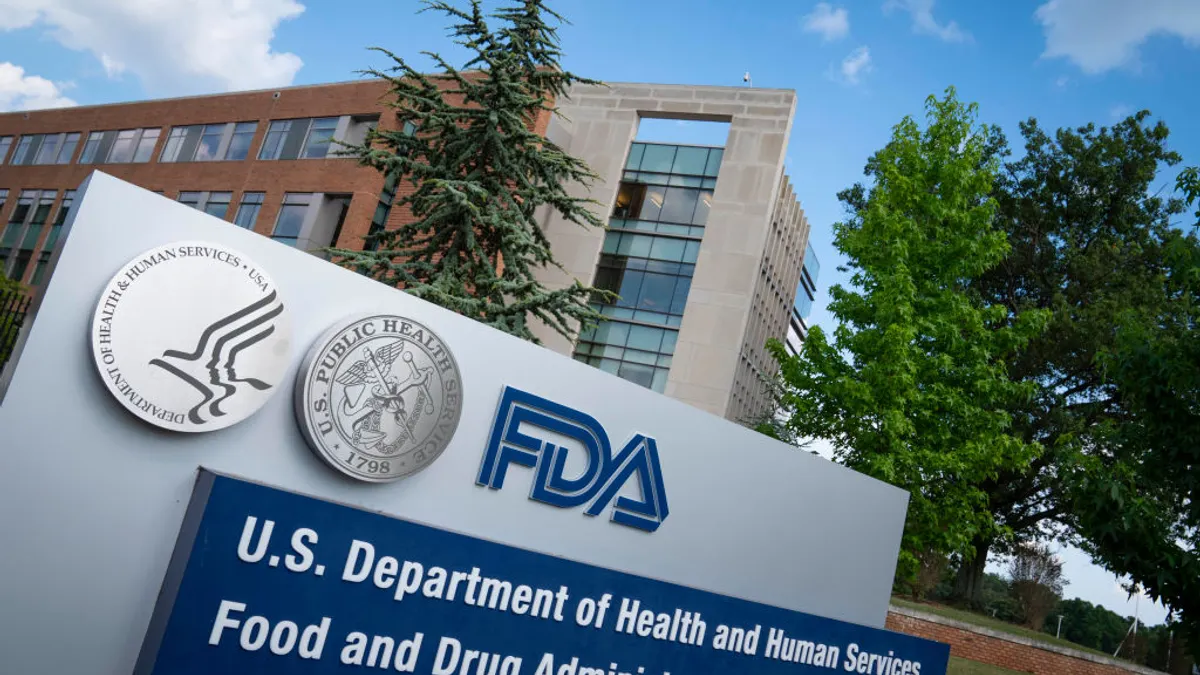
Provider groups flocked to comment on a proposal from the Food and Drug Administration on regulating generative AI-backed medical devices.
National healthcare groups representing hospitals, health systems, physicians and telehealth companies are telling the government they don't want to be held responsible for the safety and performance of medical devices that use generative AI, arguing that developers should shoulder that burden.
In comments submitted to the Food and Drug Administration, the American Hospital Association, American Medical Association and American Telemedicine Association said that monitoring devices that use generative AI — including tools like chatbots and those that synthesize medical information — would place too heavy a load on providers, particularly small and rural practices.
Rather, developers should carry the responsibility of monitoring AI devices used in healthcare, and the FDA should create ways for providers to report problems with devices.
“Manufacturers should remain responsible for the safety and performance of the devices they sell,” according to comments submitted by ATA Action, the lobbying arm of the American Telemedicine Association.
As AI tools advance at warp speed, the healthcare industry is grappling with who’s responsible for the tools’ mistakes. For providers, taking on responsibility could increase their exposure to malpractice lawsuits, while tech companies could face their own negligence claims. Neither party is eager to take on responsibility for the tools.
One problem, doctors say, is a lack of transparency into the AI models themselves. Hospitals told the FDA that, while health systems usually have established governance to review AI-backed devices, a lack of understanding into how the models actually work would make it hard for providers to identify flaws in the models.
Source link