This article has been reviewed according to Science X's editorial process and policies. Editors have highlighted the following attributes while ensuring the content's credibility:
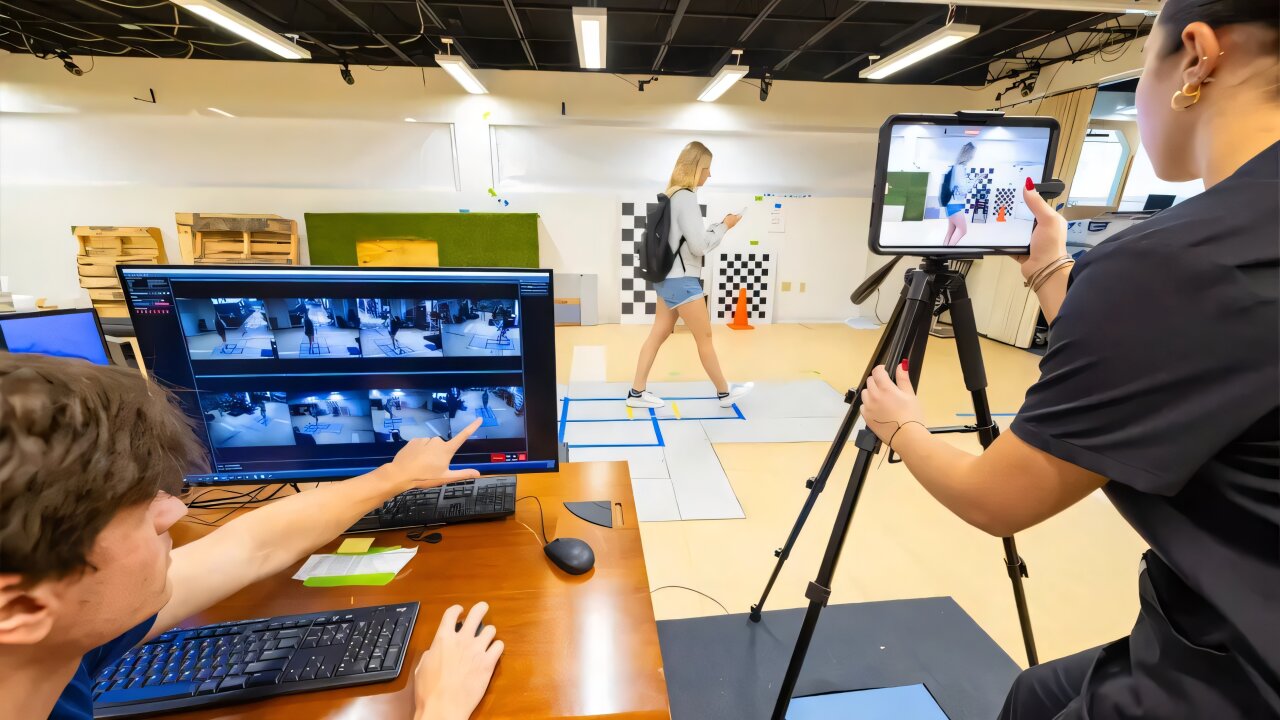
Experts in kinesiology and sport sciences and psychology from the University of Miami are collaborating on research to find out whether the way people walk could give clues about their mental health. The two researchers are exploring this question through a project called MindStep, where participants answer survey questions about their mental health and then complete different intellectual tasks while walking, as specialized cameras record and measure their walking patterns.
"The way we walk may tell us more about our mental health than we realize," said Moataz Eltoukhy, a professor of kinesiology and sport sciences in the School of Education and Human Development who has expertise in gait analysis and motion capture. "Changes in mood, stress or mental well-being can sometimes be reflected in subtle changes in the way a person moves."
Their work was spurred by the mental health crisis permeating the United States and the world, with a burden especially prevalent among teens between the ages of 15 and 19, according to the Institute for Health Metrics and Evaluation. That is why the researchers chose to focus on college students, and they are now analyzing data to see whether a student's own thoughts can affect the way they walk.
Last year, Eltoukhy and Jennifer Britton, an associate professor of psychology in the College of Arts and Sciences, began working together to investigate whether two of the most common mental health conditions—depression and anxiety—can influence the way college students walk and whether increased stress can alter the way they walk during certain times of the year.
Source link