
This article has been reviewed according to Science X's editorial process and policies. Editors have highlighted the following attributes while ensuring the content's credibility:
For more than two decades, azacitidine has been a major treatment for blood cancers such as high-risk myelodysplastic syndromes (MDS) and acute myeloid leukemia (AML). The drug was thought to work through DNA, by stripping off the chemical tags that keep genes silenced and allowing those genes to switch back on.
Understanding how azacitidine works matters because the drug helps only a third to half of patients, and doctors have no reliable way to predict who will benefit.
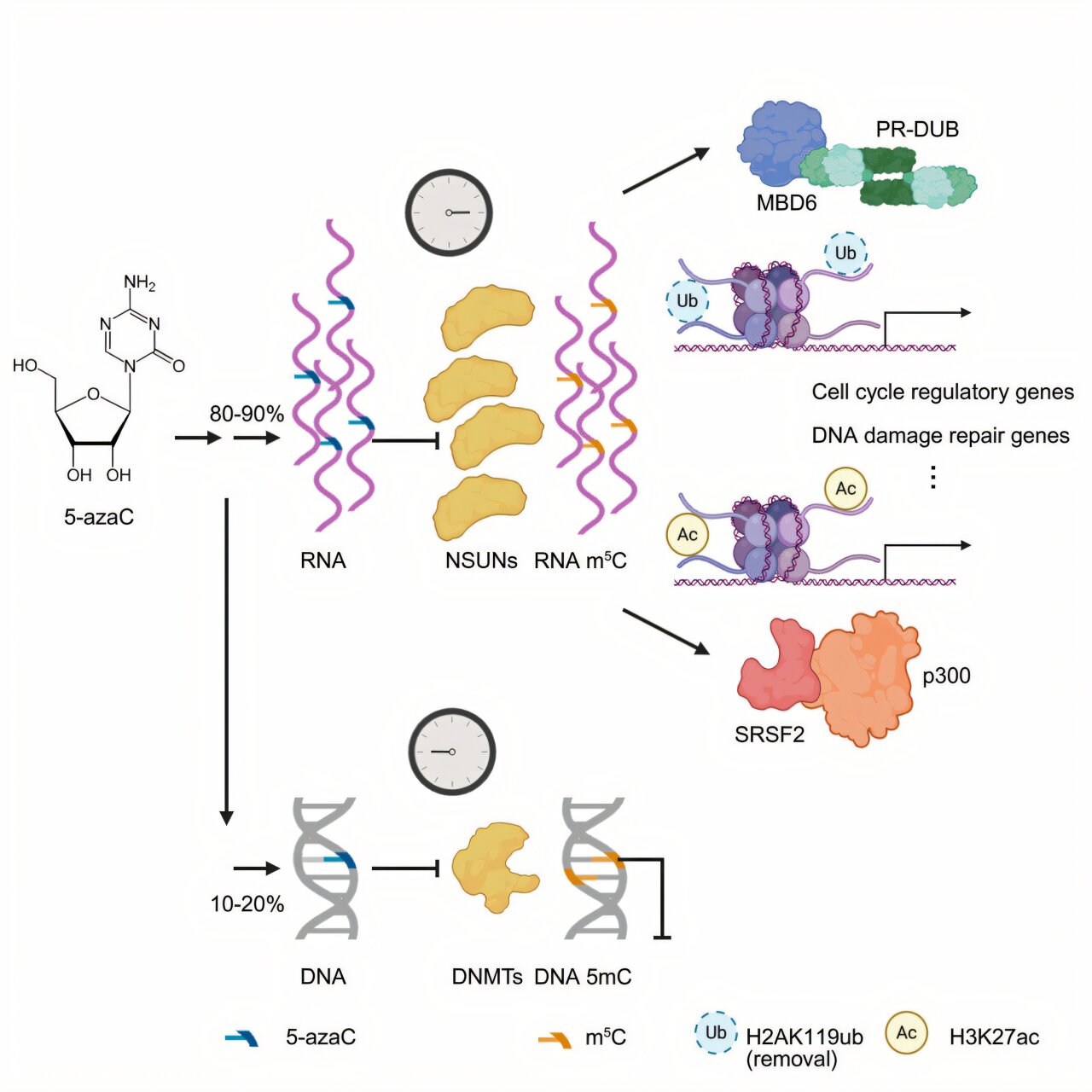
In a recent study published in Molecular Cell, researchers at the University of Chicago and UT Health San Antonio report that during the first day of treatment, when the drug kills the most cancer cells, almost none of it happens in DNA, but instead mostly in RNA. There, it strips chemical tags from RNA and shuts down genes that cancer cells need to divide and repair their DNA. The research findings point to NSUN2, the enzyme that installs those tags, as a more precise drug target.
Scientists have long classified azacitidine as a DNA hypomethylating agent because a fraction of the drug ends up in DNA, but that DNA-centric model left major clinical puzzles unsolved. Changes in gene activity after treatment often did not match changes in DNA methylation , a process that adds or removes chemical tags from DNA molecules and changes their activity. Some patients benefited from the drug, even without measurable DNA demethylation.
Source link





