This article has been reviewed according to Science X's editorial process and policies. Editors have highlighted the following attributes while ensuring the content's credibility:
In a study focused on aggressive breast and pancreatic cancers, scientists have discovered how tumors surrounded by a protective "scaffold" of dense, scar-like tissue manage to thrive—despite the scaffold severely restricting the blood supply and nutrient delivery essential for growth.
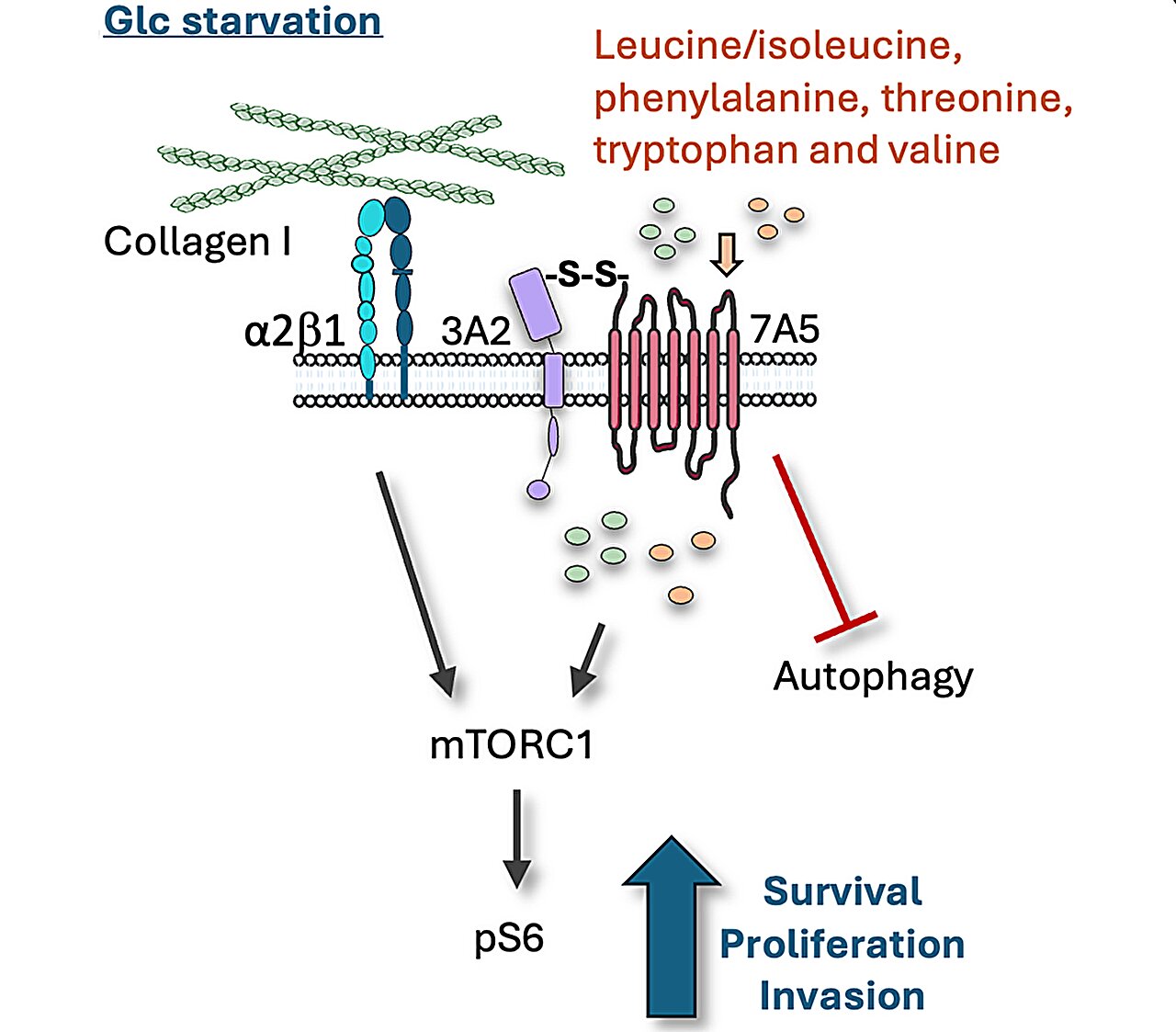
Researchers from the Sheffield Center for Cancer Research discovered that the key lies in a protein abundant throughout the human body: type I collagen. The study, published in PLOS Biology, revealed that type I collagen, a major building block of the scaffolding around tumors, helps cancer cells adapt to these challenging, nutrient-poor conditions.
In breast and pancreatic tumors, up to 90% of the mass consists of this scaffolding, known as the extracellular matrix. Typically, if you starve cancer cells of glucose—the primary source of energy for cells in the body—they die. But when this scaffold is present, the cells adapt by finding another fuel source.
When glucose levels drop, collagen triggers signals that allow cancer cells to switch fuel sources and absorb essential amino acids: the building blocks needed for their growth and survival. This process relies on a transporter protein called LAT1, which acts like an internal delivery system to pull amino acids into the cancer cells.
Laboratory tests on cellular models showed that blocking LAT1 transporters and interrupting the cells' interaction with collagen starves the cancer cells of vital nutrients, offering a promising target for future therapies.
Source link