
This article has been reviewed according to Science X's editorial process and policies. Editors have highlighted the following attributes while ensuring the content's credibility:
For many couples who endure repeated miscarriages, the search for a cause comes up empty: The embryos or fetuses have the normal number and assortment of chromosomes, and any routine ultrasounds prior to loss reveal no structural abnormalities. The lack of answers can be devastating for couples trying to build their families.
Now, Stanford Medicine researchers and their collaborators have identified possible genetic explanations in 30 of 118 such families. Previous studies of recurrent, chromosomally normal miscarriages had together analyzed only about 60 samples of miscarried pregnancies, often from just four to eight families at a time. The new study is published in the journal Genome Medicine.
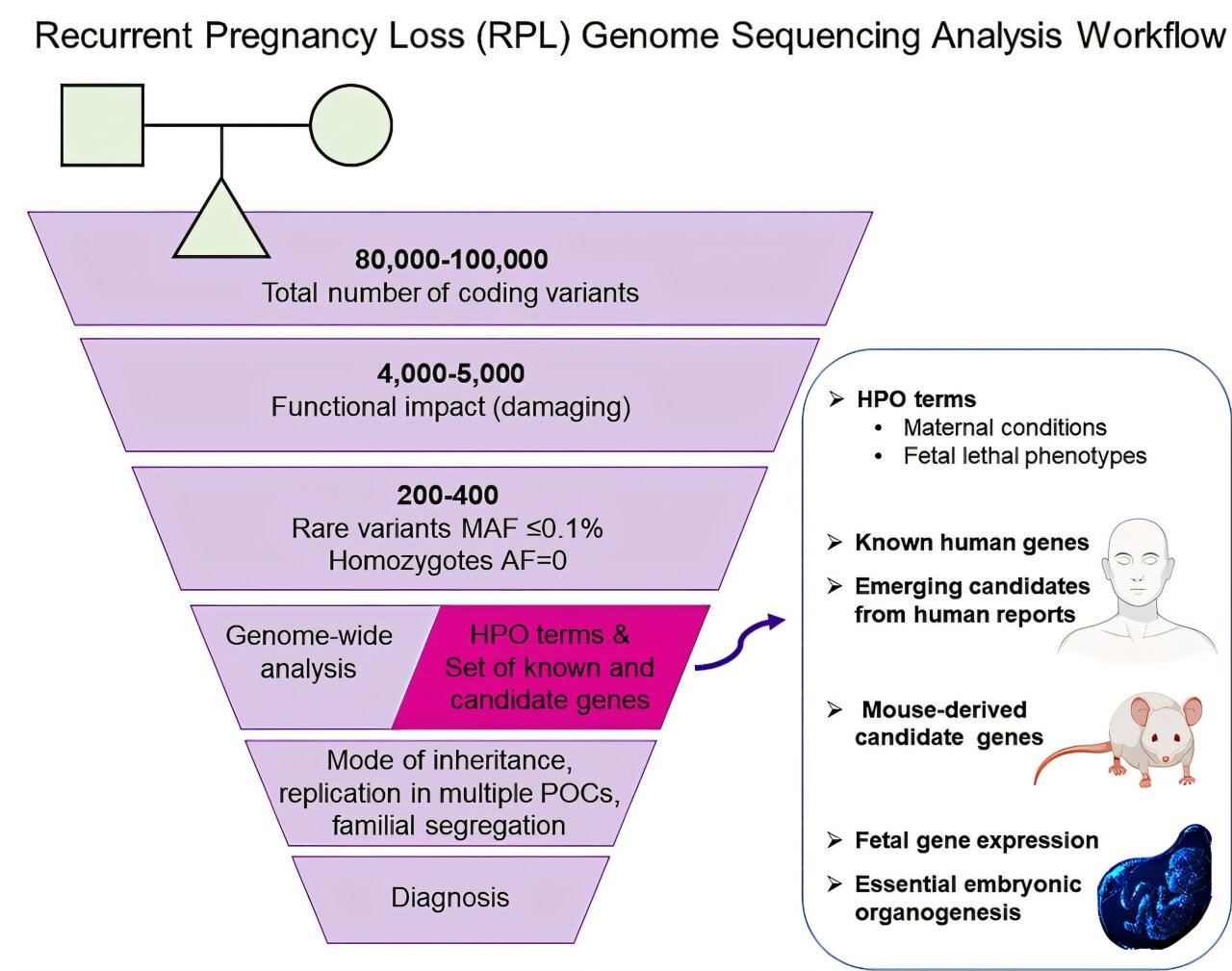
The team sequenced the genomes of the parents and the miscarried pregnancies in each family; earlier studies often sequenced only the miscarried pregnancies, making it hard to tell inherited genetic changes from those that arose in the embryo, or to distinguish harmful changes from harmless ones.
In 18 families (15.3%), the researchers found variations, or changes, in genes involved in early human development that were likely to affect the gene's function (known as pathogenic, or likely pathogenic, variants). In 12 others (10.2%), they found variants of uncertain significance, meaning the evidence, although suggestive, doesn't establish a cause of miscarriage.
Most findings were inherited: In 24 of the 30 families, at least one parent carried the variant, usually while experiencing no symptoms themselves.
Source link





