
This article has been reviewed according to Science X's editorial process and policies. Editors have highlighted the following attributes while ensuring the content's credibility:
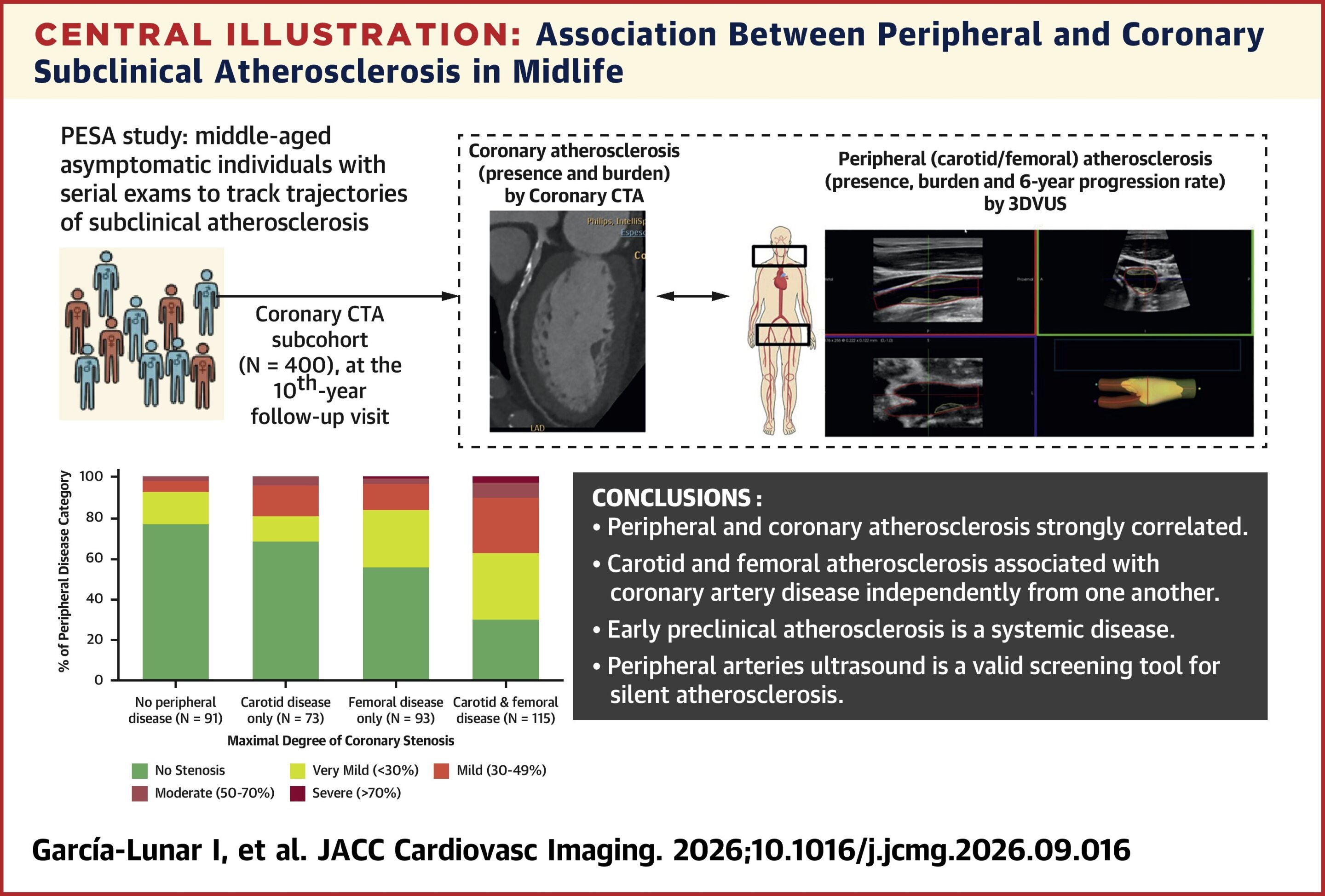
Atherosclerosis does not respect anatomical territories. Once cholesterol plaques appear in the arteries, they tend to spread throughout different regions of the arterial system. A new analysis from the PESA (Progression of Early Subclinical Atherosclerosis) study, led by researchers at the Centro Nacional de Investigaciones Cardiovasculares Carlos III (CNIC) under the direction of principal investigator Dr. Valentín Fuster, shows that the presence and extent of plaques in the neck (carotid) and leg (femoral) arteries are closely associated with the presence, severity and burden of atherosclerosis in the coronary arteries.
Subclinical atherosclerosis, the silent accumulation of cholesterol plaques in the arteries before symptoms appear, is a systemic disease that can affect multiple arterial territories throughout the body. The study, now published in JACC: Cardiovascular Imaging, shows that the presence and extent of atherosclerotic plaque in the carotid and femoral arteries, assessed by 3D vascular ultrasound, are robustly and independently associated with the presence, severity and burden of coronary atherosclerosis, quantified by advanced contrast-enhanced coronary computed tomography angiography.
Historically, atherosclerosis has been viewed through a territory-based lens: plaque in the coronary arteries as the principal determinant of myocardial infarction risk, plaque in the carotid arteries as a marker of stroke risk, and so on. The results of this study challenge that paradigm and propose an alternative perspective: atherosclerosis, regardless of where it is detected, represents a systemic manifestation of an arterial wall that is more vulnerable to cardiovascular risk factors.
Source link





