This article has been reviewed according to Science X's editorial process and policies. Editors have highlighted the following attributes while ensuring the content's credibility:
Researchers at Memorial Sloan Kettering Cancer Center (MSK) and their colleagues have discovered that a type of rogue DNA found in aggressive cancers has a hidden structural weakness—and that blocking a single repair protein can cause it to fall apart, suggesting a new therapeutic opportunity.
This rogue DNA is called extrachromosomal DNA, or ecDNA, and it is found in roughly 1 in 6 human cancers. ecDNA consists of circular pieces of DNA that sit outside normal chromosomes and drive the amplification of cancer-causing genes.
The presence of ecDNA has been linked to faster tumor growth, resistance to treatment and poorer survival—but scientists haven't been clear on how cancer cells keep this unstable DNA intact.
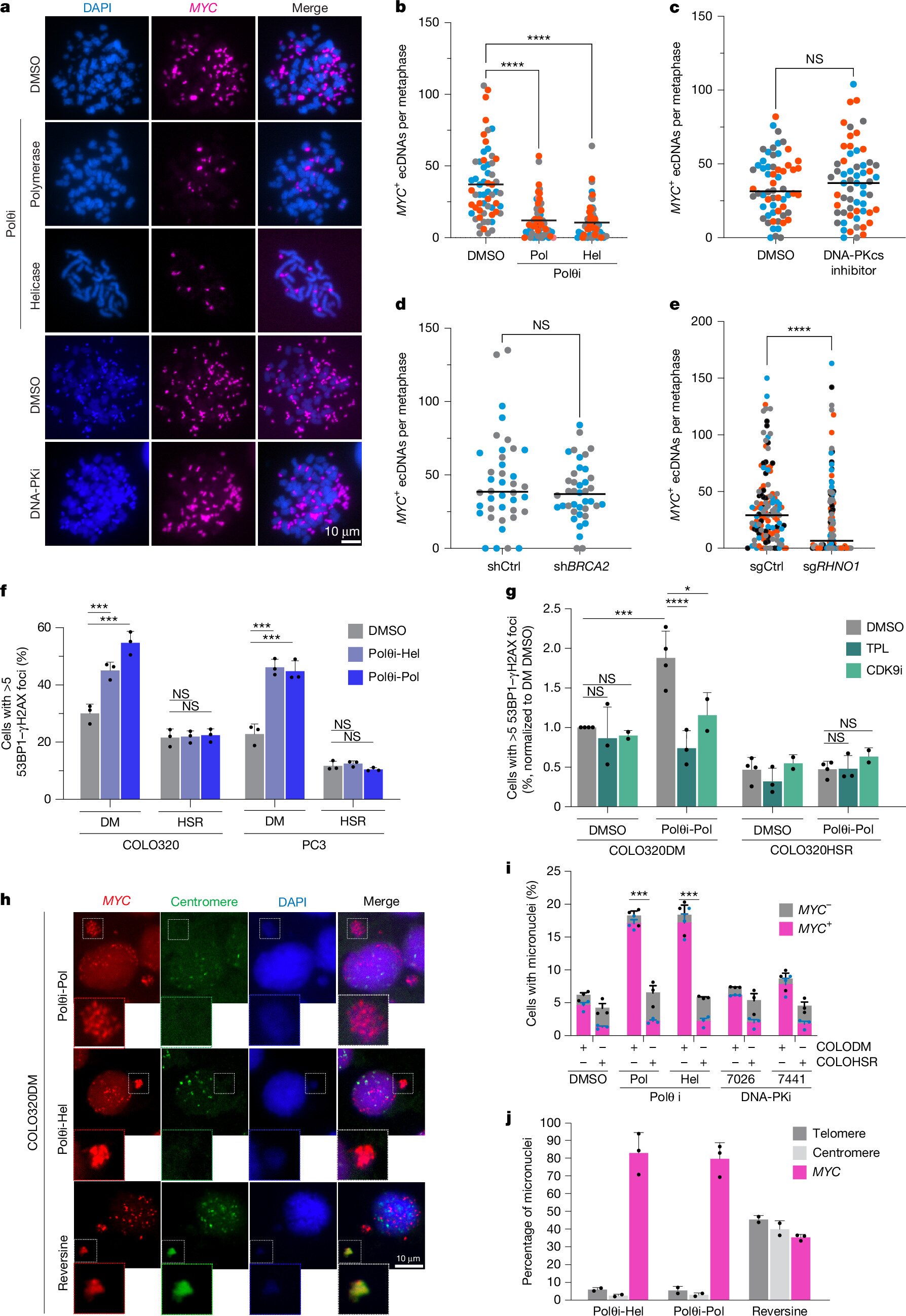
Now the lab of Agnel Sfeir, Ph.D., at MSK's Sloan Kettering Institute and collaborators have uncovered a two-part protection system that cancer cells use to prevent and repair breaks in ecDNA. They also show that ecDNA carries a structural vulnerability that could potentially be targeted therapeutically. Their findings were published Sept. 23 in Nature.
The team—co-led by radiation oncologist David Billing, MD, Ph.D., and graduate student Monica Selvaraj—found that repetitive sequences in ecDNA are structural weak points where it is prone to breaking.
Specifically, the team identified stretches of alternating T and A letters in the DNA code—called TA repeats—that tend to fold into unusual, cross-shaped structures. These structures are particularly fragile, leading to breaks that the cancer cell must repair quickly.
Source link