This article has been reviewed according to Science X's editorial process and policies. Editors have highlighted the following attributes while ensuring the content's credibility:
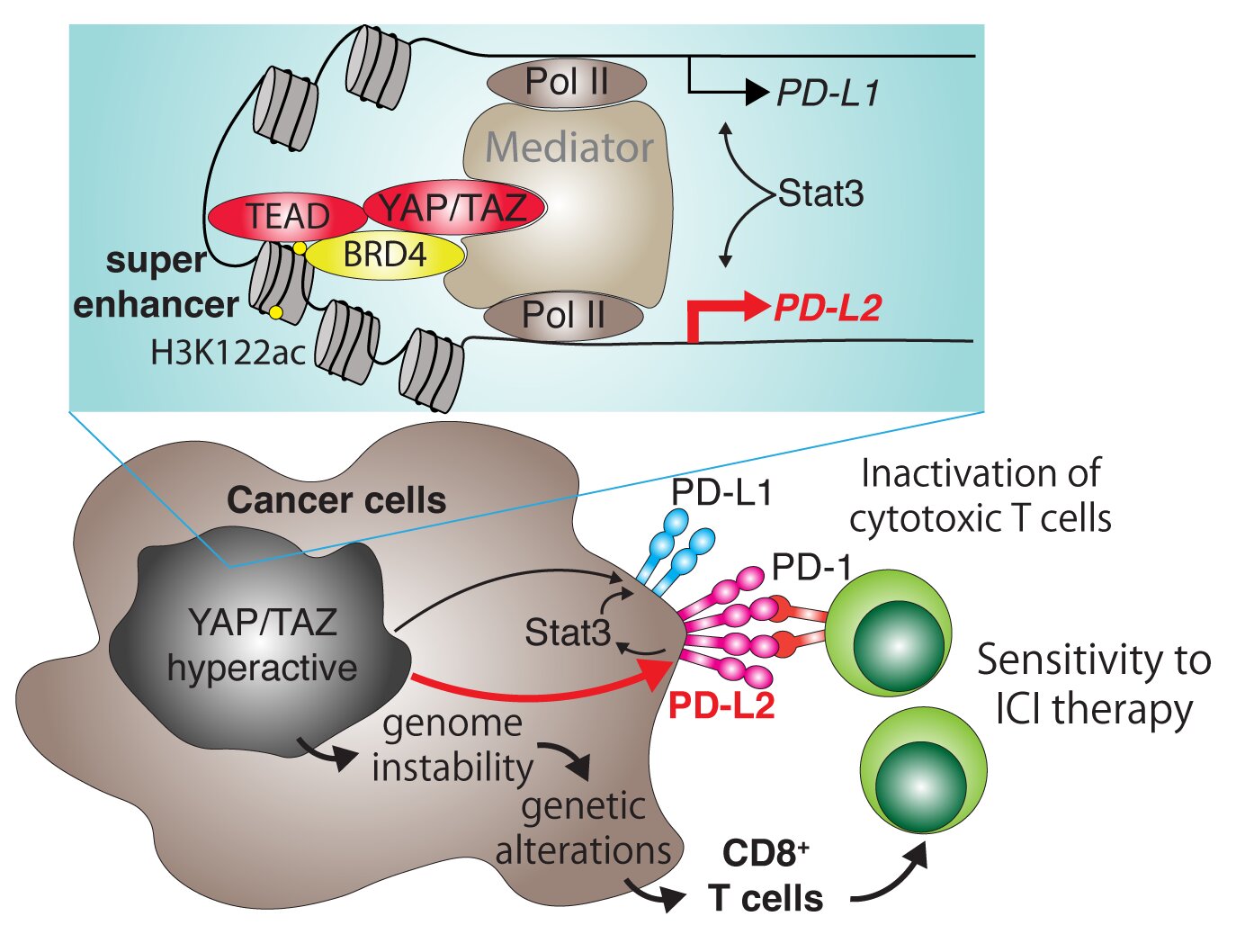
The immune system may recognize a cancer cell and still fail to destroy it. In a recent study, researchers at Hiroshima University and their international collaborators found that hyperactive YAP and TAZ (YAP/TAZ), two cancer-promoting proteins, were associated with genomic instability that may make cancer cells more recognizable to the immune system, while also increasing PD-L2, which helps the cells suppress T-cell attack.
That combination could matter for immune checkpoint inhibitor (ICI) therapy, which can block inhibitory signals that restrain T-cell activity. If genomic instability makes a tumor more likely to be recognized by the immune system while PD-L2 helps suppress the T cells that recognize it, blocking such inhibitory signaling could leave the tumor more vulnerable to immune attack.
The researchers propose that this may help explain why tumors with certain Hippo pathway alterations were associated with better outcomes in a separate analysis of 1,662 patients treated with ICIs.
The Hippo signaling pathway helps control cell growth by keeping YAP/TAZ activity in check, in part through the regulators LATS1 and LATS2 (LATS1/2). When LATS1/2 are lost, that restraint can weaken, allowing YAP/TAZ activity to increase. Overactive YAP/TAZ are known to promote cancer growth, but their role in helping tumors evade immune attack has been less clear.
The researchers found that increased YAP/TAZ activity drove up PD-L2 expression. To test whether PD-L2 helped cancer cells resist immune attack, they exposed head and neck squamous cell carcinoma (HNSCC) cells to engineered T cells designed to recognize EGFR, a protein on the cancer cells.
Source link