
This article has been reviewed according to Science X's editorial process and policies. Editors have highlighted the following attributes while ensuring the content's credibility:
When it comes to medical imaging, everyone wants better technology faster—but no one wants to cut corners on health and safety. Enter a new statistical tool that determines whether AI-generated data could accurately stand in for patient data in clinical trials.
Jointly developed by researchers from Virginia Tech; the University of Maryland, Baltimore County; Texas Tech University; and Princeton University, the model was published in the Proceedings of the National Academy of Sciences.
Deploying a more powerful, precise MRI in a hospital, for instance, requires approval from the U.S. Food and Drug Administration (FDA). To prove these devices are safe and effective, manufacturers must run clinical trials—research studies using human subjects that can take years and cost millions of dollars.
To accelerate this process, the FDA is exploring AI-generated synthetic data alternatives that could compress trial timelines to a matter of months.
"The problem is, you have to verify that the synthetic data is true to life," said Yulia R. Gel, Virginia Tech professor of statistics. "We want clinical trials with synthetic data to reach the same conclusions we would get with real people."
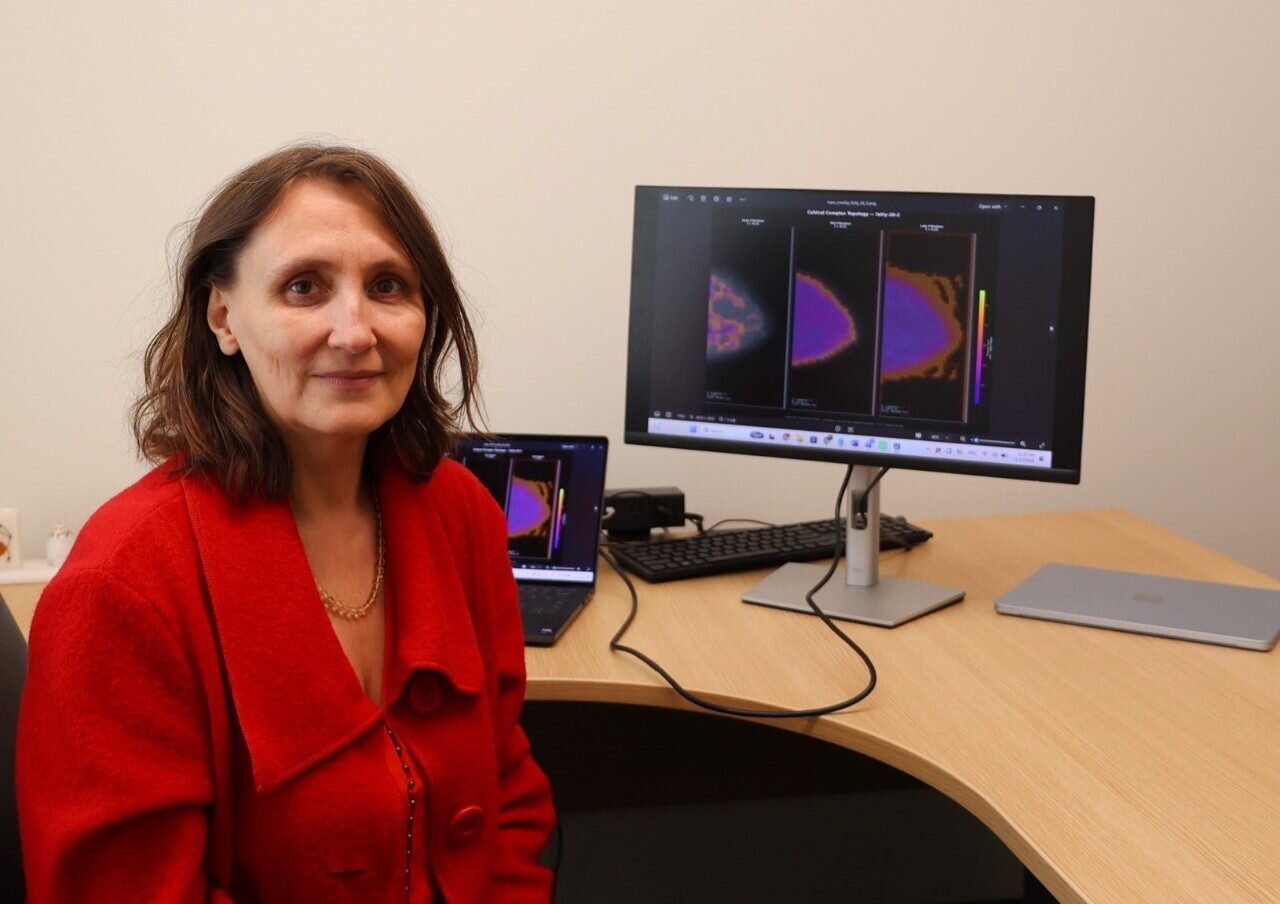
The tool developed by Gel and her colleagues bridges two fields—computational topology and statistics—to measure and compare complex image data.
To test the method, the team compared synthetic mammograms against real patient data, tracking how breast cancer responds to different radiation doses.
Source link





