This article has been reviewed according to Science X's editorial process and policies. Editors have highlighted the following attributes while ensuring the content's credibility:
A new molecular map of breast cancer has identified novel forms of the disease and provides a foundation for selecting personalized treatments guided by a tumor's molecular characteristics rather than standard pathology alone.
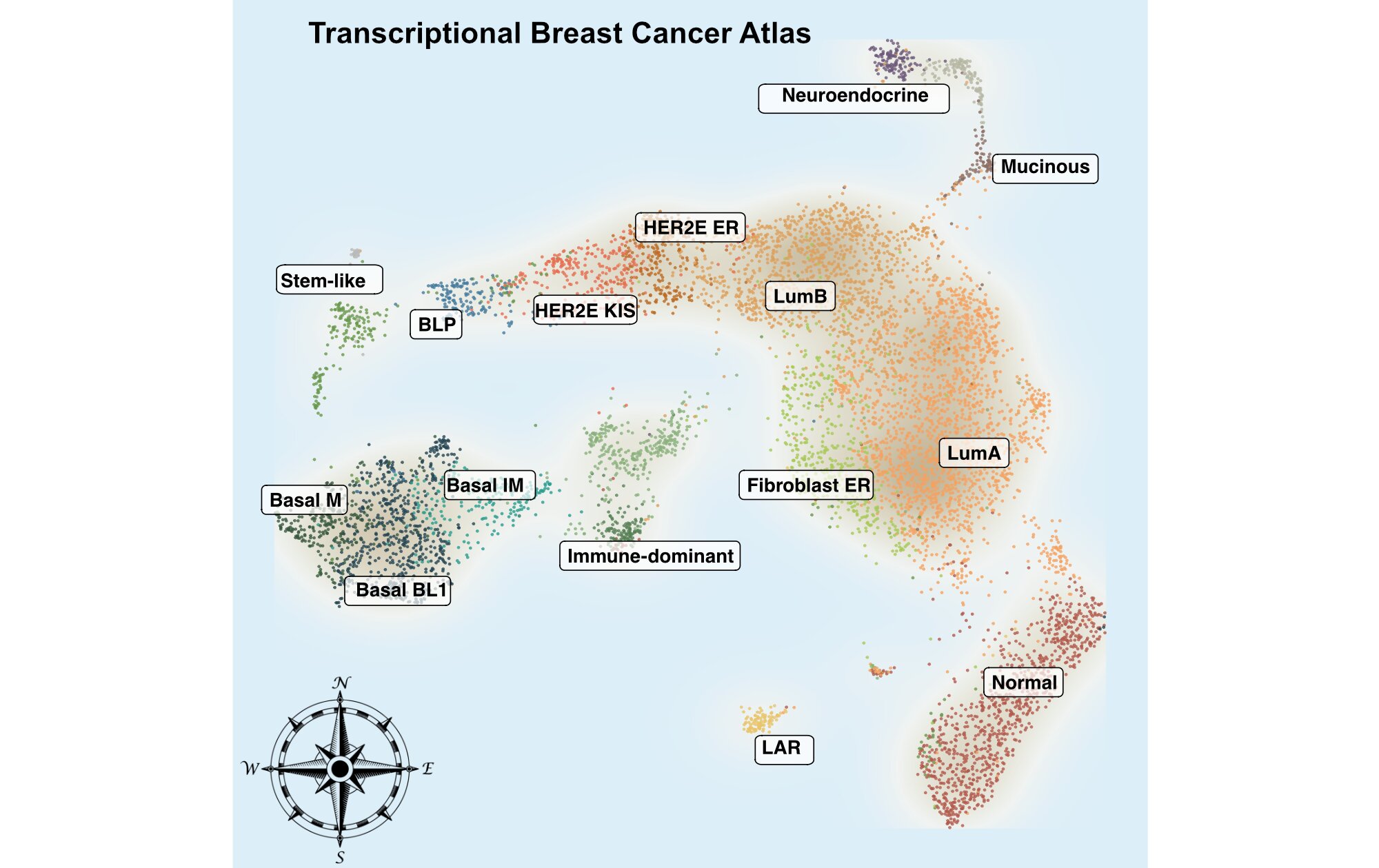
In a study published Nov. 3 in Cell Reports Medicine, researchers at Vanderbilt-Ingram Cancer Center generated one of the largest transcriptomic maps of breast cancer ever assembled, integrating data from more than 7,600 tumors across 22 independent studies. The "transcriptome" is the complete set of RNA molecules produced by a tumor; it reveals biological details about gene expression and other molecular characteristics.
"The breast cancer atlas provides an unprecedented view of the disease's molecular diversity and reveals distinct tumor populations associated with different clinical outcomes, biological characteristics and therapeutic vulnerabilities," said corresponding author Brian Lehmann, Ph.D., research associate professor of medicine at Vanderbilt Health. "By analyzing thousands of tumors together, we uncovered previously hidden forms of breast cancer that differ in prognosis, biology and treatment sensitivity."
Breast cancer is traditionally classified and treated based on the presence—or absence—of hormone (estrogen, progesterone) and HER2 receptors. Transcriptomic profiling has further defined some molecular subtypes, but clinical responses to the same subtype are varied, and other subtypes noted by pathologists remain undefined.
, chief scientific and strategy officer and executive vice president for research at Vanderbilt Health, who helped define molecular subtypes of triple-negative breast cancer.
Source link