This article has been reviewed according to Science X's editorial process and policies. Editors have highlighted the following attributes while ensuring the content's credibility:
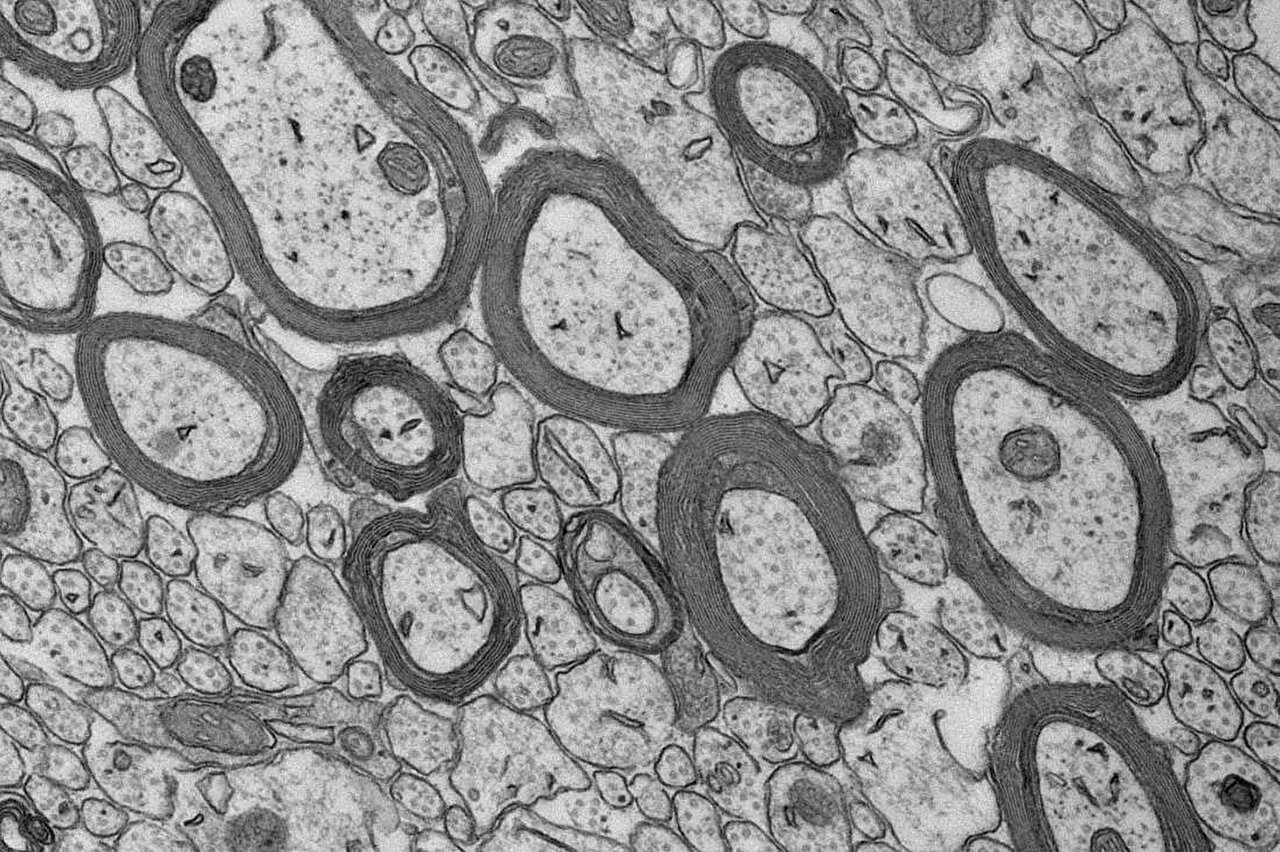
UT Southwestern Medical Center researchers have identified a cellular "brake" that helps prevent excessive myelin growth in the brain, which has been linked to mental health conditions such as major depressive disorder, anxiety and post-traumatic stress disorder.
Myelin is a fatty, insulating substance that wraps around nerve fibers in the brain, spinal cord and peripheral nerves. Its primary role is helping nerve signals travel faster and more efficiently. However, excessive or abnormally patterned myelin can alter the timing and efficiency of communication within neural circuits.
The study, published in Science Advances, identified a specialized form of autophagy—the process by which a cell breaks down and recycles its own damaged, unnecessary or worn-out components—that selectively degrades the endoplasmic reticulum (ER) and associated contents involved in the production of lipids that feed myelin production. The ER is a network of membranes inside a cell that acts as a manufacturing and transportation system for proteins and fats.
, assistant professor of molecular biology and an investigator in the Peter O'Donnell Jr. Brain Institute at UT Southwestern. "But we know very little about the cellular brakes that regulate its production.
Source link