
This article has been reviewed according to Science X's editorial process and policies. Editors have highlighted the following attributes while ensuring the content's credibility:
A new framework, published in Brain, could reshape researchers' understanding of how the brain creates memories and experiences, and how disruptions in this process may indicate Alzheimer's disease and other forms of dementia.
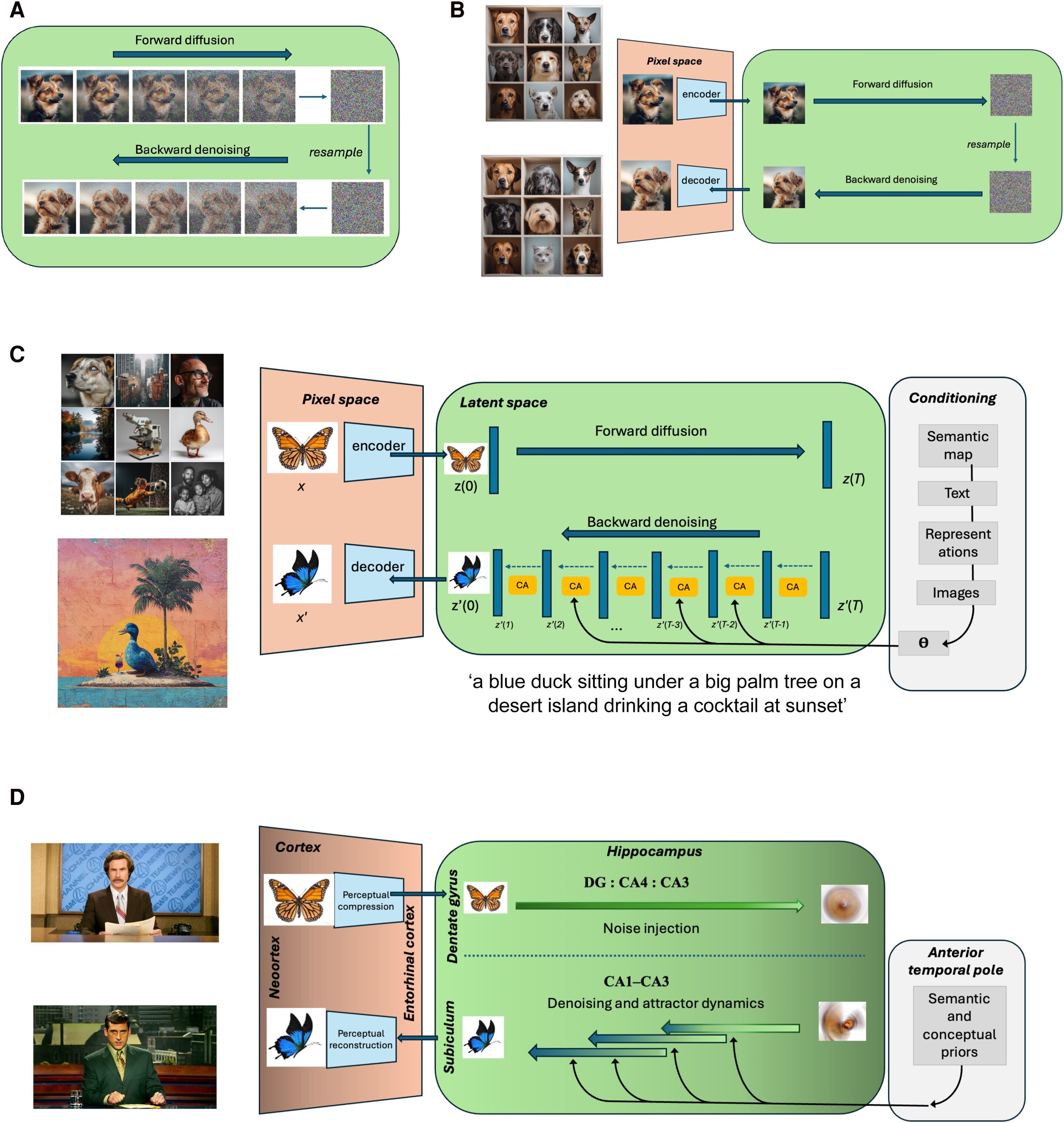
David T. Jones, M.D., a Mayo Clinic neurologist and director of the Mayo Clinic Biological Intelligence Lab, and his collaborator, Michael Breakspear, M.B.B.S., Ph.D., of the University of Newcastle in Australia, have mapped out how the brain's limbic system processes and organizes information using a concept from generative artificial intelligence (AI) called latent diffusion.
In generative AI models, latent diffusion engines convert complex information, such as an image or text prompt, into a compressed representation of its underlying features. The model then processes that information within a latent, or hidden, space before converting it back into an output.
Their proposed framework, called stochastic latent oscillatory diffusion (SLOD), breaks latent diffusion across inner brain structures into four core processes: compression, diffusion, conditioning and decompression.
"We propose the hippocampus doesn't store memories the way a filing cabinet stores documents. Instead, it learns the underlying features of the world and models it at a deeper level," says Jones, likening it to a creative engine. "The format that it's using is so flexible that the hidden features of the world can be combined and produced into new things beyond what you know or have experienced."
Source link





