This article has been reviewed according to Science X's editorial process and policies. Editors have highlighted the following attributes while ensuring the content's credibility:
When people and other mammals learn new movements, connections between some of their brain cells become stronger. Yet studies have shown that learning motor skills also prompts changes in myelin, an insulating material around nerve fibers produced by cells called oligodendrocytes.
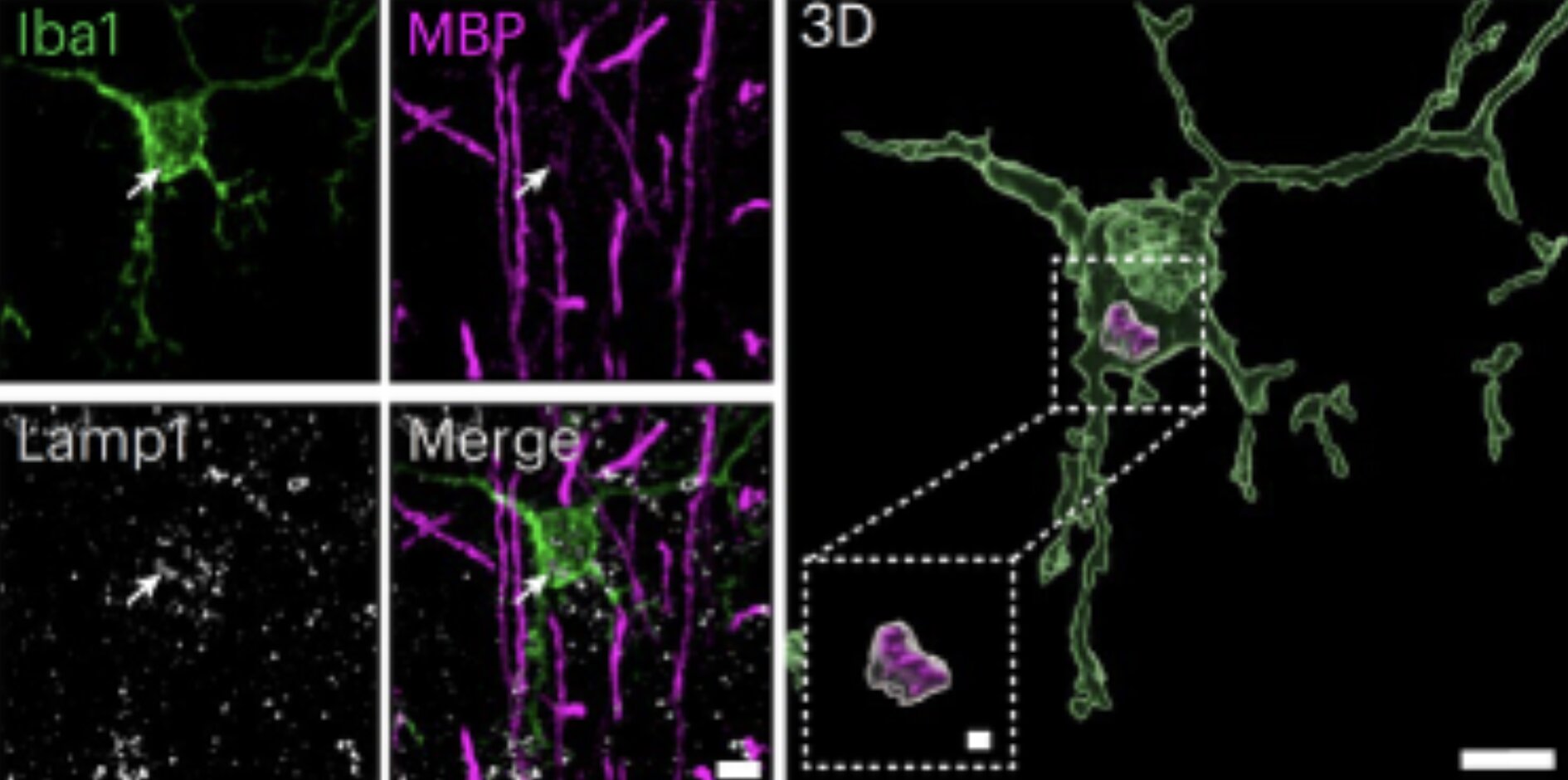
Researchers at Zhejiang University recently studied mice to investigate how memories of learned movements fade over time. Their paper, published in Nature Neuroscience, links the weakening of motor memories with the removal of memory-associated myelin by immune cells called microglia.
"This study is a continued work following an earlier study from our group, which showed that microglial phagocytosis of neuronal synapses drives forgetting of contextual fear memory," Lang Wang, senior author of the paper, told Medical Xpress.
"We were also inspired by studies showing that motor learning and other forms of memory require de novo myelination in the brain. We began to wonder how myelin changes as a memory fades, and whether microglia play a role in that process."
The main objective of this study was to understand whether myelin is progressively remodeled while a motor memory is forgotten. In addition, the researchers wanted to determine whether microglia, the brain's resident immune cells, contribute to this remodeling.
, a rotarod) for one week. They then placed them on the same rotarod at different points in time, assessing how long they could stay on it.
Source link