
This article has been reviewed according to Science X's editorial process and policies. Editors have highlighted the following attributes while ensuring the content's credibility:
Cornell engineers and Dana-Farber oncologists found that RNA floating in the plasma carries a signature of a lymphoma tumor's surroundings, one that tracked with whether patients were still in remission a year later.
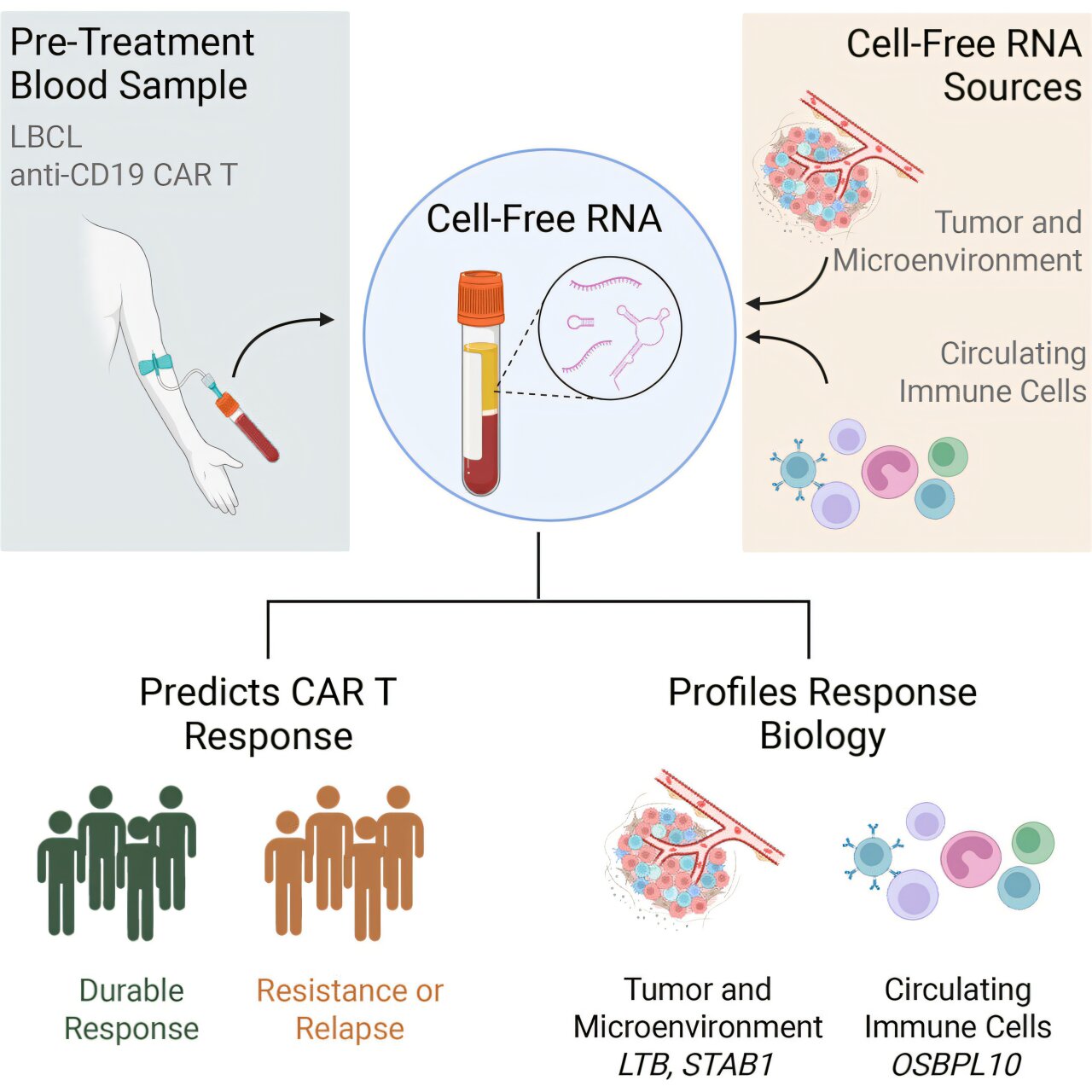
Of 91 lymphoma patients who received a powerful cell therapy at Dana-Farber Cancer Institute, those whose blood carried a particular gene expression signature before treatment were far less likely to see their cancer progress. Patients with high scores on that signature had an 80% lower risk of progression than those with low scores, according to a new study from Cornell and Dana-Farber. The research was published Nov. 18 in the journal Cell Reports Medicine.
The genetic signature comes from cell-free RNA, fragments of genetic material shed by cells into the bloodstream. The researchers say it offers a glimpse of the tumor's local environment without the need for a biopsy.
The research addresses a deficit in a current therapy for an aggressive blood cancer known as large B-cell lymphoma. Anti-CD19 CAR T-cell therapy, in which a patient's own immune cells are engineered to hunt cancer, has transformed care for people with large B-cell lymphoma. But nearly half of patients either fail to respond or relapse within a year. Until now, doctors have had few reliable ways to predict who will do well.
"CAR T-cell therapy is one of the major breakthroughs of the past couple of decades, but not every patient responds," said Iwijn De Vlaminck, professor in the Meinig School of Biomedical Engineering in the Cornell Duffield College of Engineering, who led the research.
Source link





