
This article has been reviewed according to Science X's editorial process and policies. Editors have highlighted the following attributes while ensuring the content's credibility:
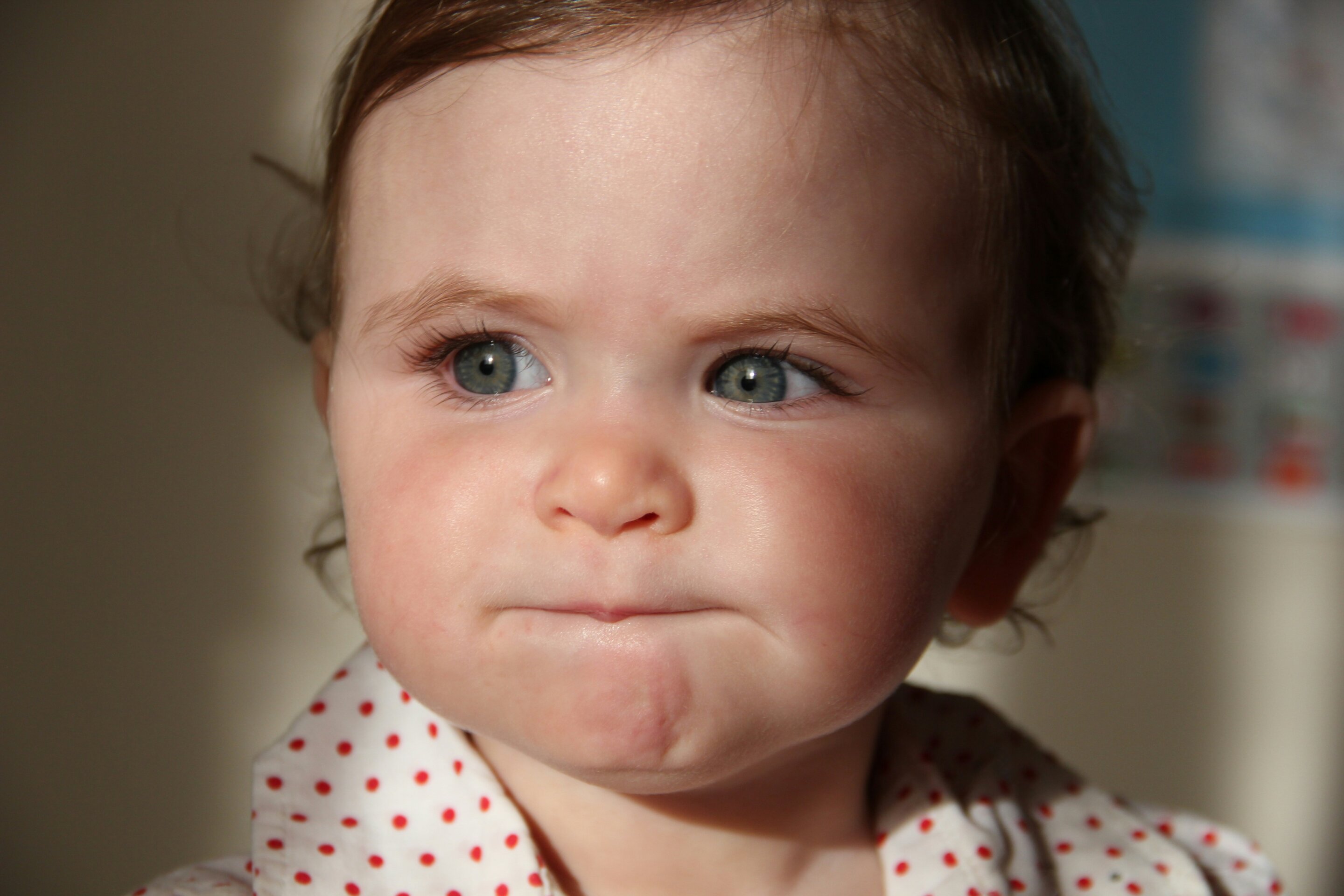
A new paper in Communications Psychology calls into question the value of exaggerated facial expressions commonly used in research to study babies' emotional understanding. The study, led by University of Kansas researchers, shows that babies ages 6–17 months rarely encounter these expressions in everyday life—and rarely see full faces at all.
"Basic emotion theory posits that specific facial configurations were evolutionarily conserved as ways of communicating particular emotion-relevant signals among humans, among conspecifics," said lead author Katie Hoemann, assistant professor of psychology at KU.
"In all these studies, and you see it all over the place, happiness means a big toothy smile. Anger means a big scowl. Sadness means a super exaggerated frown. And these are the kinds of stimuli that are used in tests of emotion perception for people of all age groups, for the most part."
The work stems from a running collaboration between researchers at KU, Rutgers University and other institutions. Jeffrey M. Girard, associate professor of psychology at KU, co-led the study. For example, much of the data Hoemann and Girard analyzed was collected, prepared and coded at Rutgers.
Hoemann and her coauthors wondered how often babies see these exaggerated facial configurations in real life. They analyzed an existing data set of monthly, hourlong home recordings of infants ages 6 to 17 months, categorizing their exposures to faces and facial expressions.
Source link





