This article has been reviewed according to Science X's editorial process and policies. Editors have highlighted the following attributes while ensuring the content's credibility:
A team led by Harvard Medical School researchers at Beth Israel Deaconess Medical Center and Dana-Farber Cancer Institute has developed a faster way to identify and engineer cancer-fighting therapies.
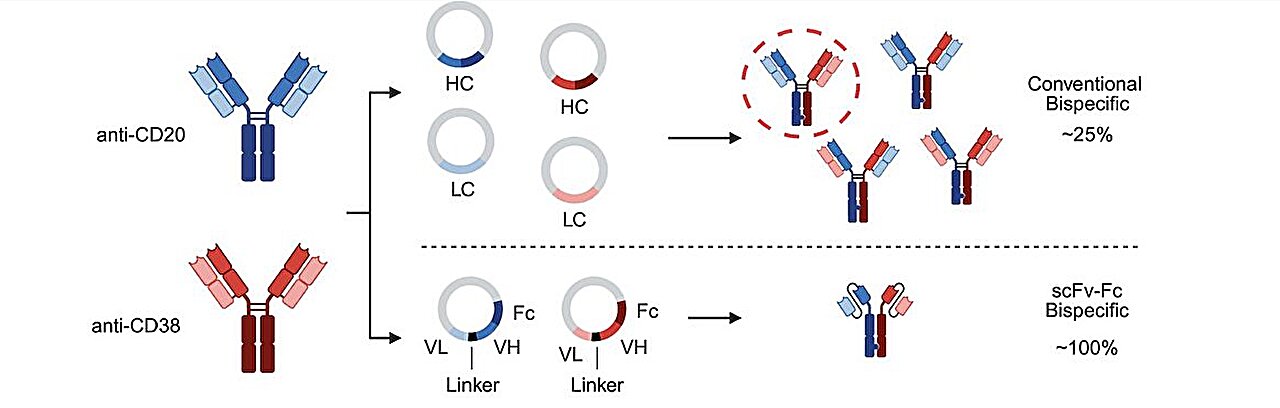
In a study published in Nature Communications, the team used the new approach to create an investigational treatment that showed strong activity against aggressive B-cell lymphomas in laboratory experiments.
The approach, which the researchers are calling "tactical surfaceome profiling," is a novel strategy for identifying the most promising targets for immune-based therapies from among the molecules found on the surface of the malignant cells (collectively called the surfaceome).
The goal is to help macrophages—immune cells that identify, engulf, and dispose of diseased cells—recognize lymphoma cells more effectively, said co-first author Carlota Pagès-Geli, HMS research fellow in medicine at Beth Israel Deaconess in the lab of senior author Kipp Weiskopf.
B-cell lymphomas, which are among the most common blood cancers, arise from B cells, a type of white blood cell that helps protect the body from infection. Although immunotherapy treatments such as rituximab have transformed care for many patients, some lymphomas become resistant to therapy or return after treatment, creating the need to develop new therapeutic options.
Cancer cells often evade the immune system by displaying molecules on their surface that can fool macrophages, blunting the body's immune response to the disease.
Tactical surfaceome profiling begins by identifying the surface proteins that induce the desired immune response.
Source link