
This article has been reviewed according to Science X's editorial process and policies. Editors have highlighted the following attributes while ensuring the content's credibility:
Kawasaki disease (KD) is an acute inflammatory condition that primarily affects children under 5. It causes inflammation of blood vessels throughout the body and can lead to serious complications, particularly affecting the coronary arteries that supply blood to the heart. Although Kawasaki disease is a major cause of acquired heart disease in children, its exact cause remains unclear. Genetic susceptibility and environmental exposures are thought to contribute to its development, but the underlying mechanisms are not fully understood.
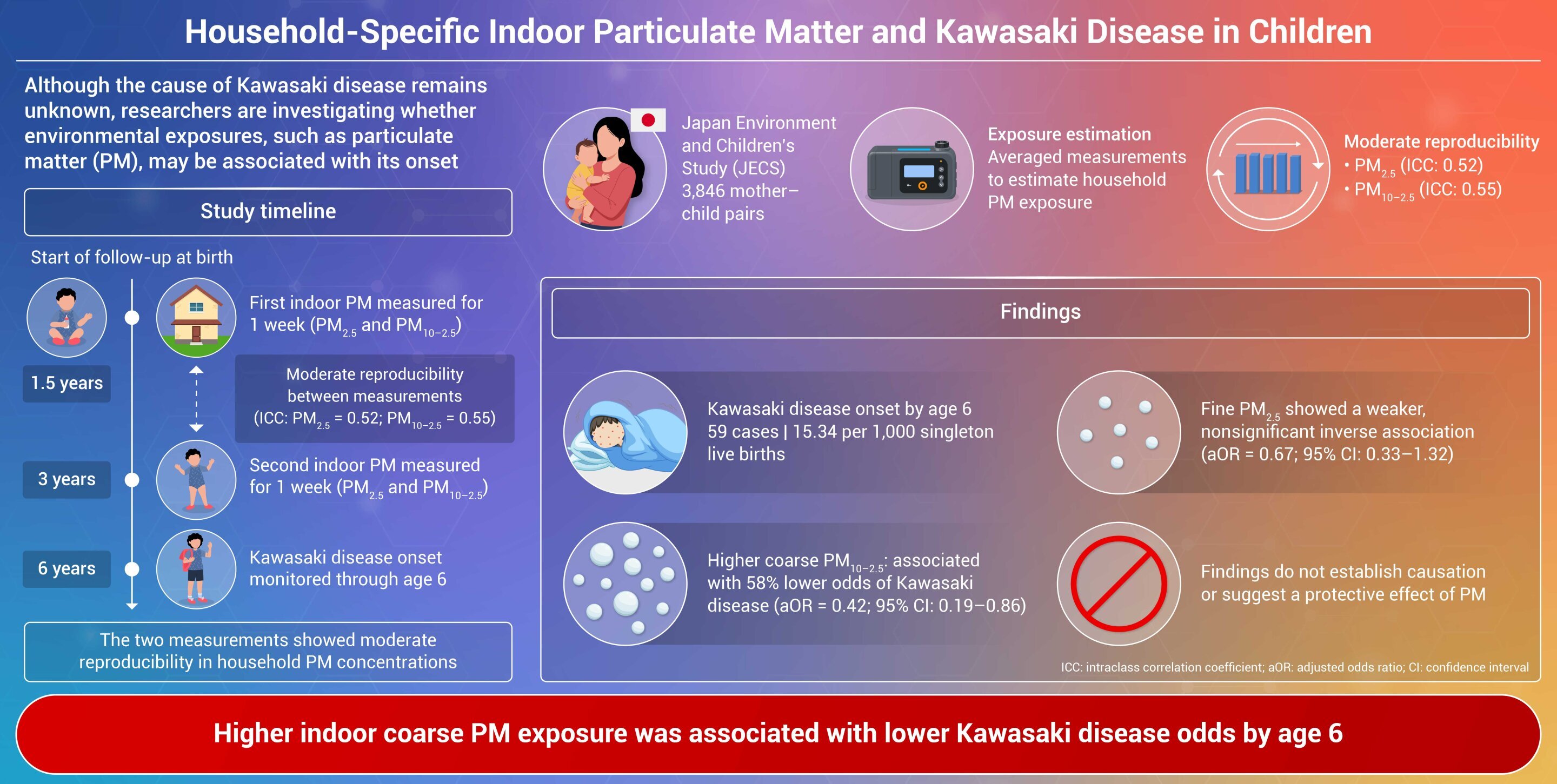
Previous studies have suggested associations between outdoor particulate matter (PM) and Kawasaki disease. However, less is known about whether exposure to PM inside homes is associated with Kawasaki disease. To investigate this potential link, researchers from the University of Toyama in Japan, led by professor Kenta Matsumura (Aomori University of Health and Welfare, Japan) along with professor emeritus Hidekuni Inadera, examined the association between household-specific indoor PM exposure during early childhood and Kawasaki disease onset by age 6.
The study, published in the International Journal of Hygiene and Environmental Health, aimed to determine whether exposure to fine or coarse particles was associated with the likelihood of developing the condition.
The researchers analyzed data from 3,846 mother-child pairs enrolled in the Japan Environment and Children's Study (JECS), a large prospective birth cohort study. 5 and 3 years old. The measurements were averaged to estimate household-specific exposure. 5.
Source link





