
This article has been reviewed according to Science X's editorial process and policies. Editors have highlighted the following attributes while ensuring the content's credibility:
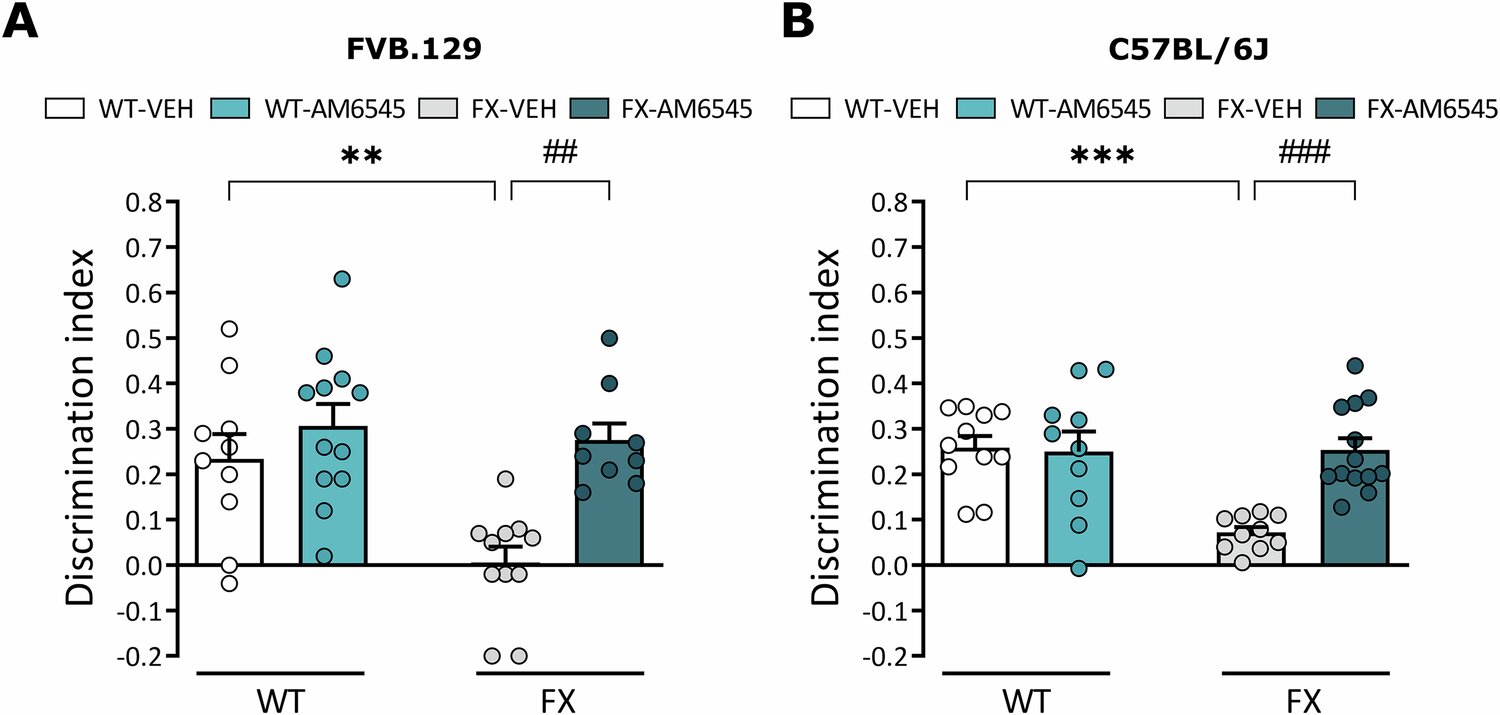
Ongoing treatment with a drug that inhibits the endocannabinoid system peripherally improves memory deficits, reduces synaptic alterations, mitigates gut microbiota dysbiosis and restores intestinal barrier integrity markers in fragile X syndrome mouse models. This experimental approach opens the door to studying a potential therapy to improve the cognitive ability of people who have the syndrome and underscores the role that alterations to the microbiota–gut–brain axis may play in intellectual disability.
Fragile X syndrome is the most common monogenic cause of inherited intellectual disability and autism spectrum disorder. In Spain, it affects around 10,000 people who, to varying degrees, experience memory impairment, hyperactivity, impulsiveness, gastrointestinal dysfunction or autistic-type behavior, among other symptoms. To date, there is no treatment for cognitive impairment caused by this syndrome. An estimated 127,000 people in Spain are carriers.
Now, a study by the Cognition Biology Research Group at Pompeu Fabra University, published in the journal Translational Psychiatry, reveals that a one-week experimental treatment in mice improves the neuronal connections and cognitive abilities of animals affected by the syndrome and restores their microbiota and intestinal barrier.
"Unlike other drugs that act on the brain, the compound we have tested acts only on peripheral type 1 cannabinoid (CB1) receptors," explains Andrés Ozaita, director of the Cognition Biology Research Group and principal investigator. Like treatments that act on the brain, this peripheral treatment enhances memory and increases plasticity in mice with the fragile X mutation, improving the quality of neuronal connections in the hippocampus.
Source link





