
This article has been reviewed according to Science X's editorial process and policies. Editors have highlighted the following attributes while ensuring the content's credibility:
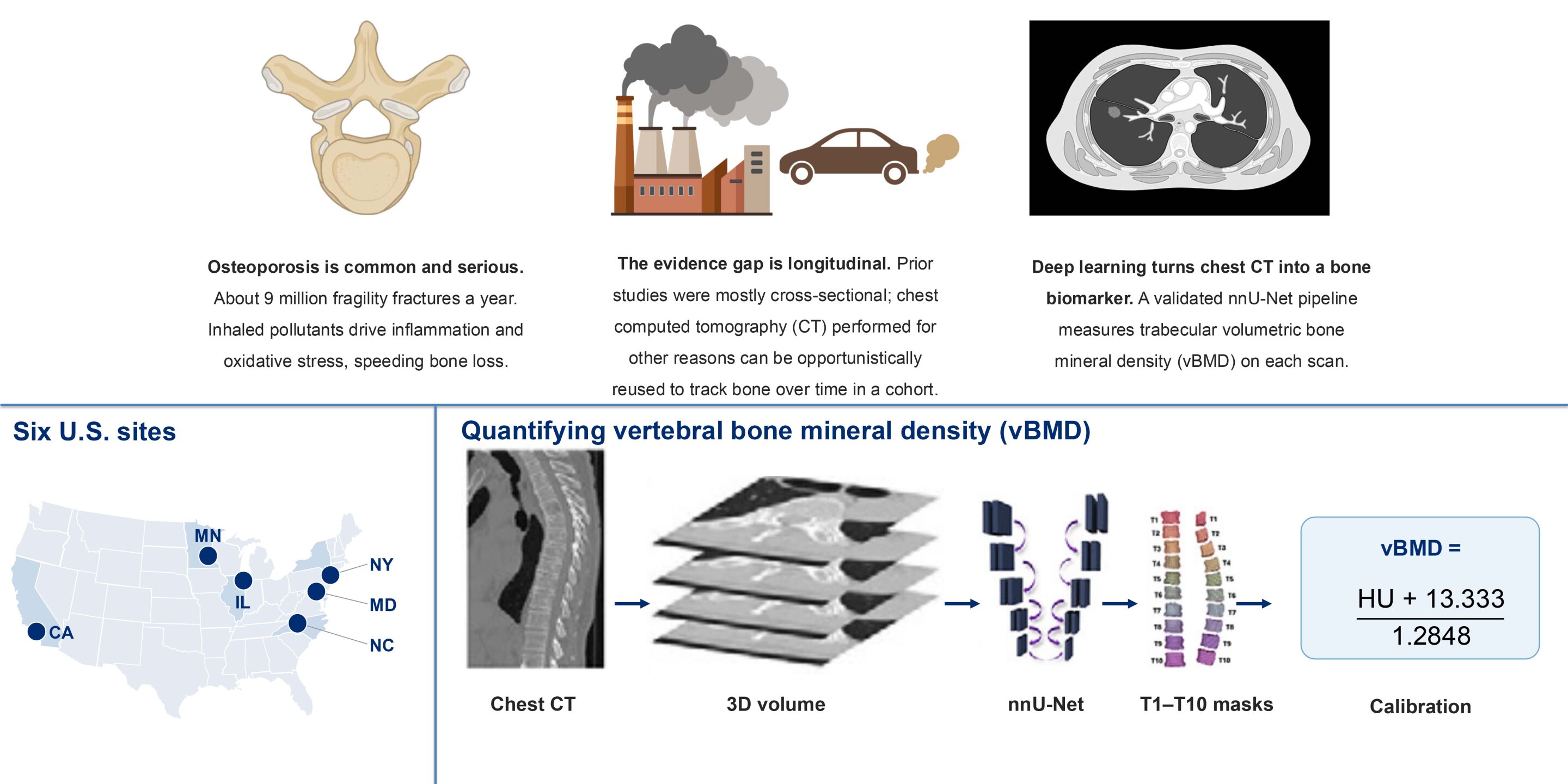
Higher recent exposure to air pollution from traffic and other sources is associated with slightly faster bone loss in the spine among older adults in metropolitan areas, according to a large new study being presented next week at the annual meeting of the Radiological Society of North America (RSNA).
"Air pollution may affect bone as well as the heart and lungs," said lead author Dr. Sara Momtazmanesh, a postdoctoral research fellow in the Department of Radiology and Radiological Science at Johns Hopkins University School of Medicine in Baltimore. "In our study, higher recent exposure to nitrogen dioxide was linked to modestly faster loss of spine bone density."
Nitrogen dioxide (NO₂) is a harmful, reddish-brown gas that contributes to smog and acid rain. Vehicle exhaust and power plant emissions are major sources.
Loss of vertebral bone mineral density (BMD) can weaken the spine and increase the risk of fractures. These fractures can cause chronic pain, height loss and a hunched back. In severe cases, spinal curvature can crowd internal organs and affect breathing.
In this secondary analysis, the researchers used AI to help assess vertebral BMD in 1,245 participants (median age, 66) using two noncontrast chest CT scans per participant taken approximately six years apart. S. cohort of adults without diagnosed cardiovascular disease at baseline who have been followed prospectively for decades to study the development and progression of subclinical cardiovascular disease.
Source link





