
This article has been reviewed according to Science X's editorial process and policies. Editors have highlighted the following attributes while ensuring the content's credibility:
AI-generated discharge summaries can meet, and in some respects exceed, current standards of care, according to new research led by iCARE (Imperial Clinical Analytics, Research and Evaluation).
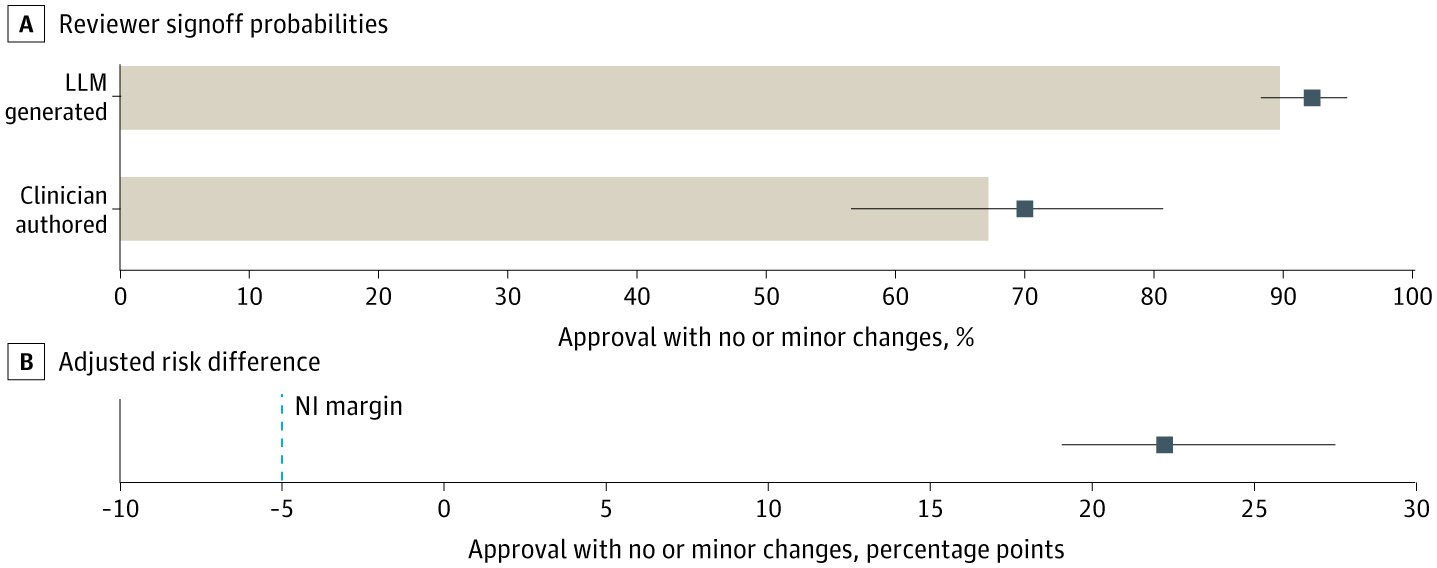
Published in JAMA Network Open on Nov. 17, the study evaluated an AI system developed and assessed in partnership with resident doctors at Imperial College Healthcare NHS Trust. In a blinded evaluation involving 12 doctors and 1,294 discharge summaries, AI-generated summaries were more likely to be considered clinically acceptable and received higher ratings for accuracy, completeness, clarity and tone than those produced through usual clinical practice.
The findings suggest that AI-assisted discharge documentation could represent a promising use case for generative AI in health care and demonstrate the importance of continued human involvement throughout the co-design, use and evaluation of AI tools.
Discharge summaries give GPs and other health care professionals a concise account of a patient's hospital admission, including diagnoses, investigations, treatments, medication changes and follow-up arrangements. They can also help patients and families understand what happened during a hospital stay and what should happen next.
Producing a summary requires clinicians to bring together information from across an admission, often drawing on multiple clinical notes, investigations and specialist teams. This work is often completed alongside competing demands for direct patient care and under considerable time pressure. The task has become increasingly complex as patient records have grown in both volume and detail.
Source link





