This article has been reviewed according to Science X's editorial process and policies. Editors have highlighted the following attributes while ensuring the content's credibility:
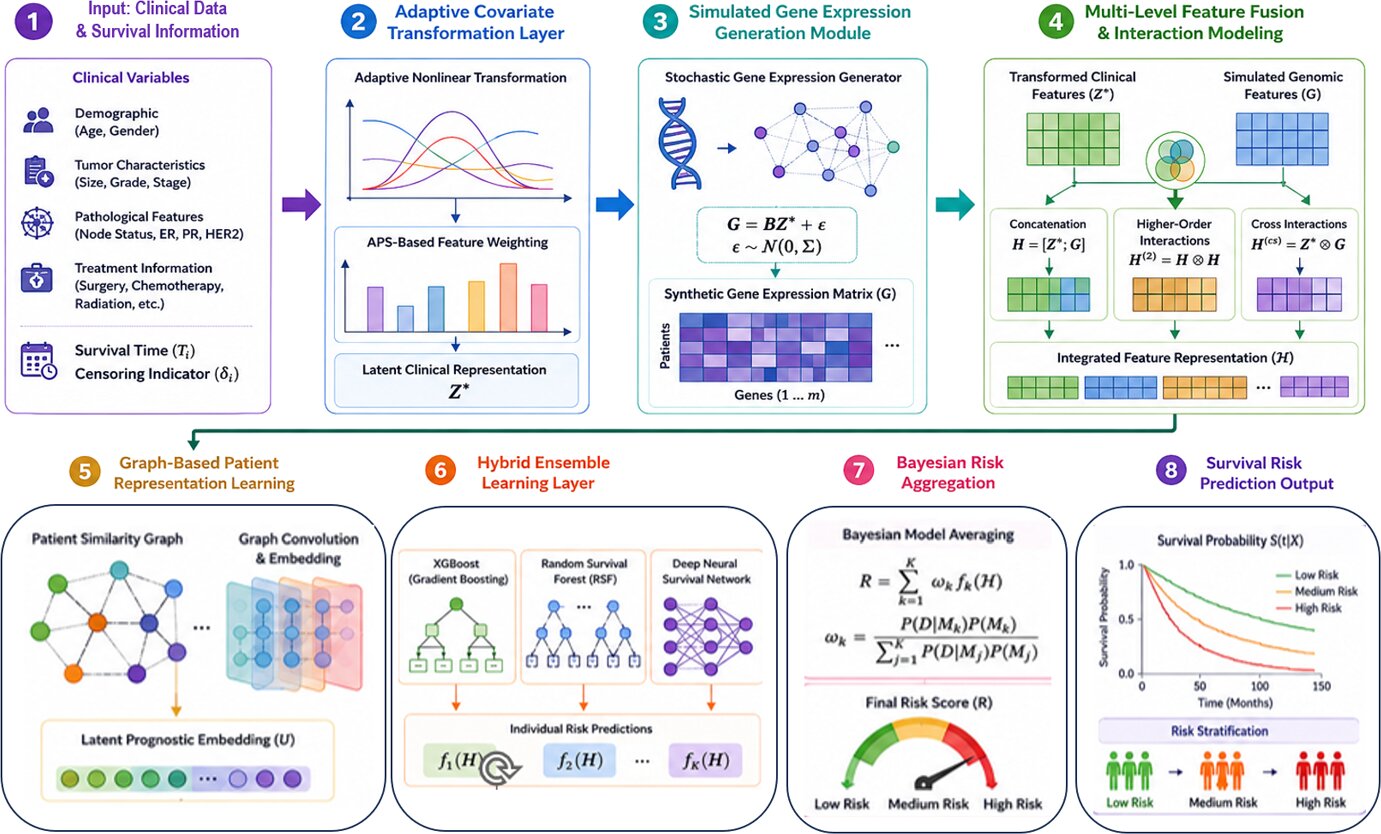
New University of Cincinnati Cancer Center research published in the Journal of Statistical Theory and Practice describes the potential for a more robust and accurate breast cancer survival model that combines statistical methods with a deep learning framework. The goal is to give physicians a better tool to make personalized care decisions for each patient.
Each case of breast cancer is unique and depends upon many variables, including clinical, biological and genetic factors. Traditional survival models are useful to estimate each patient's risk and expected outcomes, but they cannot fully account for how the complex relationships between these factors affect survival prediction for a given patient.
"We wanted to explore whether combining statistical methods with deep learning could capture these relationships and improve the overall survival prediction," said corresponding author Wedad Alatebi, a doctoral student in the Department of Biostatistics, Health Information and Data Science in UC's College of Medicine. "Deep learning can be described as teaching a computer to recognize complex patterns in patient data."
Co-author Anand Seth, Ph.D., said the "fusion" strategy combining multiple statistical approaches allows a much more precise prediction outcome. The deep learning framework allows patients who are seemingly similar to be stratified into more specific risk groups.
"That way, you can individualize therapy for a specific group of patients," said Seth, research manager in the Department of Biostatistics, Health Information and Data Science in UC's College of Medicine.
Source link