This article has been reviewed according to Science X's editorial process and policies. Editors have highlighted the following attributes while ensuring the content's credibility:
Pancreatic cancer is one of the most aggressive and difficult-to-treat cancers. One reason for its resistance to therapy is the dense tissue surrounding the tumor that acts as a protective barrier and suppresses the immune response. It is a complex tissue made of supporting cells, blood vessels and immune cells—the tumor microenvironment. In pancreatic cancer, this surrounding tissue accounts for up to 90% of the tumor mass.
Of particular importance are cancer-associated fibroblasts (CAFs), mutated connective tissue cells surrounding the tumor. They stimulate its growth and spread by growing a scar-like tissue structure and suppressing the body's own immune response. As a result, many immunotherapies that help with other forms of cancer are often ineffective.
Researchers at the Karlsruhe Institute of Technology (KIT) have now identified a molecular mechanism that regulates this tumor-supporting environment. At the heart of this mechanism is CD44, a molecule that controls the behavior of cancer-associated fibroblasts, specialized connective tissue cells that play a crucial role in shaping the tumor microenvironment. Their research is published in Cell Death & Disease.
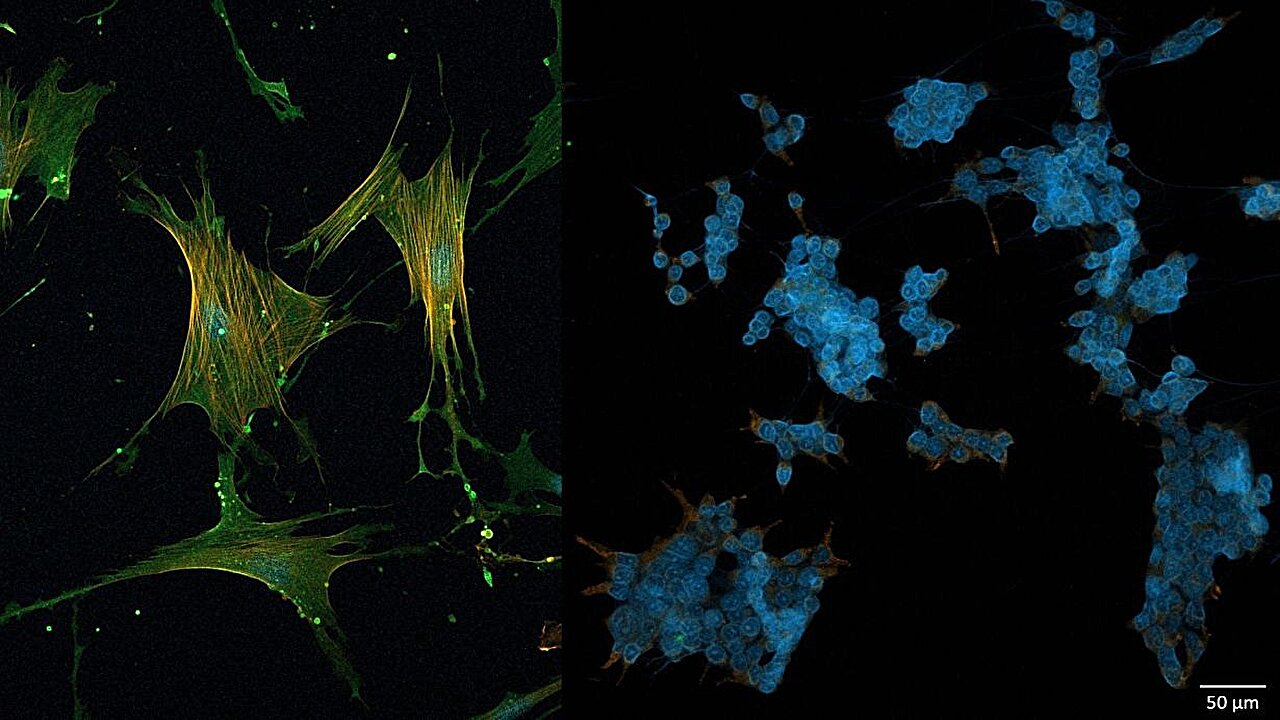
In their study, the researchers focused on the role of the CD44 molecule in cancer-associated fibroblasts. They demonstrated that CD44 intensifies important signals that activate these cells. In the laboratory, they inactivated CD44 in the mouse model as well as in human cells.
"This changed the fibroblasts dramatically. They produced less extracellular matrix , released fewer cytokines and lost their ability to suppress the immune system.
Source link