
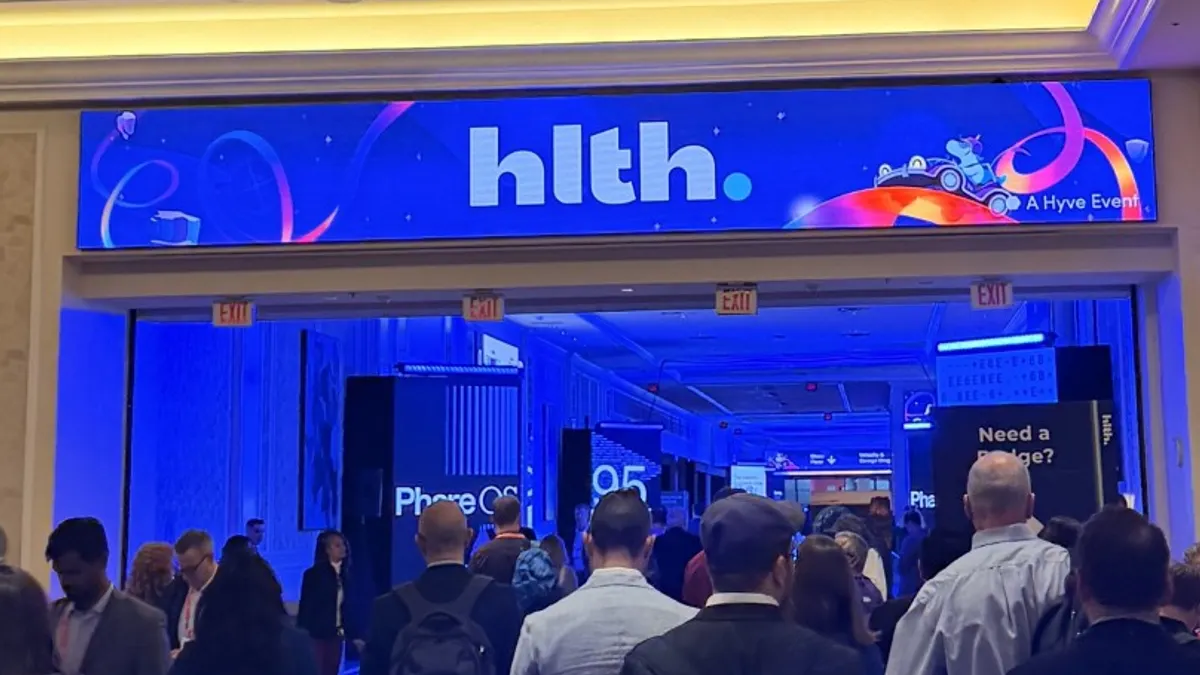
From agentic AI to GLP-1s, HLTH 2026 made one thing clear: The path from technological promise to affordable access is still a work in progress.
Healthcare is AI’s largest vertical market, with spending hitting $3.7 billion this year, according to Menlo Ventures. Absorption with the technology was palpable at HLTH this year.
Over four days in Las Vegas, seemingly every booth on the show floor hawked AI solutions promising to solve triaging, billing, charting — even aging, while panels on the conference’s colorfully lit stages debated how the technology will continue to evolve, taking the healthcare industry with it.
But as healthcare becomes increasingly comfortable with AI at scale — including cutting-edge iterations like agentic AI and world models — the industry is still contending with challenges it hasn’t fully solved, especially AI’s effect on spending. And affordability’s grip on the conference went well beyond AI, with cost concerns bubbling up in discussions on GLP-1s, insurance, politics, care delivery and more.
As medicine and technology advance, promising a bright future of on-demand access and personalized treatments, one thing is certain: The path from promise to delivery is still very much a work in progress.
Vendors and health systems are confronting AI cost challenges on multiple fronts, even though tokens — units of data that effectively serve as the operational currency for AI prices — are cheaper than they’ve ever been, experts said at HLTH.
“There's an industry paradox,” Aashima Gupta, global director of healthcare at Google Cloud, said during a panel on Monday.
Source link





