This article has been reviewed according to Science X's editorial process and policies. Editors have highlighted the following attributes while ensuring the content's credibility:
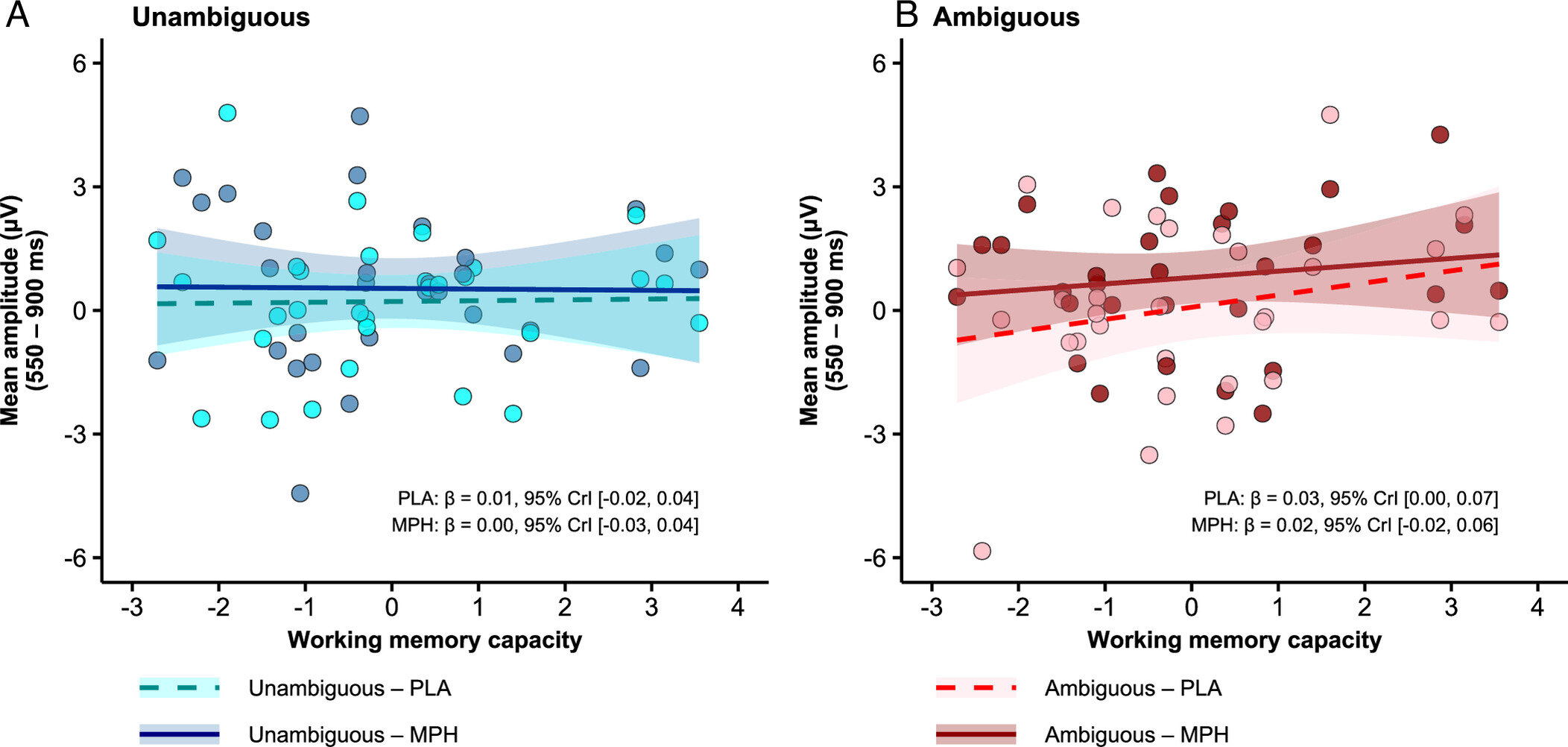
In a neuroimaging study published in PNAS, a team of researchers led by the Max Planck Institute for Psycholinguistics in Nijmegen recorded the brain activity of healthy adults during sentence comprehension after raising catecholamine levels with stimulant medication (methylphenidate). Higher catecholamine levels led to stronger recruitment of cognitive resources during processing of grammatically ambiguous sentences, showing how neurochemical systems may shape language processing.
The neurotransmitters dopamine and norepinephrine both belong to the class of catecholamines. "Catecholamines are known to regulate attention, working memory and cognitive control, but their role in language remains poorly understood," says Peter Hagoort, senior investigator and director emeritus of MPI's Neurobiology of Language Department and the Donders Institute for Brain, Cognition and Behaviour.
"Our earlier work suggested that catecholamines can affect semantic aspects of sentence comprehension. Whether these neuromodulatory systems also influence syntactic processing—how the brain combines words into grammatical structures—was largely unknown."
Methylphenidate, commonly used as a treatment for ADHD, increases catecholamine levels. Would the stimulant affect the neural processes involved in syntactic processing?
To study syntactic processing, the researchers used temporarily ambiguous "garden-path" sentences. When such sentences are presented word by word, readers are led "up the garden path," as their first interpretation is likely to be incorrect.
In "The fan attacked the drummer and the guitarist packed the instruments up," most readers will interpret "the drummer and the guitarist" as a unit.
Source link