
This article has been reviewed according to Science X's editorial process and policies. Editors have highlighted the following attributes while ensuring the content's credibility:
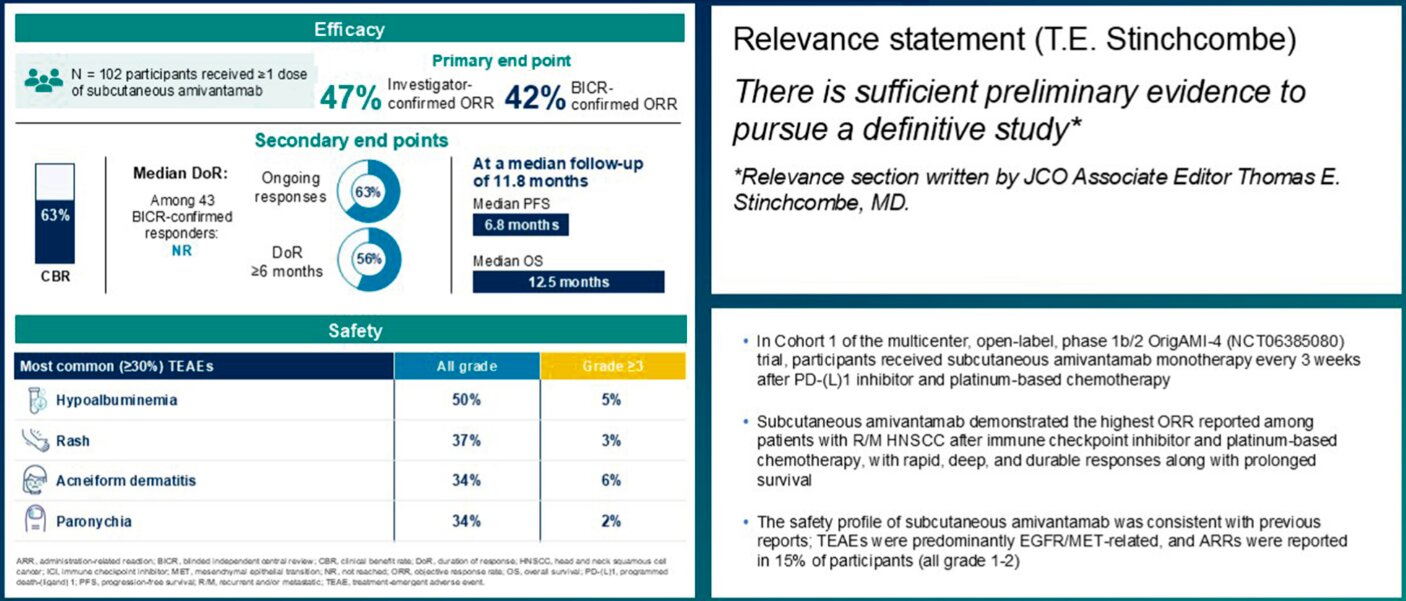
On Nov. 5, the U.S. Food and Drug Administration (FDA) approved the use of a new drug to treat head and neck cancer, the first in seven years. Called amivantamab, the drug is the first to target two growth receptors for head and neck cancer simultaneously, reducing the cancer's ability to adapt to the treatment. The FDA granted amivantamab accelerated approval because of the promising results it showed during clinical trials, which were led by Yale School of Medicine researchers.
Barbara Burtness, M.D., Anthony N. Brady professor of medicine at Yale School of Medicine, was the lead clinical investigator for the trials. She also guided the Yale portion of the multinational study. The trial results have been published in the Journal of Clinical Oncology.
We spoke with Burtness, who serves as co-leader of Yale Cancer Center's Developmental Therapeutics Research Program, about the amivantamab approval and the future of dual-targeted cancer drugs.
Head and neck squamous cell carcinoma is the sixth most common cancer, and that probably equates to just under 70,000 cases a year. It comes in two main etiologic groups. Some diagnoses are related to human papillomavirus (HPV), and many are not. And the ones that are not are related to environmental exposures like tobacco and alcohol, or sometimes dental complications. This drug, amivantamab, is approved for the second group.
For a long time, targeting epidermal growth factor receptors (EGFR) was the only targeted therapy available for head and neck cancer.
Source link





