
This article has been reviewed according to Science X's editorial process and policies. Editors have highlighted the following attributes while ensuring the content's credibility:
Sisanda Hani enters a former shipping container at a community center in South Africa, slips off her shoes and plunges into a sea of blue plastic balls. The 40-year-old mother of a teenager with ADHD and epilepsy lets the balls envelop her and screams.
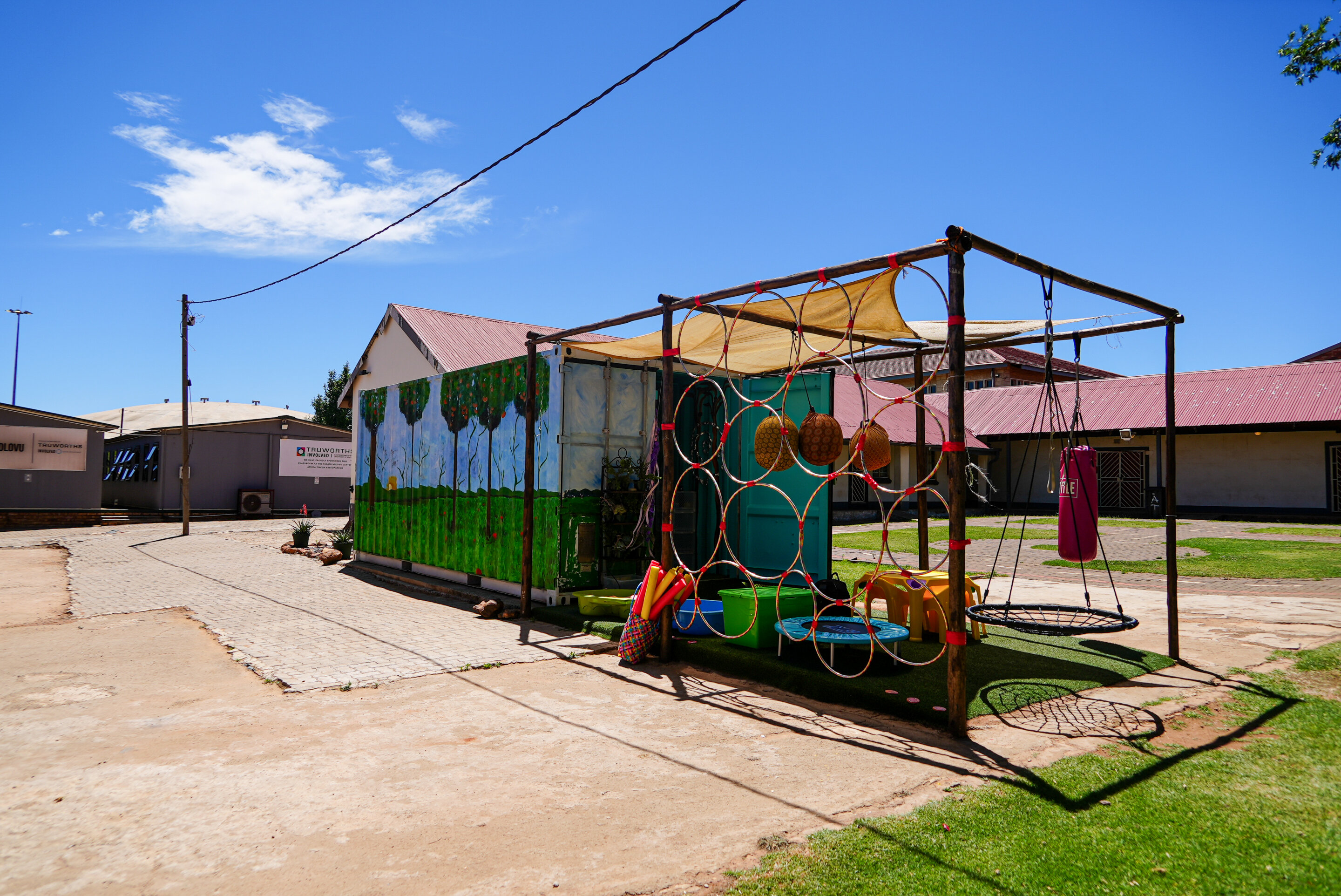
The shipping container is now a "sensory room" opened in April by youth-focused nonprofit Afrika Tikkun in Orange Farm, a low-income township south of Johannesburg. Initially designed for young children with developmental conditions, it surprisingly also became a place of relief for parents and caregivers in a neighborhood where professional therapy is hard to find.
"We had a lot of stress," Hani told The Associated Press. "No one was asking us how we were doing."
The room is an assortment of sights and textures. Fairy lights thread through beaded curtains. Foil fish, tiny mirrors, a hammock and a burlap cushion fill the underwater world, with shapes resembling amoebas and coral covering a wall. Outside are balancing logs, sand and water pits, and a swing.
Locals helped design it, making sensory items from recycled materials in workshops led by Afrika Tikkun and its partner, Sensory-Space.
Hani was among those who helped. Caring for her 19-year-old son makes it difficult for the single mother to hold down a job. Even temporary work can be interrupted by a call about a seizure, sending her rushing home.
Source link





