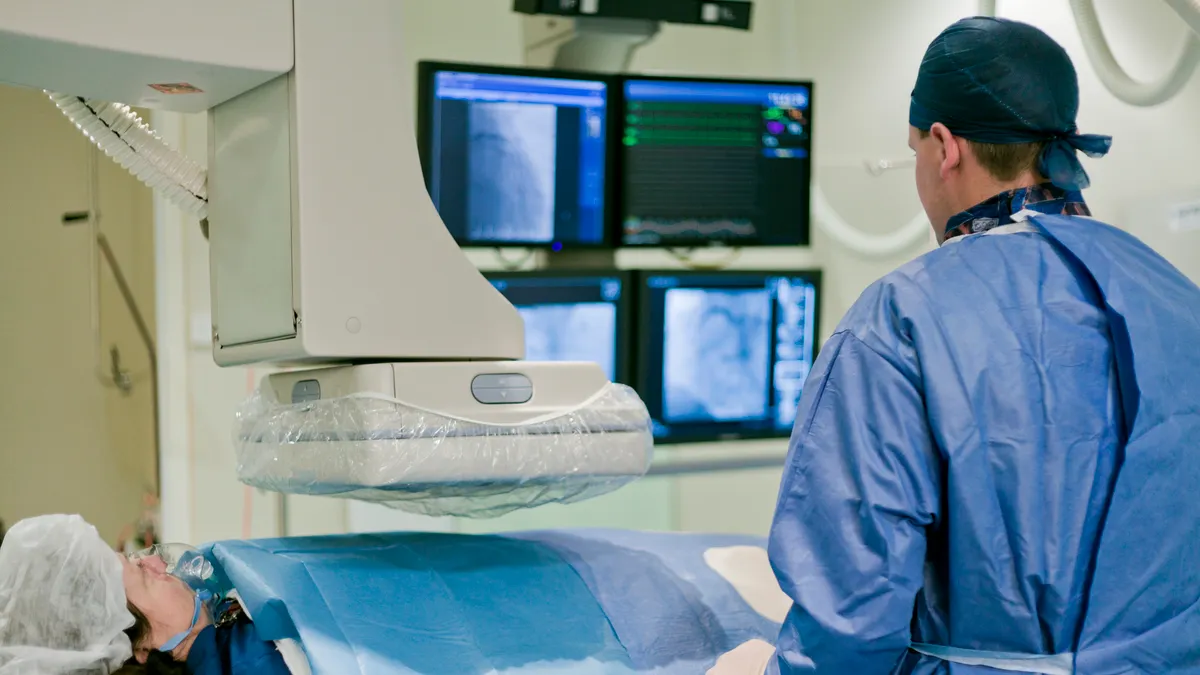
Edwards’ TAVR results in moderate aortic stenosis drew applause from meeting attendees, while Medtronic’s renal denervation and Abbott’s LAA closure devices also produced positive study findings.
Study results supporting Edwards Lifesciences’ transcatheter aortic valve replacement in patients with less severe disease were a highlight of the Transcatheter Cardiovascular Therapeutics conference.
Also notable were findings on Medtronic’s renal denervation system in a broader patient population and the performance of Abbott’s Amulet 360 left atrial appendage closure device one year after implant.
The TCT conference, which wrapped up in San Diego this week, is the Cardiovascular Research Foundation’s annual scientific symposium. Here are details on three key studies to know from the conference:
Edwards Lifesciences’ TAVR device met its primary endpoints in a study of patients with moderate aortic stenosis and at-risk features. At the meeting, the results received a “very strong round of applause” from physicians, J.P. Morgan analysts wrote to clients.
TAVR proved superior to clinical surveillance on the composite effectiveness endpoint of death or heart failure events at two years. Guidelines call for clinical surveillance, including echocardiogram, in moderate disease. The TAVR group also saw no mortality or disabling stroke through 30 days.
The PROGRESS study data provide “unequivocal validation” of TAVR’s benefit as a treatment option for moderate AS patients, Dan Lippis, Edwards’ corporate vice president of TAVR, said in an interview before the presentation. “This should give physicians and patients great comfort and great confidence in that treatment strategy,” Lippis said.
There are one to two times as many people with moderate AS as there are with severe AS, said Lippis.
Source link