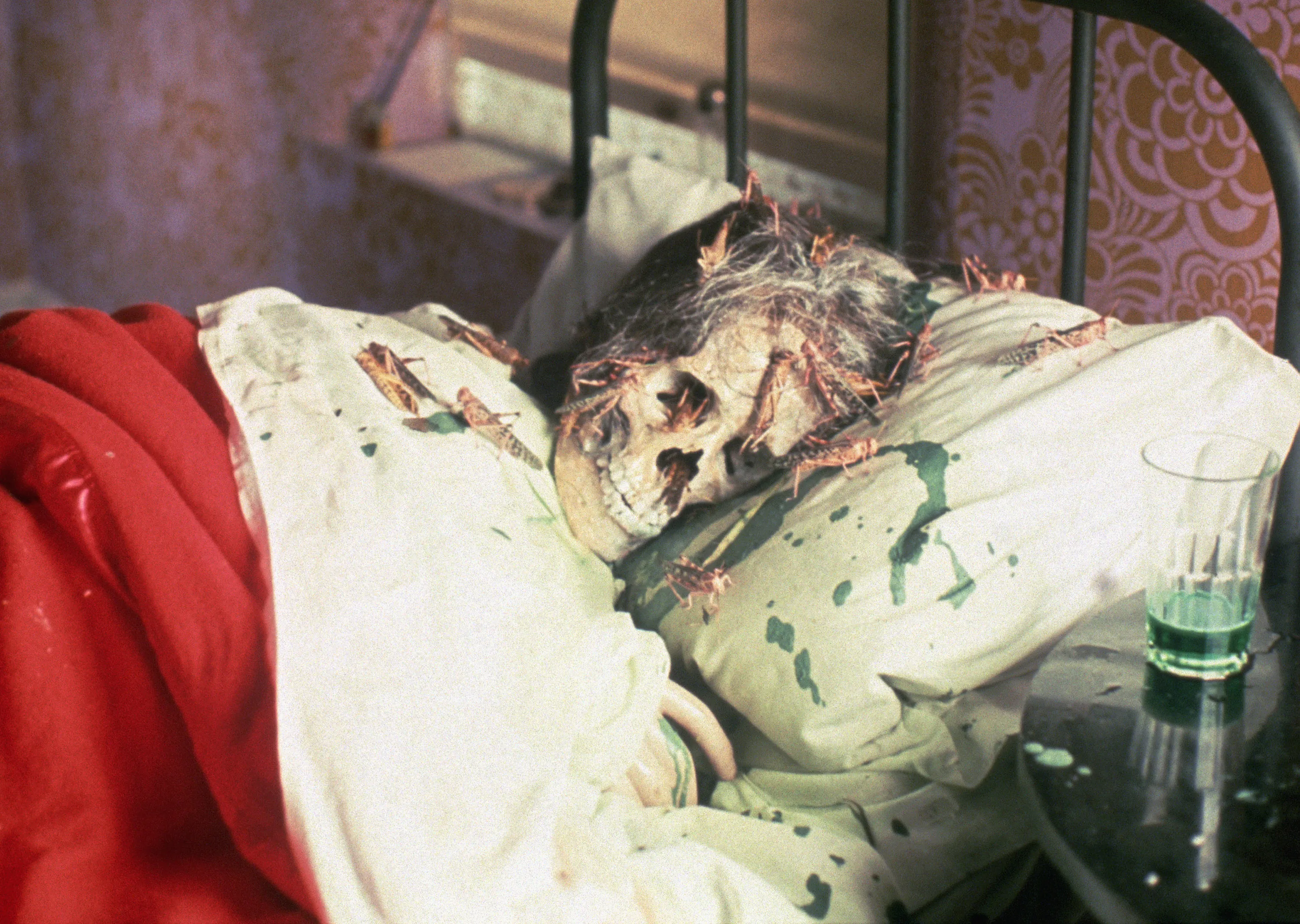
A hooded figure emerges slowly from the floor of a cavernous art-deco space — supposedly the hallway of his house, although it looks like a theater stage. He dramatically plays an organ mounted on a hydraulic platform. The organ is flanked by a sinister clockwork jazz band with papier-mâché heads. The hooded figure sets the band in motion and a beautiful young woman appears in a fantastical white gown. The pair dance together in courtly fashion. Then they go and murder a guy by lowering a cage full of ravenous bats into his bedroom through a skylight. The bats eat the man alive. The woman and the hooded man return home and he plays his organ again, sinking slowly into the floor.
We are 10 minutes into The Abominable Dr. Phibes, and nobody has spoken a word. Robert Fuest’s 1971 horror film is a surreal, kitsch, and intentionally funny murder-museum of a movie. But it's also dreamlike and deeply strange in a way that lingers after you've watched it.
The hooded figure will turn out to be Vincent Price, the stately star of horror cinema's most lurid and campy era. Unlike his friends and peers Peter Cushing and Christopher Lee, Price never appeared in a production by Hammer, the legendary British horror studio; his career followed a parallel American track in Roger Corman's Edgar Allen Poe adaptations. But by the late '60s, Price was appearing in British productions that were pushing Hammer's technicolor horror style in weird new directions, like the brutally grim Witchfinder General .
Source link