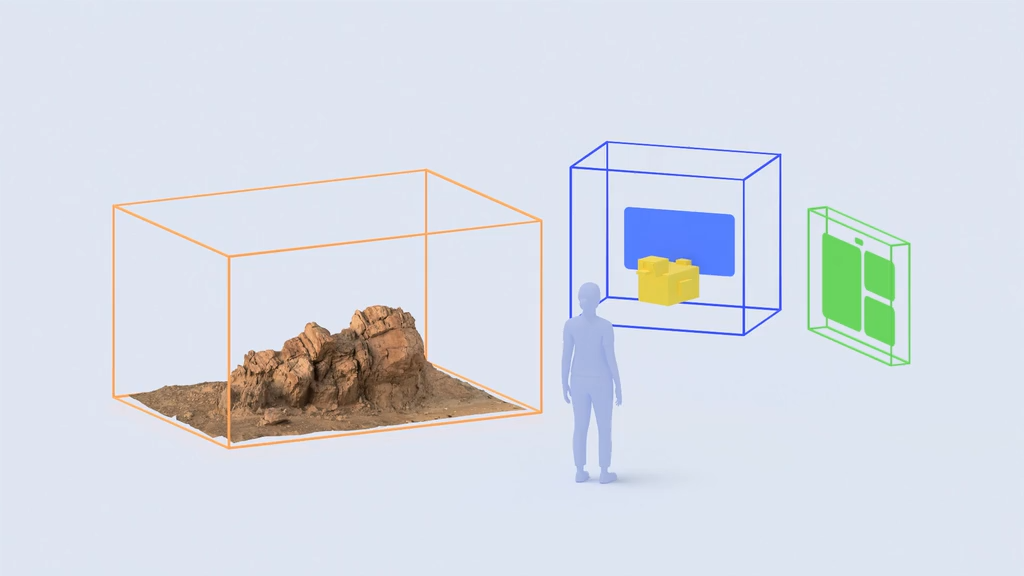
The newly released OpenXR Spatial Container extensions standardize system-managed spaces in which applications can display volumetric 3D content, similar to how traditional systems place 2D content within windows on a desktop.
OpenXR is the open standard API for AR/VR/MR app development and runtimes. It's managed by Khronos, the same non-profit industry consortium that manages OpenGL, Vulkan, and WebGL.
The ideal of OpenXR is that developers can build apps that run on any headset, without needing to use vendor-specific core APIs for different hardware. Almost every headset, engine, and runtime supports OpenXR today, except for Apple Vision Pro and PlayStation VR2 on PS5.
Spatial Containers extend OpenXR beyond fully immersive apps and allow developers to build apps that can move between multitasking and full-space experiences. Apps can have multiple Spatial Containers, each capable of switching between:
A Spatial Container's position is controlled by the system. This allows you to choose its preferred location or enables the system to have a Spatial Container that follows you during movement.
The initial Spatial Container extensions that have been ratified and published in the OpenXR Registry are as follows:
The Khronos OpenXR Working Group says that it is also actively building extensions to enable apps to leverage a system-provided renderer that is optimized for the particular hardware that an app is running on, from high-performance headsets to lower-power devices.
In essence, Spatial Containers allow for apps broadly similar to those enabled by the core concepts of visionOS on Apple Vision Pro , where the "Shared Space" architecture and RealityKit framework allow for both windowed and volumetric 3D apps to run alongside each other in a system-managed environment and transition into "Full Space" immersive experiences.
Source link