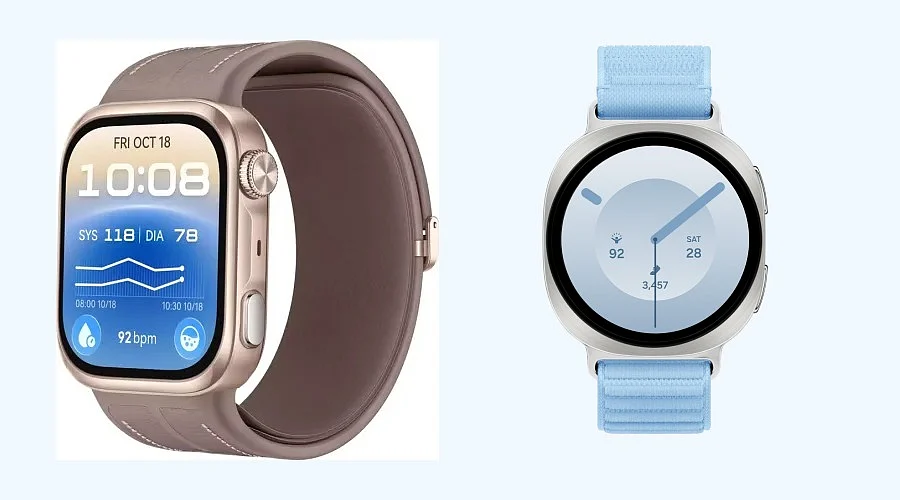
Huawei Watch D3 uses a certified cuff for true blood pressure readings.
Smartwatches have moved far beyond step counts and notifications. Today, a wearable health tracker is expected to flag irregular heart rhythms, monitor blood pressure and support long-term wellness goals.
Two devices leading this shift in 2026 are the Huawei Watch D3 and the Samsung Galaxy Watch9, each built with a distinct philosophy toward health monitoring.
The Huawei Watch D3 takes a clinical approach, built around genuine cuff-based blood pressure readings. The Samsung Galaxy Watch9, meanwhile, blends everyday smartwatch convenience with an expanding suite of optical health metrics.
This comparison breaks down their sensors, specifications and health capabilities to help buyers decide which wearable health tracker suits their needs.
The Huawei Watch D3 measures 46.5 x 41 x 11.3mm and weighs only 40 grams. This is remarkably light for a watch carrying a mechanical airbag inside its strap. Its 1.92-inch LTPO AMOLED display reaches 3,000 nits at peak brightness.
The Samsung Galaxy Watch9 comes in two sizes, 40mm and 44mm. Both use Super AMOLED panels protected by sapphire glass. Brightness also reaches 3,000 nits, giving the Galaxy Watch strong visibility outdoors.
Build quality feels premium on both devices. Huawei sticks to aluminium alloy, while Samsung uses brushed aluminium across its case. Neither watch offers a titanium option this generation.
Sensor choices reveal the biggest gap between these two smartwatches. The Huawei Watch D3 combines a nine-axis IMU, ECG sensor, temperature sensor, and barometer. Its most distinctive part is a differential pressure sensor tied to a physical airbag.
Source link