
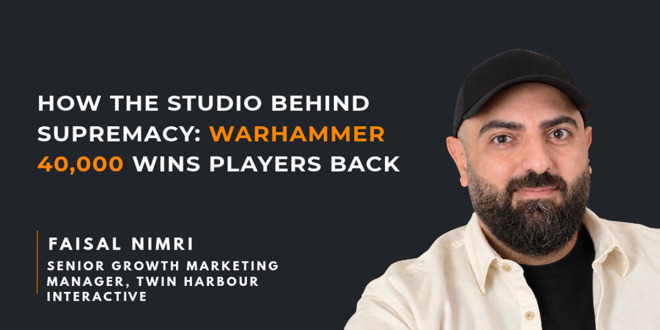
As acquisition costs rise, Twin Harbour Interactive, maker of Supremacy 1914, Call of War 1942, World War 3 and Warhammer 40,000, is turning to players who have already left.
We spoke to Faisal Nimri, senior growth marketing manager, ahead of his session at PGC Jordan about why the studio is investing in re-engagement, what its first failed test taught it and how smaller studios can start on a limited budget.
Twin Harbour has historically concentrated on user acquisition, but rising costs prompted a change in approach.
"As CPIs are getting higher and higher, UA is becoming more challenging," Nimri says. Given its years of live operation and a large base of mid-core strategy players, the studio considered retargeting "a natural fit for us."
Re-engagement remains relatively new for the company, which began investing in it approximately 18 months ago. "We're still new," he says.
To establish whether re-engagement advertising generates additional revenue, Twin Harbour uses incrementality testing. Nimri compares the methodology to a pharmaceutical trial: one group is exposed to the advertising, while a control group is not.
Twin Harbour typically assigns 80% of an audience to the test group and 20% to control, then measures the difference in revenue. Standard attribution, he notes, only "tells you who clicked, where this click is coming from". Incrementality testing measures whether the advertising changed player behaviour.
The studio considered three approaches. Running tests internally would have required significant team resources. Relying on a retargeting partner’s free measurement would have limited comparisons between channels.
Source link