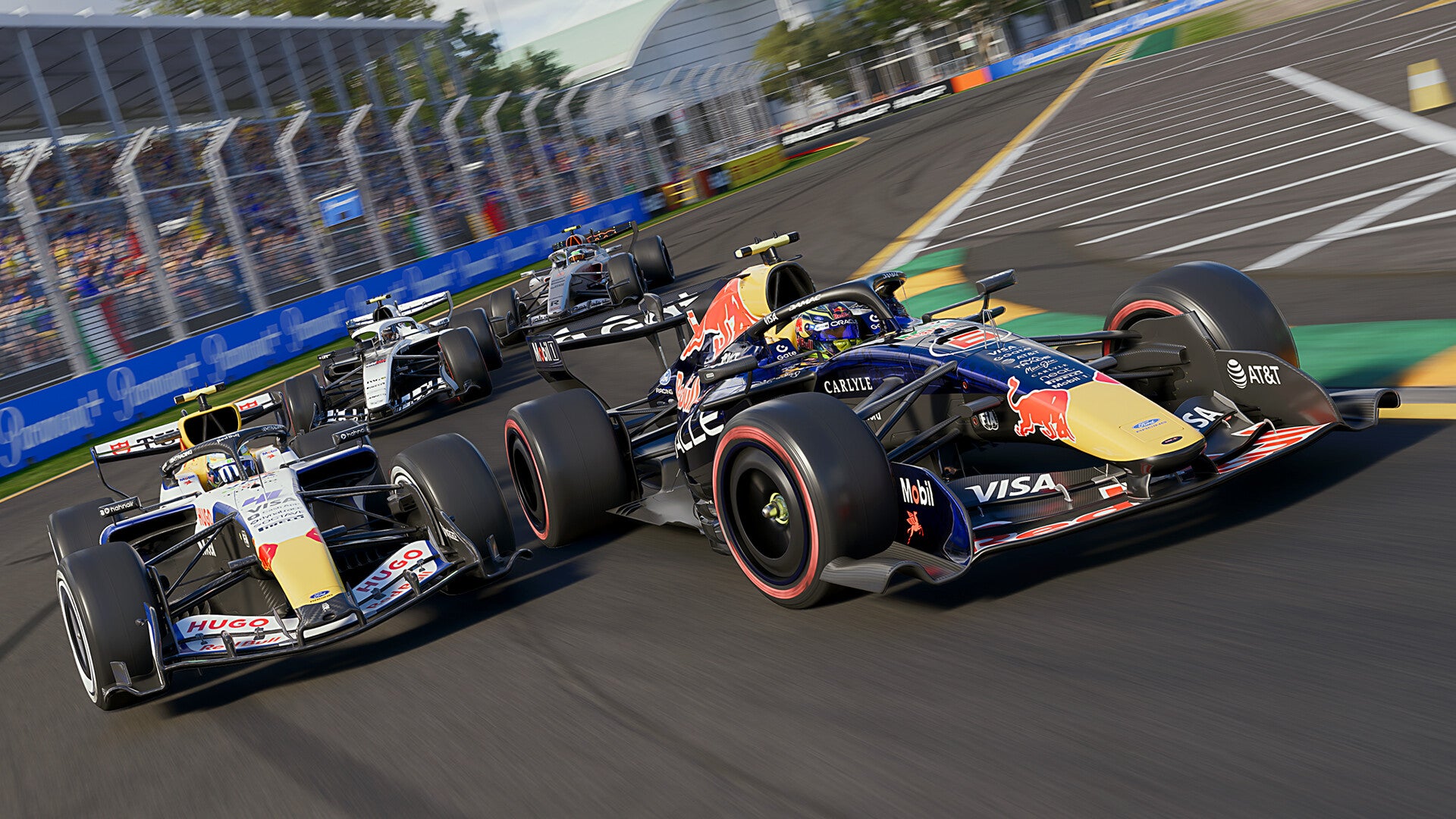
Since it acquired the F1 license in 2009, UK-based studio Codemasters has walked a precarious sim-cade tightrope with its F1 games. It’s never been as rigorous in its physics simulation as iRacing, rFactor or Assetto Corsa Competizione, but neither has it shied away from capturing the details and demands of the sport and packaging them up into an entertaining and ultimately rewarding race weekend.
But replicating those details will introduce a difficult new element when it comes to the next F1 game. Machine learning AI supercomputers are taking control away from Formula One drivers. Borne of the new 2026 season regulation changes, it’s a phenomenon that’s usually subtle because it works by controlling the power deployment of extremely complex hybrid power units. That’s quite tricky to eyeball from the onboard broadcast cameras. But when that AI-controlled power deployment goes wrong, it makes itself extremely conspicuous.
At a drenched Sepang circuit on the first weekend of October, race fans were treated to the sight of 22 vehicles representing the pinnacle of motorsport losing throttle and trundling at 20mph on the warmup lap. It was the result of a software glitch triggered by the wet weather and the way Sepang’s sectors are configured, and it required all teams to install a software update to their cars before the race could begin.
Lewis Hamilton, whose Ferrari came to a complete standstill on the start-finish straight, later reported that he had to do a full engine restart, essentially CTRL+ALT+DEL’ing his vehicle on the track in order to gain back some throttle control and power deployment.
Source link